The Critical Intersection of Sleep Science and Public Policy: A Champion Cyclist’s Crash Highlights the Peril of Discounting Rest

When inquiring about my field, I often explain my work as residing at the confluence of sleep science and public policy. The typical reaction, a quizzical, "Really? I never thought of sleep that way," underscores a prevalent societal misconception. Most people instinctively view sleep as a matter of personal discipline or individual choice. However, two decades of research, including my own contributions and those of numerous colleagues, have unequivocally demonstrated that the most significant threats to healthy sleep extend far beyond individual habits. They are, in fact, deeply embedded within the very policies and frameworks governing our daily lives.
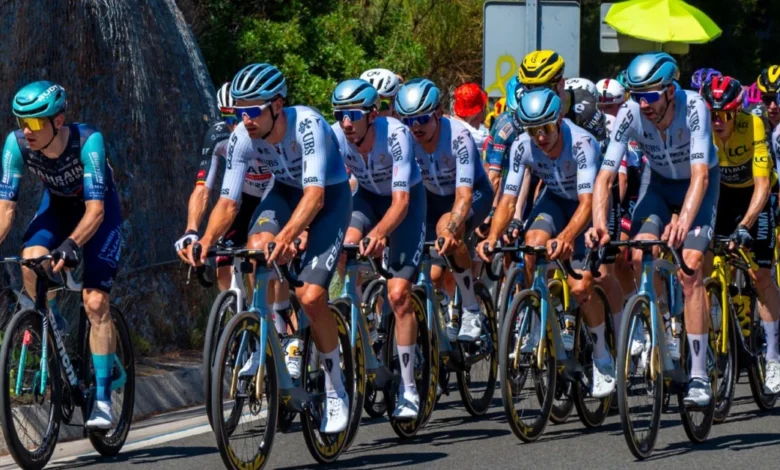
This critical point was starkly illustrated by a recent incident at the Tour de France, a story shared by a friend who avidly follows professional cycling. The narrative involves Jonas Vingegaard, the formidable two-time Tour de France champion, whose preparation for Stage 15 was dramatically interrupted. At precisely 2:00 a.m., hours before one of the most demanding stages of the world’s premier cycling event, Vingegaard was roused from his sleep by officials from the International Testing Agency (ITA) for a mandatory, random anti-doping test. Reports indicated that the testing procedure, which involved providing biological samples, consumed approximately 40 minutes. Vingegaard himself later confirmed the profound disruption, stating that it took him a considerable amount of additional time to fall back asleep after the officials departed.
As a sleep scientist, this account immediately resonated as a classic example of severe sleep fragmentation. Being abruptly awakened in the profound darkness of the early morning, undergoing the process of dressing, leaving one’s room, and then performing a task requiring biological compliance is inherently counterproductive to the rapid re-initiation of sleep. Such an interruption creates a cascade of physiological and psychological challenges, making the return to restorative, deep sleep exceptionally difficult. The body’s circadian rhythm, which governs the sleep-wake cycle, is profoundly disturbed, and the cognitive and physical systems are prematurely activated during a critical period of rest and recovery.
Tragically, later that day, during the very competition of Stage 15, Vingegaard was involved in a serious crash. The incident resulted in a fractured collarbone, a debilitating injury that immediately forced his withdrawal from the Tour de France, ending his aspirations for a third consecutive victory.
Did the Disrupted Sleep Cause the Crash? The Unsettling Question
It is crucial to preface this discussion by acknowledging the multifaceted nature of cycling crashes. These incidents can arise from a myriad of factors, including technical failures, rider error, road conditions, and unexpected events within the peloton. Therefore, stating definitively that Vingegaard’s disrupted sleep caused his crash would be an oversimplification and speculative. However, as a sleep scientist, the timing and circumstances of the incident compel an important and unsettling question: What tangible benefit is gained by conducting a routine anti-doping test at 2:00 a.m., when decades of robust scientific research unequivocally demonstrate that disrupting sleep severely impairs critical functions such as reaction time, attention, decision-making capabilities, and motor coordination?
This leads to an even broader, more critical inquiry: Why would any governing body knowingly compromise one of the most fundamental biological contributors to peak performance, especially within the context of one of the most physically and cognitively demanding sporting events globally?
Sleep is not a discretionary luxury; it is a non-negotiable biological imperative. For elite athletes, it stands as arguably the most powerful and effective recovery tool at their disposal. The scientific literature is replete with evidence underscoring its profound importance. Even a single night of significantly disrupted sleep has measurable and detrimental effects: reaction times are demonstrably slowed, attentional lapses increase in frequency and duration, judgment is impaired, and overall coordination is reduced. These are precisely the finely tuned functions upon which elite athletes, particularly in a sport as intricate and high-speed as professional cycling, are utterly dependent. In a peloton traveling at high velocities, where split-second decisions can dictate not only race outcomes but also personal safety and the safety of competitors, such impairments matter enormously. The margin for error in professional cycling is infinitesimally small, and any factor that diminishes a rider’s cognitive or physical acuity can have catastrophic consequences.
It is imperative to clarify that this analysis is not, in any way, an argument against anti-doping testing itself. The integrity of fair competition and the protection of clean sport are paramount, and robust anti-doping protocols are essential to upholding these principles. However, the pursuit of clean sport should not come at the expense of an athlete’s fundamental biological need for healthy sleep. A truly enlightened and effective policy framework should be designed to protect both the integrity of the competition and the well-being of the athletes who participate in it. Good policy, therefore, must be sleep-informed.
The Pervasive Discounting of Sleep in Public Policy
The Vingegaard incident resonated deeply because it serves as yet another stark example of how effortlessly sleep is discounted, marginalized, or entirely overlooked when public policy decisions are formulated. The consequences extend far beyond the realm of elite sports, impacting broad swathes of society.
Consider, for instance, the recent legislative action in the United States. Just last week, Congress passed the Sunshine Protection Act, a bill aimed at making Daylight Saving Time permanent. This legislative move occurred despite years of persistent and unequivocal warnings from a vast consortium of sleep and circadian scientists. Their expert consensus is clear: permanent Daylight Saving Time runs directly counter to fundamental human biology. Human physiology is optimally aligned with standard time, where the sun’s highest point more closely aligns with noon. Shifting to permanent Daylight Saving Time means later sunrises, particularly in winter, forcing individuals to wake and commute in the dark, disrupting the natural synchronization of their internal biological clocks (circadian rhythms) with the external light-dark cycle. This chronic misalignment has been linked to a range of negative health outcomes, including increased risks of cardiovascular disease, metabolic disorders, depression, and even traffic accidents.
At first glance, the abrupt awakening of a champion cyclist for a doping test and the legislative decision to implement permanent Daylight Saving Time appear to be entirely disparate events. One involves the hyper-specific context of elite athletic competition, while the other concerns the broad societal regulation of our clocks and the rhythms of daily life.
Yet, these two seemingly unrelated events share a profound and deeply problematic common assumption: the belief that sleep is somehow a flexible, negotiable entity.
It is not.
Whether we are examining the highly specialized demands placed upon elite athletes, the critical developmental needs of teenagers forced to start school before sunrise, the exhausting and often dangerous schedules of physicians working overnight shifts in critical care environments, or the general populace compelled to wake and function in the dark of winter mornings due to permanent Daylight Saving Time, the overarching lesson remains consistent and undeniable: policies that disregard the fundamental necessity of sleep inherently ignore biology.
And, as history and science repeatedly demonstrate, biology always, eventually, wins. The human body and mind operate according to immutable biological laws, and attempts to circumvent or ignore these laws invariably lead to adverse outcomes.
The Science Underpinning Sleep’s Imperative
The scientific evidence supporting sleep’s critical role is overwhelming. Sleep is far more than mere "downtime" or a passive state of inactivity. It is an active, complex physiological process essential for physical restoration, cognitive consolidation, emotional regulation, and metabolic health.
During sleep, the body undertakes vital restorative processes. Muscles repair, tissues grow, and hormones crucial for appetite, growth, and stress management are regulated. For athletes, this period is when growth hormone is released, aiding muscle repair and adaptation to training stress. Lack of sleep can impede these processes, increasing recovery time and susceptibility to injury. Studies such as those by Fullagar et al. (2015) and Charest and Grandner (2020) explicitly detail the cascading negative effects of sleep loss on athletic performance, encompassing reduced endurance, impaired power output, and slower sprint times.
Cognitively, sleep is fundamental for memory consolidation, learning, and problem-solving. While we sleep, the brain processes and stores information acquired during waking hours. Sleep deprivation, conversely, impairs working memory, reduces creativity, and significantly diminishes the ability to focus and sustain attention. For an athlete, this translates directly to a reduced capacity to execute complex strategies, react to changing game dynamics, or maintain vigilance during prolonged events. The impairment in decision-making, in particular, can be catastrophic in high-stakes environments.
Furthermore, sleep plays a critical role in immune function. Chronic sleep deprivation weakens the immune system, making individuals more susceptible to infections and slowing recovery from illness. For athletes, this means increased risk of falling ill, which can derail training and competition schedules. Emotionally, sleep deprivation can lead to increased irritability, mood swings, and a reduced capacity to manage stress, impacting team dynamics and mental resilience.
Towards a Sleep-Informed Policy Framework
The Vingegaard incident, alongside the ongoing debate surrounding Daylight Saving Time, serves as a powerful call to action for policymakers globally. It highlights an urgent need for a paradigm shift in how sleep is perceived and integrated into policy development.
Anti-doping agencies, while upholding the integrity of sport, could explore more sleep-friendly testing protocols. This might involve restricting early morning tests to only instances of specific, well-founded suspicion, or implementing testing windows that minimize disruption to an athlete’s critical sleep period. Such adjustments would not undermine the effectiveness of anti-doping efforts but rather demonstrate a commitment to athlete well-being and performance, acknowledging the latest scientific understanding.
Beyond sports, legislative bodies must engage more deeply with sleep science when enacting policies that directly or indirectly impact public health and well-being. This means reconsidering early school start times, evaluating the impact of shift work on essential personnel, and, critically, aligning time zone policies with human biological rhythms. The economic arguments for permanent Daylight Saving Time, often cited by proponents, must be weighed against the well-documented health and safety costs associated with chronic circadian misalignment.
The overarching implication is clear: sleep is not a luxury to be sacrificed at the altar of productivity, convenience, or even competitive fairness when alternative solutions exist. It is a biological necessity and, profoundly, a performance imperative across all domains of human endeavor. From the peak physical and cognitive demands of a Tour de France champion to the daily routines of schoolchildren and essential workers, the benefits of adequate, high-quality sleep are undeniable and far-reaching. It is time for our public policies, at every level, to recognize and treat sleep with the fundamental importance it deserves, thereby fostering healthier, safer, and more productive societies.
References
- Fullagar HH, Skorski S, Duffield R, Hammes D, Coutts AJ, Meyer T. Sleep and athletic performance: the effects of sleep loss on exercise performance, and physiological and cognitive responses to exercise. Sports Med. 2015 Feb;45(2):161-86. doi: 10.1007/s40279-014-0260-0. PMID: 25315456.
- Charest J, Grandner MA. Sleep and Athletic Performance: Impacts on Physical Performance, Mental Performance, Injury Risk and Recovery, and Mental Health. Sleep Med Clin. 2020 Mar;15(1):41-57. doi: 10.1016/j.jsmc.2019.11.005. PMID: 32005349; PMCID: PMC9960533.