Georgia Tech Researchers Develop Wireless Wearable to Track Physiological Changes Linked with Sleep and Brain Health in Home Settings

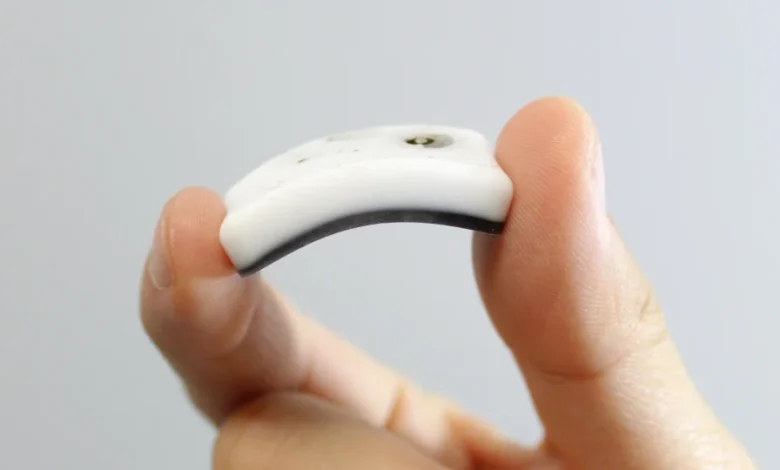
The intersection of bioelectronics and neurology has reached a significant milestone as researchers at the Georgia Institute of Technology have unveiled a pioneering soft, wireless wearable device designed to monitor the brain’s waste-clearing dynamics during sleep. This innovation, recently detailed in the journal Science Advances, represents a potential paradigm shift in how clinicians and researchers approach brain health, moving away from the restrictive environments of hospitals and laboratories toward the comfort and consistency of a patient’s own home. By focusing on the glymphatic system—a recently discovered macroscopic waste clearance system for the central nervous system—this technology addresses a critical gap in the early detection and management of neurodegenerative diseases such as Alzheimer’s and Parkinson’s.
The Critical Role of the Glymphatic System in Cognitive Longevity
To understand the importance of the Georgia Tech innovation, one must first look at the biological process it seeks to measure. The glymphatic system is a functional waste clearance pathway that utilizes a network of perivascular channels, formed by astroglial cells, to eliminate soluble proteins and metabolic waste from the central nervous system. During wakefulness, the brain’s metabolic activity is high, leading to the accumulation of byproducts like amyloid-beta and tau proteins. When we sleep, particularly during deep, non-rapid eye movement (NREM) stages, the interstitial space in the brain expands, allowing cerebrospinal fluid (CSF) to flush through the brain tissue and clear these toxins.
Chronic sleep deprivation or poor sleep quality has been increasingly linked to the failure of this clearance mechanism. When metabolic waste is not efficiently removed, it aggregates, forming plaques that are the hallmarks of cognitive decline. Until now, the primary method for observing these dynamics in humans has been through high-resolution Magnetic Resonance Imaging (MRI) combined with the injection of contrast agents. While effective, MRI is a "snapshot" diagnostic tool—it is expensive, requires the patient to remain perfectly still in a noisy, confined space, and cannot be used for multi-night, longitudinal monitoring in a natural environment.
Engineering the Solution: Soft Bioelectronics and NIRS Technology
The research team, led by W. Hong Yeo, the Peterson Endowed Professor in the Woodruff School of Mechanical Engineering, set out to bypass the limitations of traditional neuroimaging. The resulting device is a soft, flexible patch that adheres comfortably to the forehead. Unlike the rigid, bulky sensors found in traditional polysomnography (PSG) setups, this wearable is designed to be "invisible" to the wearer, ensuring that the sleep data collected reflects a true natural night’s rest.
At the heart of the device is Near-Infrared Spectroscopy (NIRS) technology. The system operates by emitting specific wavelengths of light from miniature LEDs into the forehead. This light penetrates the skin and skull, interacting with the underlying brain tissue and fluids. Because different substances—such as oxygenated hemoglobin, deoxygenated hemoglobin, and water—absorb light at different rates, the signals reflected back to the device’s photodetectors provide a real-time map of physiological changes.
The Georgia Tech device specifically targets brain water and glymphatic clearance dynamics. By monitoring the subtle shifts in fluid volume and movement within the cranial environment, the device provides a proxy for how effectively the brain is "washing" itself during the various stages of the sleep cycle. The integration of Bluetooth technology allows this data to be streamed wirelessly to a smartphone or tablet, where it can be processed and analyzed using sophisticated algorithms.
Overcoming the Challenges of Home-Based Monitoring
Transitioning high-precision medical diagnostics from a controlled lab to a home setting presents significant engineering hurdles. In a laboratory, environmental variables are strictly managed. At home, a user might toss and turn, breathe deeply, or experience temperature fluctuations, all of which can introduce "noise" into sensitive optical data.
Professor W. Hong Yeo and his team at the Wearable Intelligent Systems and Healthcare (WISH) Center acknowledged these complexities in their study. They noted that optical measurements can be influenced by breathing depth, slight shifts in forehead pressure, body position, and even the ambient temperature of the room. To maintain the integrity of the data, the researchers shifted their focus from attempting to provide a single, absolute measurement of brain water content to analyzing trends and fluctuations over several hours.
This longitudinal approach allows the system to filter out transient artifacts—such as a person rolling over in bed—while retaining the slow-wave oscillations associated with glymphatic activity. The team also utilized advanced signal processing to account for the "skin-effect," where the sensors might inadvertently pick up signals from the scalp or superficial blood vessels rather than the brain itself. This rigorous approach to data filtration ensures that the resulting "brain health score" is grounded in actual neurological trends rather than environmental interference.
A Timeline of Innovation and Development
The development of this wearable device is the culmination of years of interdisciplinary research at Georgia Tech, involving experts in mechanical engineering, materials science, and electronics.
- 2012–2015: The discovery and naming of the glymphatic system by researchers like Maiken Nedergaard sparked a global interest in sleep-based waste clearance.
- 2018–2020: The Georgia Tech team began experimenting with soft, "skin-like" electronics, focusing on biocompatible materials that could host complex sensors without causing skin irritation.
- 2021–2022: Initial prototypes of the NIRS wearable were developed. Early testing focused on the miniaturization of the LED and photodetector arrays to ensure the device remained lightweight.
- 2023: The team conducted pilot studies to compare the wearable’s data against traditional PSG and MRI benchmarks.
- 2024: The publication in Science Advances officially introduced the world’s first soft, wireless NIRS system capable of monitoring glymphatic dynamics at home.
Comparative Analysis: Wearable vs. Traditional Diagnostics
To appreciate the impact of this technology, one must compare it to the current gold standards in sleep and brain health monitoring.
- Polysomnography (PSG): Considered the "gold standard" for sleep apnea and disorder diagnosis, PSG involves dozens of wires attached to the scalp, face, and chest. It usually requires an overnight stay at a clinic. While it tracks brain waves (EEG) and heart rate, it provides limited direct information about the glymphatic clearance process.
- Magnetic Resonance Imaging (MRI): While MRI can visualize fluid movement, it is prohibitively expensive (often costing between $1,000 and $5,000 per session). Furthermore, sleeping inside an MRI machine is difficult, meaning the data collected may not represent a person’s typical sleep architecture.
- The Georgia Tech Wearable: This device costs a fraction of an MRI scan to produce and can be used for 30 consecutive nights or more. It provides a continuous stream of data, allowing doctors to see how a patient’s brain health fluctuates in response to lifestyle changes, medication, or diet.
Broader Implications for Public Health and Preventive Medicine
The implications of a low-cost, home-based brain monitoring system are vast. We are currently facing a global "silver tsunami," with the aging population expected to drive a massive increase in dementia cases. According to the World Health Organization, over 55 million people worldwide currently live with dementia, a figure expected to rise to 139 million by 2050.
If the Georgia Tech wearable can identify the early signs of glymphatic failure—years before cognitive symptoms like memory loss appear—it could open the door for preventive interventions. Patients could be advised on specific sleep hygiene practices, exercise regimens, or pharmacological treatments designed to boost waste clearance.
Furthermore, the device holds promise for the field of semiconductor electronics. As W. Hong Yeo also directs the Korea Kiat-Georgia Tech semiconductor electronics center, the integration of advanced microchips into flexible substrates represents a leap forward for the "Internet of Medical Things" (IoMT). This technology proves that high-end diagnostic tools do not need to be tethered to a wall outlet or a hospital bed.
Future Research and Commercialization
While the current results are promising, the Georgia Tech researchers emphasize that this is just the beginning. Future iterations of the device may include additional sensors to track heart rate variability, blood oxygenation, and even electroencephalogram (EEG) signals to provide a holistic view of sleep stages.
The research team is also looking toward clinical trials involving larger, more diverse populations. By testing the device on individuals with existing cognitive impairments compared to healthy control groups, they hope to refine the algorithms that identify "at-risk" glymphatic patterns.
As the technology matures, it is likely to attract interest from both medical device manufacturers and consumer tech giants. In an era where smartwatches already track basic sleep duration, a medical-grade patch that monitors the very health of the brain’s "plumbing system" could become a standard tool in the wellness toolkit of the future.
In conclusion, the development of this soft, wireless wearable marks a turning point in neurological monitoring. By successfully miniaturizing NIRS technology and adapting it for the home environment, Georgia Tech researchers have provided a new lens through which we can observe the sleeping brain. It is a testament to the power of interdisciplinary innovation, promising a future where the secrets of brain health are no longer confined to the lab, but are accessible to anyone with a patch and a smartphone.