The Neuroscience of Forgiveness: Breaking the Cycle of Revenge and Violence

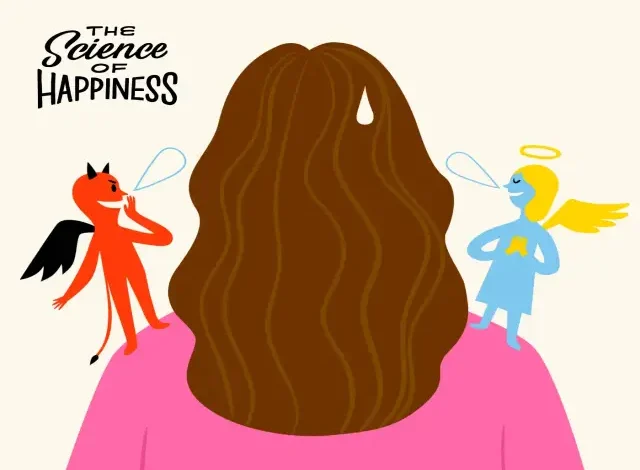
A groundbreaking convergence of neuroscience and behavioral science is illuminating the deeply rooted mechanisms of revenge, positing it not merely as an emotional response but as a potent, often destructive, form of addiction. At the forefront of this research is James Kimmel Jr., an assistant clinical professor at the Yale School of Medicine and co-founder of the Yale Collaborative for Motive Control Studies, whose work, notably detailed in his book The Science of Revenge: Understanding the World’s Deadliest Addiction and How to Overcome It, champions forgiveness as a powerful neurobiological antidote. His insights suggest that understanding and practicing forgiveness could be a crucial pathway to individual healing and a less violent global society.
From Personal Trauma to Academic Inquiry
Kimmel’s journey into the neuroscience of revenge and forgiveness is profoundly personal, rooted in a harrowing experience from his adolescence. Growing up on a farm in Central Pennsylvania, he endured years of escalating bullying. What began as verbal harassment intensified into physical assaults, including pushing, shoving, kicking, and punching, coupled with relentless psychological abuse and humiliation from neighboring farm kids. The torment reached a tragic climax when Kimmel was around 16 or 17 years old. One night, his family was awakened by a gunshot. While initially finding no damage, the next morning revealed a devastating truth: their beloved beagle hunting dog, Paula, lay dead in her pen, killed by a bullet wound to the head. The vehicle of one of his tormentors was seen fleeing the scene. Despite police reports, authorities declined to pursue the matter, leaving Kimmel and his family with a profound sense of injustice and vulnerability.
Weeks later, the perpetrators returned, detonating the family’s mailbox with an explosion that, as Kimmel recounts, "didn’t only detonate the mailbox, it took what was left of my self-control." This act of aggression pushed him to the brink. In a fit of rage, Kimmel armed himself with his father’s handgun, jumped into his mother’s car, and pursued his harassers down a dark, rural road. He eventually cornered them on their farm, their truck pinned against a barn. As they emerged, unarmed and unaware of his weapon, Kimmel had the "perfect setup" for the revenge he had fantasized about for years. However, in that critical moment, a sudden "flash of inspiration" provided a glimpse into two potential futures: one where he committed violence, leading to incarceration and the destruction of his own identity, and another where he pulled back. Recognizing the prohibitive cost of his desired retaliation, he lowered the gun, got back into the car, and drove home. This pivotal experience became the catalyst for his lifelong quest to understand the compelling nature of revenge and the healing power of forgiveness.
The Legal System: A "Professional Revenge Business"?
Kimmel’s initial path after this traumatic event led him into the legal profession, where he became a litigator. He describes this phase as entering the "professional revenge business," arguing that the legal system, particularly litigation, often serves as a "legalized form" of revenge, rebranded as "justice." In this capacity, lawyers facilitate clients’ desires for retaliation, seeking to inflict pain or compel compliance from opposing parties, even if through legal means. Kimmel observed a disturbing pattern: both he and his clients experienced "momentary bursts of pleasure" with every small victory or setback for the opposition. This vicarious and direct enjoyment of causing distress became addictive, seeping from his professional life into his personal relationships, where he found himself seeking grievances and opportunities for retaliation against his wife and children. This personal deterioration led him to question if he was "hooked on something," prompting his eventual shift from law to scientific research.
His critique of the legal system resonates with a growing movement towards restorative justice, which seeks to repair harm through dialogue and reconciliation rather than solely through punitive measures. The stark reality that lengthy prison sentences often do not deter recidivism, as noted by Keltner, further supports Kimmel’s assertion that a purely punitive approach fails to address the underlying drivers of violent behavior, often fueled by cycles of revenge.
The Neuroscience of Vengeance: A Brain on Drugs
Kimmel’s subsequent transition to the Yale School of Medicine’s Department of Psychiatry marked a significant turning point in his research. Collaborating with neuroscientists, he delved into the brain’s activity during revenge-seeking behavior. His findings, corroborated by emerging neuroscience studies, are startling: "Your brain on revenge looks like your brain on drugs, and that’s not a metaphor."
Using fMRI and PET scanners, researchers observed brain activity when individuals were presented with a grievance and then given an opportunity to retaliate. The key areas involved are:
- Reward Circuitry Activation: The nucleus accumbens and the dorsal striatum, brain regions critically linked to the "go circuitry" of addiction (motivation, craving, pleasure), become highly active. This suggests that the pursuit of revenge, much like drug use, stimulates the brain’s reward system, creating a powerful, reinforcing loop.
- Pain as a Trigger: The anterior insula, part of the brain’s pain network, activates when an individual experiences the pain of a grievance. This initial pain appears to directly cue the desire for revenge within the reward circuitry.
- Suppression of Self-Control: Crucially, the prefrontal cortex, responsible for executive functions, decision-making, cost-benefit analysis, and self-control (the "stop circuitry"), appears to be significantly shut down during revenge-seeking. This impairment in inhibitory control explains the compulsive, often irrational, nature of vengeful acts, as observed in Kimmel’s own near-violent incident.
This neurobiological signature aligns perfectly with the clinical definition of addiction: "the inability to resist an urge or desire to take something like a drug or alcohol, tobacco, or to engage in a behavior like gambling or… food or gaming… despite knowing the negative consequences of doing so." Kimmel argues that revenge fits this definition precisely, driving individuals to inflict harm despite the personal and societal costs.
The societal implications of this "deadliest addiction" are profound. Criminologists and behavioral scientists have consistently identified revenge-seeking as the primary motivation across an alarming spectrum of violence, from intimate partner and youth violence to gang conflicts, violent extremism, police brutality, genocide, and warfare. The adage "hurt people hurt people" finds scientific validation in this cycle, where perceived wrongs perpetuate a cascade of destructive acts. Globally, interpersonal violence accounts for hundreds of thousands of deaths annually, with countless more injuries and psychological traumas. While precise statistics linking all these directly to "revenge addiction" are complex, the underlying retaliatory motive is a recognized driver in a significant portion of these incidents, highlighting the urgent need for interventions that address this deep-seated human impulse.
Forgiveness: A Neurobiological Antidote and Human Superpower
If revenge is an addiction, Kimmel asserts, then forgiveness is its detox. Neuroscience research, in parallel with studies on revenge, has begun to uncover the remarkable neurobiological effects of forgiveness, demonstrating its capacity to reverse the destructive circuitry activated by grievances.
When an individual chooses to forgive, observable changes occur in the brain:
- Pain Network Deactivation: Forgiveness effectively shuts down the anterior insula, the brain’s pain network. This means that forgiveness directly alleviates the emotional and psychological pain associated with past wrongs, transforming it from a "soft spiritual practice" into a tangible neurobiological benefit.
- Reward Circuitry Deactivation: The "go circuitry" of addiction – the nucleus accumbens and dorsal striatum – also deactivates. This dampens the cravings and compulsive drive for retaliation, breaking the addictive cycle.
- Prefrontal Cortex Reactivation: Critically, forgiveness reactivates the prefrontal cortex, restoring executive function, decision-making capabilities, and self-control. This allows individuals to weigh consequences more rationally and make choices that align with their long-term well-being rather than immediate, destructive gratification.
Kimmel refers to these cumulative benefits as making forgiveness a "human superpower" or a "wonder drug." It is a freely available, self-manufactured pharmaceutical, accessible 24/7, requiring no prescription or pharmacy. Its medicinal value is enormous, offering a powerful pathway to self-healing and liberation from the past.
The concept of "decisional forgiveness" is central to Kimmel’s approach. This is an internal, cognitive decision to forgive what happened as a means of healing oneself, without necessarily involving or informing the person who caused the harm. It is not about condoning the wrongdoing, pardoning the perpetrator, or becoming a "forever victim," but rather about releasing oneself from the emotional bondage of the past.
Kimmel illustrates the immediacy and power of this process with a simple exercise: by merely imagining what it would feel like to forgive a long-held grievance, individuals often report an immediate sense of relief, a dissipation of tension, and a dissolution of emotional pain. From a neuroscientific perspective, even this imaginative act momentarily stops the pain, halts revenge fantasies, and reactivates the prefrontal cortex, demonstrating the brain’s capacity for rapid, positive change through intentional thought.
Beyond the immediate neurobiological benefits, broader psychological and physiological research on forgiveness supports these findings. Studies have shown that forgiveness is associated with reduced levels of stress hormones like cortisol, lower blood pressure, improved cardiovascular health, and stronger immune system function. Psychologically, it correlates with decreased anxiety, depression, and hostility, and improved self-esteem and relationship quality. Researchers like Robert Enright at the International Forgiveness Institute and Everett Worthington Jr. have extensively documented the therapeutic benefits of forgiveness interventions across diverse populations, further validating Kimmel’s assertions.
Societal Implications and the Path Forward
Kimmel’s work offers a compelling vision for a less violent, more compassionate world. He actively practices forgiveness daily, not as a moral obligation to others, but as a vital component of his own self-care and healing. He emphasizes that revenge-seeking fixates on punishing the past, dragging victimization and pain into the present, thereby contaminating life and hindering productivity. Forgiveness, conversely, allows individuals to discharge these grievances, leaving the past where it belongs and moving forward into a fulfilling present and future.
The implications of widely adopting this understanding of forgiveness are vast:
- Conflict Resolution: In an increasingly polarized world, marked by international conflicts and domestic divisions, the principles of forgiveness offer a critical framework for de-escalation and reconciliation. Imagine the potential for peace if individuals and nations could consistently choose forgiveness over retaliation.
- Criminal Justice Reform: Shifting from purely punitive models to approaches that incorporate forgiveness and restorative justice could lead to more effective rehabilitation, reduced recidivism, and stronger community bonds. This would entail rethinking legal frameworks to prioritize healing and accountability over simple retribution.
- Mental Health Interventions: Recognizing revenge as an addictive behavior opens new avenues for therapeutic interventions. Integrating forgiveness-based practices into mental health treatment could provide individuals struggling with trauma, anger, and chronic grievances with powerful tools for recovery.
- Education and Parenting: Teaching children and adolescents about the neurobiology of revenge and forgiveness could equip them with essential emotional regulation skills, fostering empathy, self-control, and resilience from a young age.
- Personal Well-being: For individuals, the daily practice of forgiveness offers a profound pathway to emotional freedom, allowing them to overcome personal struggles, improve relationships, and cultivate greater joy and contentment in their lives.
James Kimmel Jr.’s research, supported by institutions like the Templeton World Charity Foundation and the Greater Good Science Center, represents a significant contribution to our understanding of human behavior. By demonstrating the neurobiological underpinnings of both revenge and forgiveness, he not only validates ancient wisdom traditions but also provides a scientific imperative for cultivating forgiveness as a fundamental practice for individual well-being and global peace. His work underscores that the power to heal, to break destructive cycles, and to forge a better future resides, quite literally, within our own brains.