Navigating the Seasonal Shift: YogaRenew Instructor Lindsey Rozmes Shares Four Grounding Poses to Combat Autumn Fatigue and Restore Stability

The arrival of autumn brings a familiar cultural script: the rapid embrace of chunky knit sweaters, crisp outdoor strolls, and the ubiquitous pumpkin spice aesthetic that floods social media feeds. Yet beneath the cozy veneer of changing leaves and seasonal media marathons lies a less romanticized physiological reality. As daylight hours dwindle and temperatures drop, millions of individuals experience a profound shift in their daily energy levels, mood stability, and overall physical vitality.
In response to this seasonal transition, wellness experts and movement specialists are increasingly emphasizing the need for proactive self-care strategies. Lindsey Rozmes, a prominent instructor with YogaRenew, has curated a specialized sequence of four yoga postures designed explicitly to counteract autumn-induced fatigue. By focusing on grounding, physical stability, and somatic awareness, these postures offer a structured pathway to help practitioners anchor themselves amidst the disruptions of changing weather patterns.
Understanding the Physiological and Psychological Toll of Autumn
The transition from the expansive, high-energy months of summer into the inward-turning, cooler months of autumn affects human biology in measurable ways. Reduced exposure to natural sunlight directly influences the pineal gland, altering the production of melatonin and serotonin—neurotransmitters heavily responsible for regulating sleep cycles, mood, and alertness. Consequently, many people report feeling sluggish, scattered, or persistently "off" as autumn deepens.
In traditional holistic practices such as Ayurveda, autumn is characterized as the season of the vata dosha, an element governed by air and ether qualities like coldness, dryness, and movement. When vata becomes ungrounded or excessive due to environmental shifts, it manifests mentally as anxiety, distraction, and mental fatigue, and physically as restlessness or muscle tension.
Modern wellness practitioners note that combatting these symptoms requires counter-balancing practices. Just as society has systematically adapted to the superficial markers of the season, health advocates argue that individuals must normalize addressing the deeper somatic impacts of shorter days. Introducing intentional movement, mindfulness, and grounding physical practices serves as an effective antidote to the seasonal malaise, helping to bridge the gap between environmental shifts and internal equilibrium.
The Role of Grounding in Somatic Health
Grounding, in both a physical and psychological context, refers to the practice of increasing bodily awareness and establishing a felt sense of connection to the earth or a stable support surface. Research in physical therapy and somatic psychology suggests that mindful movement and deep-pressure stimulation can down-regulate the sympathetic nervous system—the mechanism responsible for the "fight or flight" response—while activating the parasympathetic nervous system, which promotes rest and digestion.
When individuals experience seasonal lethargy or cognitive fragmentation, proprioceptive feedback—the body’s ability to sense its location, movements, and actions—often declines. Poses that require intentional contact with the floor, sustained balance, or deliberate lower-body engagement help restore this feedback loop. Rozmes’s four-pose sequence is strategically engineered around these principles, utilizing specific biomechanical alignments to foster physical steadiness and mental clarity.
Four Essential Yoga Poses for Seasonal Stabilization
To navigate the energetic fluctuations of autumn, Rozmes recommends incorporating a targeted sequence of poses. These movements can be practiced individually for brief interludes or combined into a continuous restorative flow, depending on the practitioner’s daily schedule and physical needs.
1. Crocodile Pose (Makarasana)
Crocodile Pose is a restorative prone posture that involves resting the entire front body against the yoga mat. By placing the abdomen and chest in direct, supportive contact with the floor, the posture creates an immediate, visceral sense of physical security and steadiness.
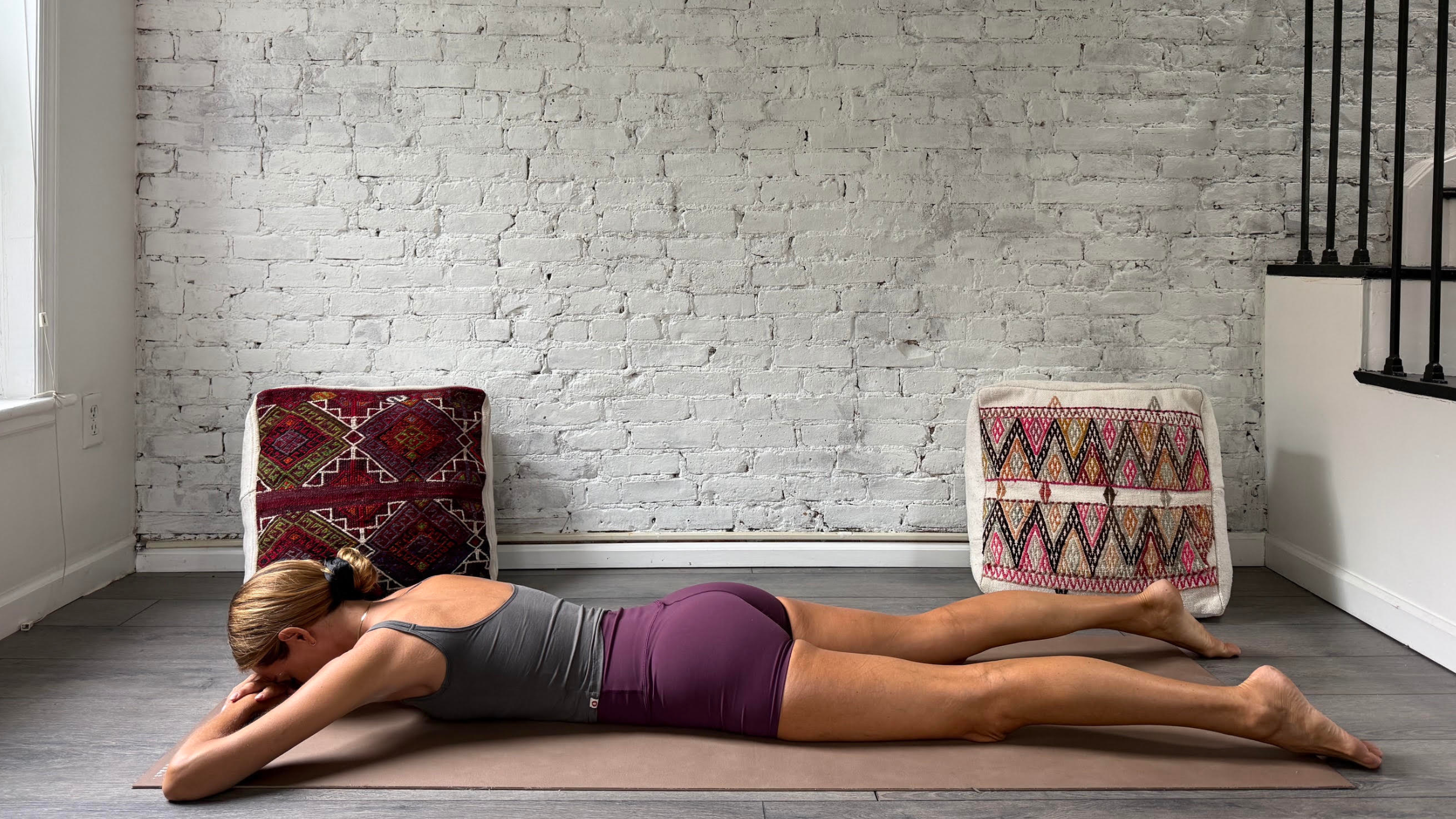
From a physiological standpoint, Crocodile Pose encourages diaphragmatic breathing against the resistance of the floor. This style of breathing stimulates the vagus nerve, which helps lower heart rate and reduce cortisol levels. Rozmes notes that the posture invites practitioners to mentally surrender physical tension to the unyielding support of the ground, making it an ideal starting point for anyone feeling overwhelmed by external environmental stressors.
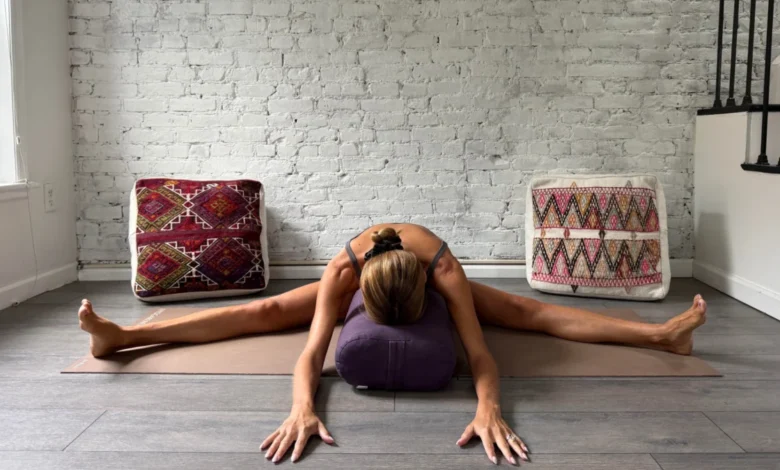
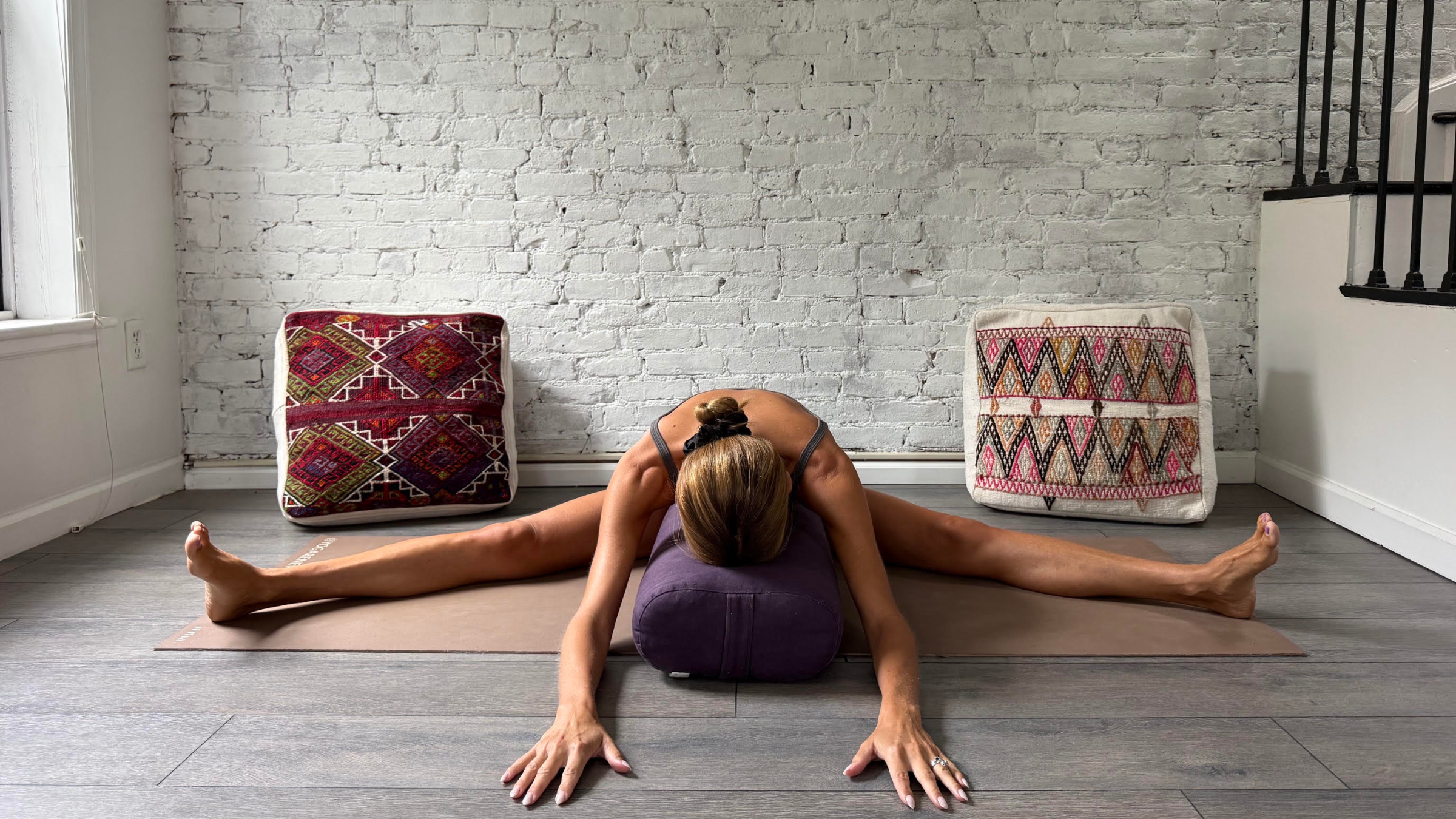
2. Supported Wide-Legged Seated Forward Fold (Upavistha Konasana Variation)
The second posture in the sequence focuses heavily on the lower half of the body and the base of the spine. In yogic philosophy, the base of the spine is intimately connected to the root chakra, or muladhara, which governs feelings of safety, survival, and foundational stability.
By widening the legs in a seated position and folding forward—optionally with the support of props such as blocks or bolsters—practitioners lengthen the hamstrings while bringing the upper body closer to the earth. This geometry stabilizes the lower back and pelvis, areas that often hold tension during times of stress. The combination of hip abduction and forward flexion signals the nervous system to let go of guarding mechanisms, fostering a deep internal quietude that counteracts vata-induced restlessness.
3. Tree Pose (Vrksasana)
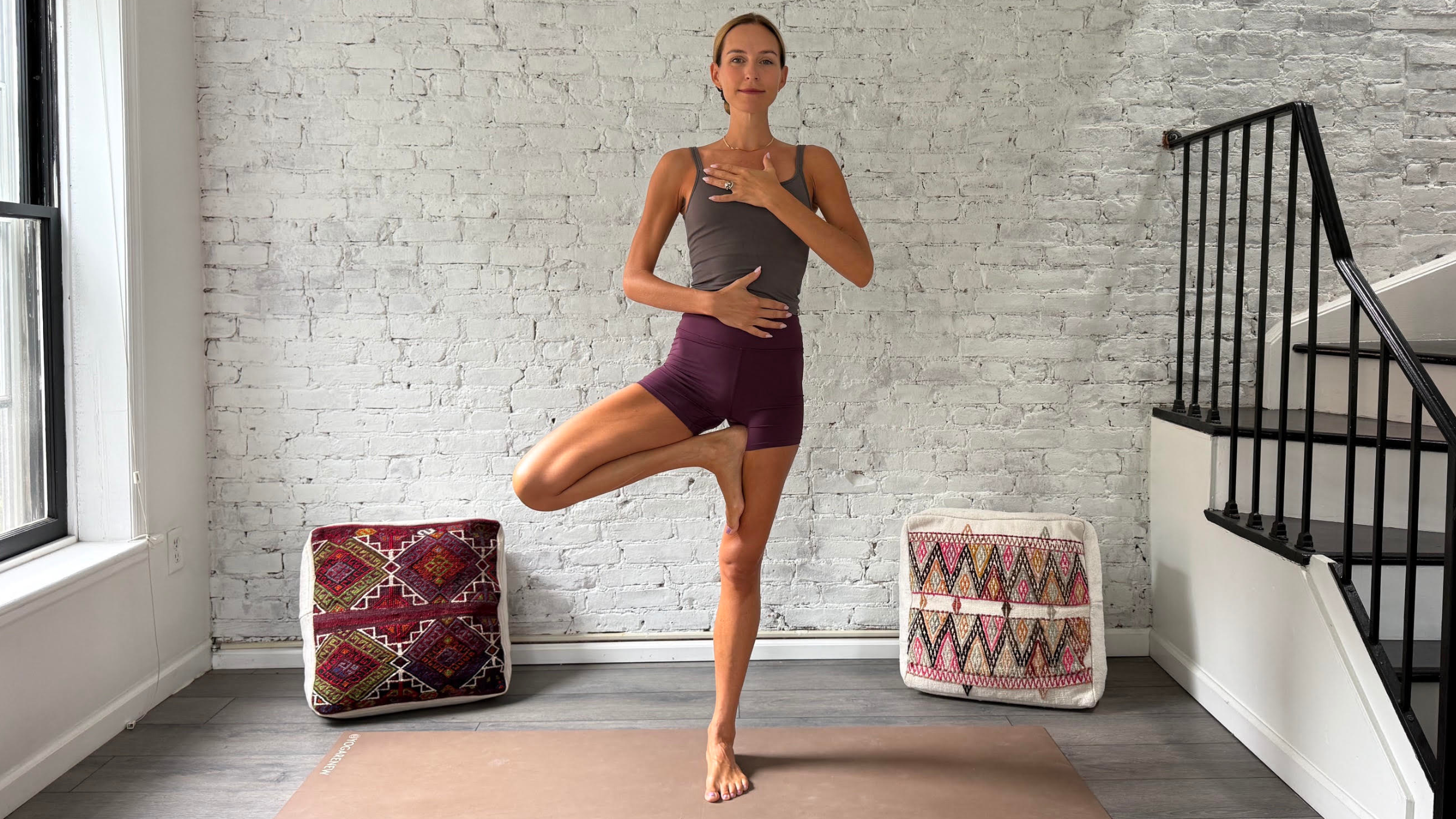
While floor-based postures provide passive grounding, balancing postures require active engagement with the earth to maintain stability. Tree Pose is a classic standing balance that challenges the practitioner’s focus and neuromuscular coordination.
During the autumn months, when the mind is prone to distraction and scattered thinking, balancing poses demand present-moment awareness. If the mind wanders, the physical body naturally sways or loses balance. By rooting down firmly through the standing foot—visualizing roots extending deep into the floor—and lifting through the crown of the head, practitioners cultivate physical equilibrium alongside mental concentration. This dynamic stability trains the nervous system to remain centered despite shifting external conditions.
4. Goddess Pose (Utkata Konasana)
Concluding the sequence with Goddess Pose introduces active lower-body strengthening and internal heat generation. The posture requires practitioners to step the feet wide, turn the toes outward, and bend the knees deeply while maintaining an upright spine.
Although the posture appears deceptively simple at first glance, holding Goddess Pose for multiple breath cycles builds profound endurance and generates warmth throughout the quadriceps, glutes, and core. This internal heat acts as a direct counter-measure to the cold, contracting qualities of the autumn season. By consciously staying with the muscular intensity of the pose and pressing the feet firmly into the mat, practitioners cultivate resilience, willpower, and an embodied sense of inner power.
Broader Implications and Public Health Perspectives
As the wellness industry continues to evolve, evidence-based approaches to seasonal affective shifts are gaining traction among physical therapists, psychologists, and yoga educators alike. Programs like YogaRenew play a critical role in training instructors to recognize how environmental changes manifest in students’ physical and mental states.
Public health advocates increasingly support the integration of accessible, low-impact movement modalities into daily routines, particularly as preventative measures against seasonal mood disruptions. While yoga is not a substitute for clinical intervention in cases of severe Seasonal Affective Disorder (SAD), practices that emphasize mindfulness, breath control, and grounding offer a valuable, empowering tool for self-regulation.
Ultimately, transitioning smoothly into the colder months requires acknowledging that our bodies undergo subtle biological and psychological transformations. By adopting intentional practices like those outlined by Lindsey Rozmes, individuals can reframe autumn not merely as a season of depletion and fatigue, but as an opportunity for inward reflection, stabilization, and renewed physical vitality.