Bridging the Gap: How Wearable Health Data and AI Are Redefining Modern Medicine

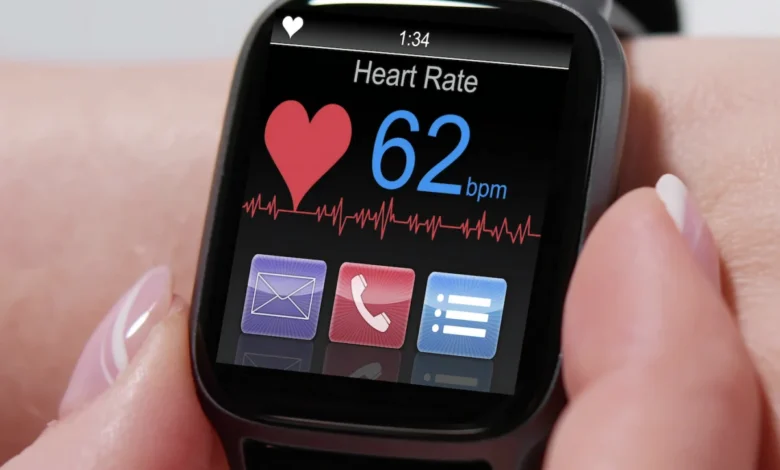
The rapid evolution of consumer technology has fundamentally transformed the landscape of personal health and clinical diagnostics. What began in the 1960s as bulky, pioneering equipment meant for targeted hospital patients has morphed into sleek, ubiquitous smartwatches, smart rings, and continuous glucose monitors worn by millions. As these devices generate unprecedented volumes of continuous physiological data, the traditional boundaries separating consumer wellness gadgets from medical-grade diagnostic tools are rapidly dissolving. This convergence presents both extraordinary opportunities for preventative healthcare and complex regulatory, operational, and privacy challenges for modern medicine.
The Historical Evolution of Continuous Physiological Monitoring
The genesis of remote cardiac monitoring traces back to the 1960s when biophysicist Norman J. “Jeff” Holter commercialized the portable electrocardiogram, widely known as the Holter monitor. Prior to this innovation, clinicians relied entirely on brief, in-clinic electrocardiograms (ECGs) to evaluate heart health. However, healthcare providers increasingly recognized a critical flaw in this approach: sampling bias. An ECG captured during a ten-minute doctor’s appointment represents a fleeting snapshot in time, entirely missing intermittent heart arrhythmias, transient palpitations, or cryptic episodes of syncope—the medical term for fainting.
Holter’s invention revolutionized cardiology by allowing patients to be monitored outside the sterile confines of the hospital. It laid the intellectual foundation for a decentralized medical future, proving that continuous data collection could unearth dangerous anomalies before they culminated in catastrophic medical events. Reflecting on this diagnostic philosophy, Holter famously noted in a 1983 historical paper that assessing human physiology from a single clinical snapshot is akin to a mining engineer attempting to assay an entire mountain of ore by testing a single rock.
For decades following Holter’s breakthrough, remote monitoring remained strictly within the clinical domain. However, the 21st century fractured this paradigm into two parallel tracks: medical-grade apparatuses designed explicitly for professional healthcare settings, and consumer-grade wellness trackers manufactured by major technology companies such as Fitbit, Samsung, Garmin, and Oura. While clinical devices were bound by rigorous validation standards, consumer products were primarily marketed for general lifestyle enhancement, tracking daily step counts, sleep duration, and casual heart rates.
Convergence of Consumer Wellness and Clinical Diagnostics
In recent years, technological sophistication has blurred the division between consumer wellness and clinical care. A prime example is Dexcom’s Stelo, the first over-the-counter continuous glucose monitor cleared by the U.S. Food and Drug Administration (FDA). By bringing a traditionally prescription-only metabolic tracking device directly to retail consumers, the healthcare market signaled a permanent shift toward self-directed biomarker monitoring.

Concurrently, tech ecosystems are building bridges between raw lifestyle metrics and professional clinical data. Apple’s HealthKit framework now aggregates comprehensive personal health records, laboratory test results, and third-party wearable data into a single interface. Similarly, wearable brands like WHOOP have initiated partnerships with clinical diagnostic laboratories, such as Quest Diagnostics, to integrate continuous physiological metrics with traditional blood testing panels.
This blending of consumer-generated data with clinical biomarkers has forced the medical community to establish new standards for data accuracy, interpretability, and clinical utility. Healthcare professionals are increasingly tasked with determining which consumer-generated signals are reliable enough to guide medical interventions.
Regulatory Shifts and Federal Initiatives
Recognizing the accelerating pace of digital health innovation, regulatory bodies are actively modernizing their oversight frameworks to accommodate the influx of wearable technology and artificial intelligence.
At the Consumer Technology Association’s CES conference, federal health officials announced significant updates to FDA guidance governing oversight of wearable technologies and AI-enabled diagnostic tools. These updates are strategically designed to accelerate the speed to market for digital health innovations without compromising basic safety parameters. Furthermore, the FDA and the Centers for Medicare and Medicaid Services (CMS) have rolled out targeted pilot programs—namely ACCESS and TEMPO (Technology-Enabled Meaningful Patient Outcomes)—to facilitate insurance reimbursement for wearable devices proven to improve health outcomes in patients managing chronic conditions such as hypertension, diabetes, and clinical depression.
Under the TEMPO pilot program, select digital health devices can be distributed to patients while manufacturers collect real-world performance data, bypassing traditional, protracted regulatory pathways typically reserved for legacy medical hardware.
Concurrently, the federal government’s Advanced Research Projects Agency for Health (ARPA-H) launched Delphi, an ambitious multi-million-dollar program aimed at supercharging the development of next-generation biosensors. The Delphi initiative focuses on creating low-cost wearable and ingestible sensors capable of continuously tracking complex biological signals that have historically eluded non-invasive monitoring, including circulating hormones, immune system markers, and precise therapeutic drug levels in the bloodstream.

The Clinical Promise and Operational Realities of Wearables
The integration of continuous monitoring into everyday life offers profound clinical benefits. Wearable devices have frequently served as lifelines, alerting asymptomatic individuals to hidden health risks. Numerous patients have credited smartwatches with prompting them to seek emergency medical evaluation for previously unrecognized atrial fibrillation.
Similarly, continuous glucose monitors have transformed metabolic health management. By correlating real-time glucose fluctuations with specific dietary choices, sleep quality, physical exertion, and stress levels, these devices empower users to make proactive lifestyle modifications. Emerging clinical evidence suggests modest metabolic benefits even for non-diabetic populations utilizing glucose tracking tools, while broader wearable use has consistently correlated with increased overall physical activity levels.
Despite these clear advantages, the massive influx of consumer-generated data introduces significant operational challenges for healthcare systems operating under severe capacity constraints. The primary friction point lies in managing false-positive alerts and turning raw data notifications into actionable clinical care.
A landmark clinical study supported by Apple evaluated nearly 419,300 adult participants using a smartwatch application designed to detect irregular pulse rhythms. During the tracking period, over 2,000 participants received notifications indicating an irregular pulse. However, when those individuals subsequently sought professional medical evaluation, atrial fibrillation was confirmed in only about one-third of the cases.
This discrepancy highlights the double-edged sword of population-scale screening. While wearables successfully identify at-risk patients who might otherwise go undiagnosed, the high volume of false positives places an immense burden on cardiology clinics and primary care providers. Consequently, health experts argue that a wearable notification should not merely act as an alarming ping, but rather as an integrated mechanism to triage genuine risk and drive meaningful behavioral or therapeutic change.
The Growing Influence and Risks of Artificial Intelligence
As the volume of wearable data surges, artificial intelligence is increasingly deployed to make sense of the digital noise. Patients routinely utilize consumer-facing AI chatbots to interpret physiological queries, while physicians adopt generative AI tools for clinical documentation, preliminary diagnosis formulation, and decision support.

In theory, large language models possess the analytical capacity to synthesize disparate wearable streams—such as heart rate variability, sleep stages, and dermal temperature—into cohesive health insights. In practice, however, AI introduction carries substantial risks. Poorly standardized biometric signals can be misconstrued by AI algorithms, potentially magnifying false positives, generating alarmist health anxieties, and flooding already strained healthcare infrastructure with unnecessary diagnostic requests.
To optimize this dynamic, industry analysts suggest that AI must function less like an autonomous diagnostician and more like an attentive patient advocate. By proactively identifying subtle negative trends in a patient’s biometric baseline, AI can help bridge the gap between sporadic doctor visits, ensuring vulnerable individuals do not fall through the cracks of the healthcare system.
Data Privacy Vulnerabilities and Legislative Gaps
Beyond clinical and operational hurdles, the proliferation of consumer health tracking devices raises critical questions regarding data privacy and surveillance capitalism.
The vast majority of biometric data collected by commercial wearables falls outside the legal purview of the Health Insurance Portability and Accountability Act (HIPAA), which traditionally governs the protection of medical records within hospital systems. Because commercial wellness data is largely excluded from HIPAA protections, wearable manufacturers face few federal restrictions regarding how they store, analyze, or monetize user information.
Privacy advocates have raised alarms over consumer health metrics being sold or transferred to commercial data brokers on open digital markets. Once acquired, this data can theoretically be utilized by corporate employers, commercial insurance underwriters, or third-party entities to infer highly sensitive personal details—including chronic stress levels, mental health fluctuations, and intimate behavioral routines such as exact sleep and wake timings.
In response to these vulnerabilities, federal lawmakers have introduced various legislative measures. Earlier proposals, such as the SMARTWATCH Data Act, sought to restrict the unauthorized commercial sale or sharing of wearable health data without explicit consumer consent. More recent legislative initiatives, including the Health Information Privacy Reform Act, aim to explicitly extend HIPAA-equivalent legal protections to health information harvested outside traditional clinical environments.

Conclusion: Charting the Future of Decentralized Medicine
Despite legitimate concerns surrounding data validation, algorithmic interpretation, and privacy protection, the medical establishment is overwhelmingly embracing the wearable revolution. By shifting the paradigm from reactive acute care to proactive preventative wellness, consumer health technologies empower patients to take direct agency over their physical well-being.
As regulatory agencies, federal research bodies, and clinical institutions continue to align their standards, the future of medicine is undeniably decentralized. For this distributed health network to succeed, it must be constructed with the rigorous dedication that medicine has historically applied to clinical diagnostics—enforcing strict standards of scientific validation, transparent algorithms, robust privacy safeguards, and clear lines of clinical accountability. By doing so, modern healthcare will successfully honor the foundational legacy established by Jeff Holter decades ago: viewing human health not through a narrow, static lens, but as a continuous, dynamic continuum.