NightWare Secures Strategic Series C Investment from Exit 156 Capital to Scale FDA-Cleared Digital Therapeutic for PTSD-Related Nightmare Disorder


NightWare Inc., a pioneer in the digital therapeutics sector, has entered into a strategic partnership with Exit 156 Capital, marking a significant milestone in the company’s mission to treat nightmare disorder associated with post-traumatic stress disorder (PTSD). This partnership centers on a strategic investment by Exit 156 Capital into NightWare’s ongoing Series C financing round, a move intended to accelerate the commercialization and clinical adoption of the first and only FDA-cleared digital therapeutic for nightmares. The Series C round is being raised at a $10 million pre-money valuation, with $1.4 million already secured and an additional $2.0 million in equity remaining available to qualified investors. This capital infusion arrives at a critical juncture for NightWare as it seeks to transition from a high-growth startup to a mainstay in the standard of care for veterans, first responders, and civilians suffering from the debilitating effects of trauma-induced sleep disturbances.
The collaboration brings together NightWare’s clinical innovation with the deep industry expertise of Exit 156 Capital, a firm renowned for its focus on healthcare services, medical devices, and transformative technology. For NightWare, the investment is more than a financial boost; it is a validation of its business model and its technological efficacy. Nightmare disorder is not merely a symptom of PTSD but a severe, independent condition that significantly degrades quality of life and is inextricably linked to increased suicidality. By securing the backing of Exit 156, NightWare is positioned to navigate the complex landscape of healthcare reimbursement and federal procurement, particularly within the Department of Veterans Affairs (VA), which represents the largest potential market for its specialized technology.
The Technological Foundation of NightWare’s Intervention
At the heart of NightWare’s offering is a sophisticated, artificial intelligence (AI)-guided system designed to monitor and interrupt nightmares without disrupting the user’s overall sleep cycle. Unlike traditional pharmacological treatments for PTSD-related nightmares, which often come with a suite of side effects ranging from daytime drowsiness to hypotension, NightWare utilizes a non-invasive, haptic-based approach. The system is comprised of a proprietary software application integrated with an Apple Watch. During the sleep cycle, the application uses the watch’s sensors to continuously monitor the wearer’s heart rate and body movement.
This data is processed in real-time by an AI algorithm that calculates a "stress index" for the individual. When the algorithm detects physiological escalations—such as a spiking heart rate or specific movement patterns—that indicate the onset of a nightmare, the system delivers a sequence of personalized vibrotactile stimulations through the Apple Watch. These vibrations are calibrated to be intense enough to interrupt the nightmare cycle by "snapping" the brain out of the REM-state distress, yet subtle enough to allow the patient to remain asleep. This preserves the architecture of the patient’s sleep, ensuring they receive the restorative benefits of a full night’s rest while avoiding the psychological trauma of the nightmare itself. The AI is self-learning, meaning it updates and personalizes the intervention nightly based on the data collected from previous sessions, ensuring that the treatment remains effective as the patient’s physiological responses evolve.
Clinical Context and the Burden of Nightmare Disorder
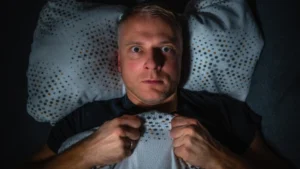
The clinical necessity for a solution like NightWare is underscored by the staggering prevalence of nightmare disorder among those with PTSD. Research indicates that between 71% and 96% of individuals diagnosed with PTSD suffer from chronic nightmares. These are not merely unpleasant dreams; they are intense, terrifying re-experiences of trauma that trigger the body’s "fight or flight" response during sleep. For many patients, the fear of these nightmares leads to sleep avoidance, chronic insomnia, and a heightened state of hypervigilance during waking hours.
Furthermore, the medical community has increasingly recognized nightmare disorder as a primary driver of suicidality. The inability to find relief in sleep creates a sense of hopelessness and exhaustion that can exacerbate the most severe symptoms of PTSD. Prior to NightWare’s FDA clearance, clinicians had limited options. Off-label use of medications like Prazosin, an alpha-1 blocker, has been a common practice, but its efficacy varies, and it requires careful monitoring of blood pressure. NightWare’s digital therapeutic offers a low-risk, high-efficacy alternative that can be used alongside existing therapies or as a standalone treatment for those who are contra-indicated for medication.
Financial Performance and Market Trajectory
Despite the challenges typically faced by growth-stage digital health companies, NightWare has demonstrated robust financial health and market traction. To date, the company has generated more than $7.5 million in cumulative revenue. This performance is supported by an average selling price of approximately $5,000 per device and a gross margin exceeding 75%, reflecting a sustainable and scalable business model. The company has already served over 2,000 patients, providing a wealth of real-world evidence to supplement its clinical trial data.
The strategic investment from Exit 156 Capital is intended to solidify this financial foundation. The $10 million pre-money valuation reflects the company’s proven ability to generate revenue while maintaining high margins—a rarity in the often-speculative digital therapeutics (DTx) market. By securing $1.4 million of the Series C round early, NightWare has demonstrated investor confidence even in a tightening venture capital environment. The remaining $2.0 million of the round presents an opportunity for investors to participate in a company that is moving toward a dominant position in a niche but high-value medical market.
The Path to Standard of Care: The VA and Beyond
A central component of NightWare’s growth strategy is its deep integration into the Department of Veterans Affairs (VA) healthcare system. The VA is the largest integrated healthcare provider in the United States, serving millions of veterans, many of whom suffer from service-connected PTSD. NightWare is currently engaged in the national VA Pathfinder Innovation Pilot, which is active at the Pittsburgh VA Medical Center. This pilot program is a crucial mechanism for demonstrating the clinical and operational viability of the device within the VA’s infrastructure.
Success in the Pathfinder pilot is expected to lead to broader adoption across the VA system. According to NightWare CEO Matt Tucker, the company is preparing to onboard additional VA sites within the next three months. This expansion is critical for establishing NightWare as the national standard of care for nightmare disorder. The partnership with Exit 156 Capital will provide the "commercial infrastructure" necessary to manage this scaling process, including the logistics of device distribution, clinician training, and patient support.
Beyond the VA, NightWare is aggressively pursuing the first responder market—including police, fire, and emergency medical services—where rates of PTSD are significantly higher than in the general population. The company is also establishing pathways for reimbursement through commercial insurance and direct-pay channels, ensuring that its technology is accessible to the broader civilian population suffering from trauma-related sleep disorders.
Leadership Perspectives and Strategic Vision
The investment by Exit 156 Capital is viewed by both parties as a strategic alignment of values and objectives. Matt Tucker, CEO of NightWare, emphasized that the choice of investment partner was deliberate. "Exit 156 doesn’t invest in categories—they invest in people and proof," Tucker stated. He noted that NightWare possesses both a seasoned leadership team and the clinical proof required to disrupt the current treatment landscape. This partnership is expected to accelerate reimbursement coverage and deepen the company’s penetration into key markets.
Josh Robinson, Managing Partner at Exit 156 Capital, echoed this sentiment, highlighting the strength of the evidence supporting NightWare’s technology. Robinson noted that the early support of Mike Nathan, an early investor and advocate for the company, played a pivotal role in setting the stage for the current partnership. "When we looked at the full picture—the clinical evidence, the reimbursement in place, the VA pilot, and a team that knows how to execute—the decision to invest at the Series C level was clear," Robinson said.
The proceeds from the Series C financing are earmarked for several key operational areas. These include the expansion of the sales and marketing teams to support the rollout in first responder and commercial markets, continued investment in the AI algorithm to further refine the "stress index" calculations, and the administrative costs associated with scaling the VA Pathfinder program.
Broader Implications for the Digital Therapeutics Industry
The success of NightWare and its ability to attract Series C funding at a strong valuation serves as a bellwether for the broader digital therapeutics (DTx) industry. In recent years, the DTx sector has faced headwinds, with some high-profile companies struggling to secure consistent reimbursement or prove long-term patient engagement. NightWare’s model suggests a path forward: focusing on a high-need, specific clinical indication (PTSD nightmares) with a clear mechanism of action and a hardware-software hybrid approach that simplifies the patient experience.
By utilizing the Apple Watch—a device many consumers already own or are familiar with—NightWare lowers the barrier to entry for patients. Furthermore, its "prescription-only" status reinforces its position as a medical-grade intervention rather than a general wellness app. This distinction is vital for securing the trust of clinicians and the coverage of payers. As healthcare continues to move toward personalized, data-driven interventions, NightWare’s AI-guided system provides a template for how wearable technology can be harnessed to treat complex psychiatric and neurological conditions.
The implications for public health are profound. If NightWare can successfully become the standard of care, it could lead to a measurable reduction in the secondary complications of PTSD, including substance abuse, cardiovascular disease, and suicide. For the thousands of veterans and first responders who have struggled with the "invisible wounds" of war and service, the promise of a peaceful night’s sleep—facilitated by the very technology they wear on their wrists—represents a significant leap forward in trauma recovery.
As NightWare moves through its Series C funding and expands its footprint in the VA and beyond, the healthcare industry will be watching closely. The company’s ability to combine clinical rigour with commercial viability may well define the next generation of psychiatric care. With the support of Exit 156 Capital, NightWare is no longer just a promising startup; it is a vital player in the ongoing effort to heal the minds of those who have sacrificed the most.