Kimi K3 Just Proved China Has Won the AI Race – Here’s Why America Never Had a Chance

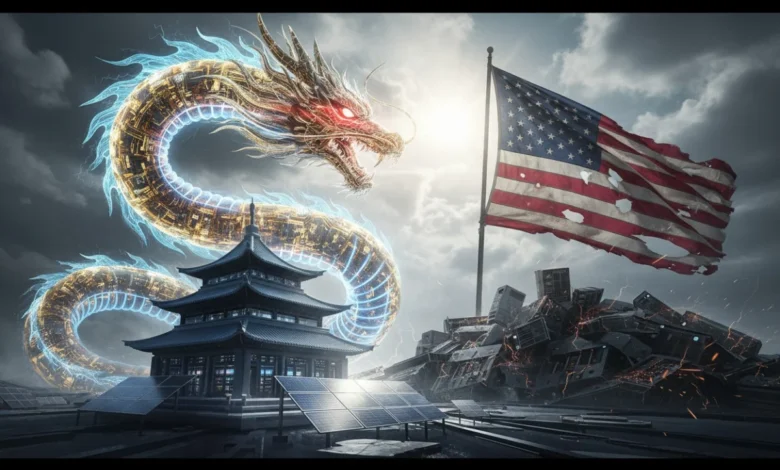
The recent unveiling and performance benchmarks of Moonshot AI’s Kimi K3 model have ignited a fervent debate about the global leadership in artificial intelligence, with significant implications for the United States and China. Independent testing and analysis suggest that Kimi K3 has not only matched but, in several key areas, surpassed the capabilities of leading US-developed frontier models. This development, coupled with differing approaches to AI development and deployment, prompts a re-evaluation of the prevailing narratives surrounding the AI race.
Kimi K3’s Disruptive Debut: A Benchmark Upset
The performance of Kimi K3, an open-source large language model (LLM) developed by China-based Moonshot AI, has reportedly been transformative, according to early adopters and analysts. Reports indicate that Kimi K3 has outperformed established US models on critical benchmarks, including those designed to test code interpretation and front-end development tasks. One notable anecdote describes Kimi K3 successfully rectifying a complex coding bug that had previously stumped Anthropic’s Claude, a leading US AI model. Beyond fixing the initial issue, Kimi K3 reportedly identified and addressed additional, previously undetected errors, demonstrating a sophisticated level of code comprehension and problem-solving.
This level of performance is being characterized not as incremental progress, but as a significant leap forward that could challenge the established business models and secrecy surrounding many US AI laboratories. The sentiment among some observers is that prior perceived advantages held by US entities were merely precursors to this more decisive moment. The availability of Kimi K3 as an uncensored and accessible open-source model further amplifies its potential impact, offering a stark contrast to the more proprietary and controlled releases from US competitors.
The Open Source Advantage: China’s Collaborative Ecosystem
A key factor attributed to China’s rapid advancements in AI is its robust culture of open collaboration and knowledge sharing. Unlike the more insular, intellectual property-focused approach often seen in the West, Chinese AI companies are frequently publishing their research and openly sharing technical innovations. This has led to a rapid diffusion of advancements, such as DeepSeek’s contributions to sparse attention mechanisms and Moonshot AI’s improvements to KV cache efficiency. This environment fosters a rapid iteration cycle, where a multitude of companies, reportedly numbering in the hundreds of AI startups in China, are collectively pushing the boundaries of the field.
This open-source ethos contrasts sharply with the strategies employed by many US AI firms, which tend to guard their technologies behind layers of proprietary protection and content moderation. The argument is that this secrecy hinders broader community contribution and slows down collective progress. By making their models openly available, Chinese developers are reportedly enabling a wider community of researchers and engineers to contribute to improvements, leading to faster development cycles and more cost-effective, powerful AI systems.
Engineering Prowess vs. Academic Shifts: A Tale of Two Systems
The underlying drivers of AI innovation in China and the US are also being analyzed through the lens of their respective educational and engineering cultures. China’s emphasis on rigorous STEM education, reportedly producing a significantly higher number of science, technology, engineering, and mathematics graduates annually compared to the United States, is cited as a foundational advantage. This meritocratic system, focused on academic achievement, is seen by some as cultivating a generation of engineers with strong foundational skills.
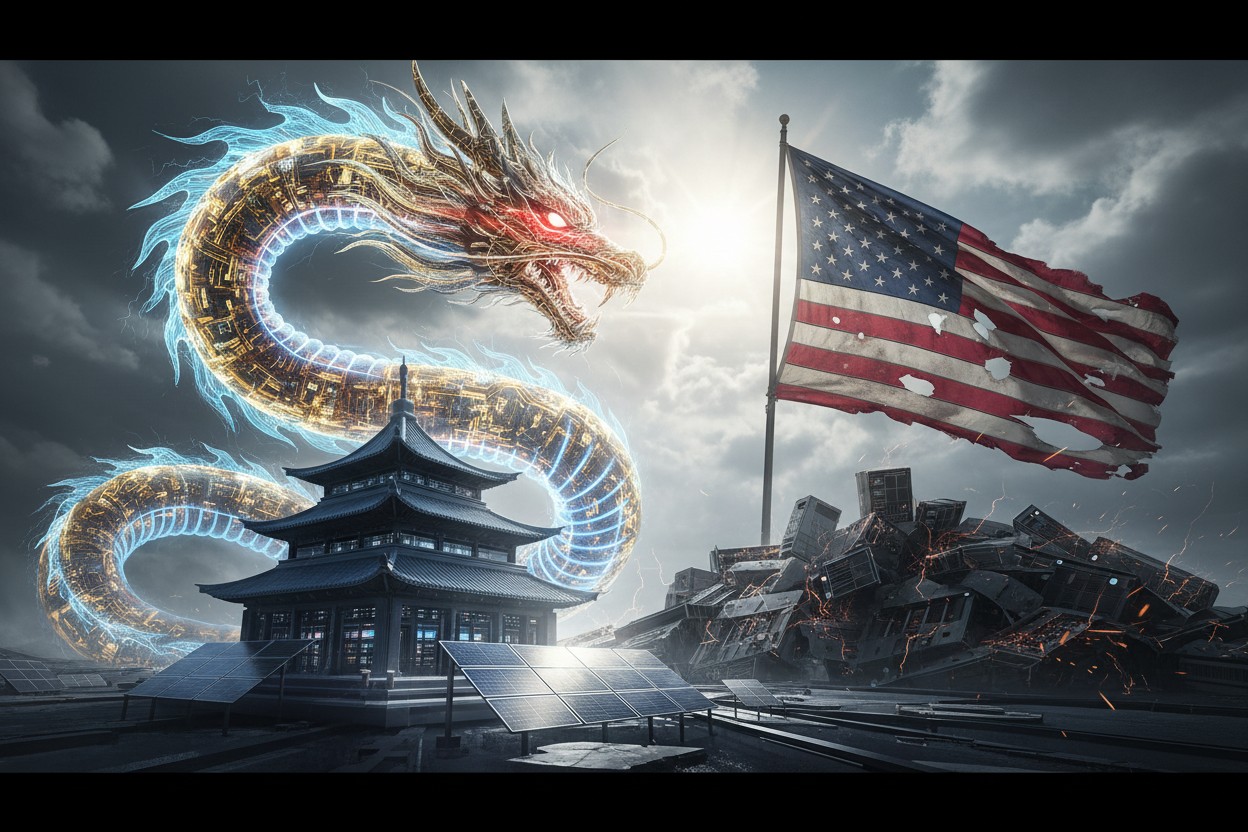
Conversely, some analyses suggest that a shift in focus within American higher education, with an increased emphasis on certain social and cultural frameworks, may be inadvertently impacting the development of core technical competencies. This perspective posits that a gap in foundational engineering and scientific skills among some US graduates necessitates reliance on international talent, particularly from China, for advanced AI development. The argument is that China’s engineering talent is focused on practical problem-solving and technological advancement, unhindered by what some perceive as ideological constraints.
Energy Infrastructure: A Critical but Often Overlooked Differentiator
The operational demands of large-scale AI development and deployment are heavily reliant on abundant and affordable energy. China’s significant investments in diversified energy infrastructure, including nuclear, coal, solar, and hydroelectric power, have reportedly resulted in comparatively low industrial electricity costs, estimated around 8 cents per kilowatt-hour. This provides a substantial economic advantage for energy-intensive AI operations, such as large data centers.
In contrast, the US energy grid faces limitations, with concerns about spare capacity and regulatory hurdles that complicate the development of new power generation facilities. These challenges, exacerbated by what some describe as climate-focused regulations, can lead to higher operational costs for AI infrastructure in the United States. The ability of China to rapidly scale data center capacity, often within months, is attributed to this underlying energy advantage, enabling more cost-effective AI inference and model training.
The Potential for a US AI Market Correction
The sustainability of the current US AI market is also under scrutiny. The argument is that a significant portion of the revenue for US AI labs is derived from government contracts and speculative investment. As more capable and cost-effective alternatives emerge, particularly from China, the reliance on these revenue streams could become precarious. This has led to predictions of a potential market correction, drawing parallels to the dot-com bubble of the late 1990s.
Signs of this potential correction are being observed in the technology sector, with reports of significant layoffs at major tech firms. The astronomical market capitalization of certain AI-focused companies, driven by high price-to-earnings ratios, is also being viewed with caution by some financial analysts. Should a broader market downturn occur, the availability of specialized hardware, such as GPUs, could increase significantly, potentially leading to a rapid devaluation of assets within the AI sector.
Broader Implications and Future Trajectories
The narrative surrounding Kimi K3 and China’s broader AI advancements suggests a fundamental shift in the global AI landscape. The emphasis on open-source development, a large and skilled STEM talent pool, and a robust energy infrastructure provides China with a unique set of advantages. These factors, combined with a different approach to innovation and deployment, are positioning China as a formidable competitor, if not a leader, in the AI race.
For the United States, this situation presents a critical juncture. Addressing challenges in STEM education, fostering a more collaborative research environment, and ensuring a stable and affordable energy supply are seen as crucial steps to maintain competitiveness. The geopolitical and economic implications of this evolving AI dynamic are profound, influencing international relations, technological innovation, and the global balance of power. The ongoing developments will undoubtedly continue to shape the future trajectory of artificial intelligence worldwide.