The debate surrounding vegetable and seed oils has reached a fever pitch, moving from niche health forums and social media platforms like TikTok to mainstream bestseller lists. What began as a simmering discussion about dietary fats has exploded into a polarizing topic, with fervent advocates on both sides. On one hand, critics label these common cooking oils as "toxic sludge," "motor oil," or "the hateful eight," attributing them to a vast array of chronic diseases. Conversely, a significant portion of the scientific and nutritional community maintains that many vegetable oils are harmless, potentially health-promoting, and often superior to traditional animal fats like butter. Unraveling this complex nutritional narrative requires a deep dive into history, processing, and the evolving landscape of dietary science.
The controversy is not entirely new. Discussions about the merits of vegetable oils have existed since their widespread introduction to the market in the early 20th century. However, the recent resurgence of interest, particularly amplified by the rise of diets such as the carnivore diet, has pushed these discussions into the public consciousness with unprecedented intensity. Claims circulating online suggest a sinister origin for vegetable oils: they were supposedly "invented" during the last century by profit-driven companies seeking to capitalize on cheap-to-grow crops, masquerading them as healthier alternatives to traditional animal fats. This narrative often draws parallels to the margarine scandal of decades past, where highly processed fats were promoted over butter, only for their trans-fat content to later be revealed as detrimental to health. Critics now argue that modern vegetable oils are equally, if not more, damaging, linking them to conditions ranging from obesity and anxiety to depression and ulcerative colitis.
However, this perspective stands in stark contrast to the consensus from many established health organizations and nutrition experts. These bodies often recommend the consumption of unsaturated fats found in many vegetable oils as part of a balanced diet, citing potential benefits for cardiovascular health. This divergence of opinion leaves consumers in a state of confusion, caught between alarmist claims and reassurances. As is often the case in nutrition, the truth is far more nuanced than can be captured in a soundbite or a viral meme. The objective here is to delineate scientific evidence from anecdotal claims and pseudoscience, providing a clear, informed basis for dietary choices regarding cooking oils.
Understanding Vegetable and Seed Oils: From Plant to Plate
Often interchangeably referred to as "seed oils," these fats are, as the name suggests, derived from the seeds of various plants. The most common varieties found in typical grocery aisles, and often the subject of the most intense scrutiny, include soybean oil, corn oil, cottonseed oil, sunflower oil, safflower oil, grapeseed oil, and rice bran oil. It is crucial to distinguish these from other plant-based oils that are derived from the fruit of a plant, such as olive oil, avocado oil, and coconut oil, which possess different fatty acid profiles and processing methods.
The significant distinction often lies in their extraction and refinement. Naturally fatty foods like olives and avocados yield their oils relatively easily. For instance, extra virgin olive oil (EVOO) can be produced through simple mechanical pressing, a process that can even be replicated at home on a small scale. This minimal processing helps retain many of the olive fruit’s beneficial compounds.
In stark contrast, most vegetable and seed oils originate from plants with a comparatively low fat content. A cup of green olives contains approximately 20 grams of fat, whereas a cup of corn yields only about 2 grams. To extract a usable quantity of oil from such low-fat sources, manufacturers employ an extensive, multi-step industrial process designed for efficiency and yield. These steps typically include:
- Crushing and Pre-pressing: Seeds are crushed to break down cell walls and often pre-pressed, sometimes with heat, to extract an initial amount of oil.
- Solvent Extraction: The remaining seed meal is then treated with chemical solvents, most commonly hexane, to extract as much residual oil as possible. This step is critical for maximizing yield from low-fat seeds.
- Degumming: Raw oil contains impurities like phospholipids and gums, which can cause cloudiness and reduce shelf life. These are removed through hydration and centrifugation.
- Refining (Neutralization): Free fatty acids, which can contribute to off-flavors and odors, are removed by treating the oil with an alkaline solution.
- Bleaching: The oil is passed through absorbent clays to remove pigments and other impurities, resulting in a clearer, lighter-colored product.
- Deodorizing: This final step involves steam distillation under high vacuum to remove volatile compounds that contribute strong flavors and odors, yielding a neutral-tasting and largely odorless oil.
This intensive processing, while ensuring a high yield and a neutral product for widespread use, comes at a cost. Crucial health-promoting compounds such as polyphenols, tocopherols (Vitamin E), and other stabilizing antioxidants naturally present in the seeds are largely stripped away. More significantly, during these high-heat and chemical processes, small amounts of the unsaturated fats can undergo undesirable chemical changes, leading to the formation of trans fatty acids. While manufacturers have largely phased out added trans fats due to the 2018 FDA ban, some industrially processed vegetable oils can still contain trace amounts. This phenomenon also occurs in deep-frying, where vegetable oils are repeatedly heated to high temperatures, increasing their trans fat content over time. While labeling these processed oils as "toxic" might be an overstatement, the scientific consensus is clear: trans fats, even in small amounts, are detrimental to cardiovascular health, increasing LDL ("bad") cholesterol and decreasing HDL ("good") cholesterol, and should be minimized in the diet.
Navigating Dietary Fat Recommendations: A Nuanced Approach
Given the complexity of fat chemistry and processing, how should consumers approach cooking oils? Leading nutrition organizations, including Precision Nutrition (PN), offer practical guidance often categorized by recommended intake levels. These guidelines generally reflect a balance between scientific evidence, practical application, and accessibility.
PN’s framework typically divides fats into three categories:
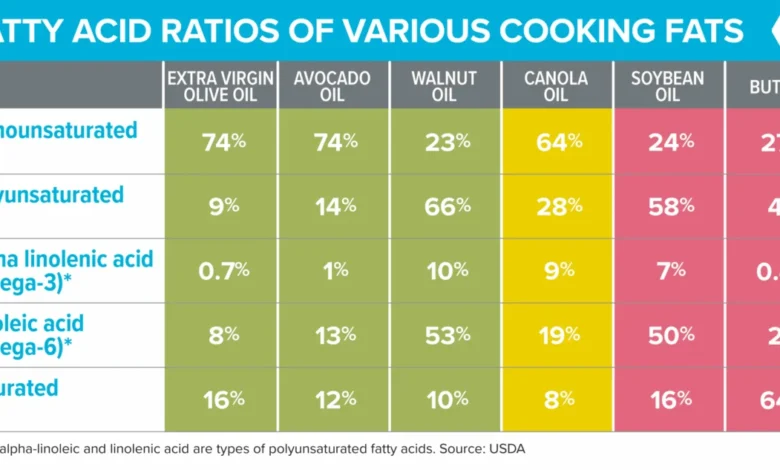
- "Eat More": This category includes oils with a robust body of research supporting their health benefits and those that are minimally processed, such as extra virgin olive oil, avocado oil, and walnut oil. These are rich in monounsaturated (MUFAs) and polyunsaturated fatty acids (PUFAs), as well as beneficial phytochemicals.
- "Eat Some": This section includes certain vegetable oils like expeller-pressed canola oil, high-oleic sunflower oil, and high-oleic safflower oil, along with flaxseed oil and coconut oil. "Eat Some" signifies that these foods, when consumed in reasonable amounts, are generally considered health-neutral or may offer minor benefits. For instance, dark chocolate in small quantities might fall into this category.
- "Eat Less": This category encompasses most other refined vegetable oils (e.g., standard corn, soybean, cottonseed oils), as well as butter and other saturated fats. The recommendation to "eat less" is based on concerns about excessive saturated fat intake, the potential for oxidation in highly refined polyunsaturated oils, and the overall processing level.
This categorization, while grounded in scientific principles, is not without its detractors. Some argue that cold-pressed canola oil should be elevated to the "eat more" category alongside olive oil, citing its beneficial fatty acid profile. Others contend that all vegetable oils should be in the "eat less" column, while butter, an animal fat, should be consumed more freely. These differing viewpoints highlight the dynamic and often contentious nature of nutritional science, where new research constantly refines our understanding.
Head-to-Head: Examining Key Oil Matchups
To understand the rationale behind these recommendations, a closer look at specific oil comparisons is necessary.
Extra Virgin Olive Oil (EVOO) vs. Expeller-Pressed Canola Oil
These two oils represent some of the least refined options within their respective categories, offering a valuable comparison.

The Case for Extra Virgin Olive Oil (EVOO):
EVOO is produced by grinding and mechanically pressing olives without the use of heat or chemical solvents. This minimal processing preserves its distinct flavor, vibrant color, and, crucially, a high concentration of beneficial compounds. It is exceptionally rich in monounsaturated fatty acids (MUFAs), particularly oleic acid, which are known for their heart-healthy properties. Beyond its fatty acid composition, EVOO retains a significant amount of the olive fruit’s original polyphenols. These powerful plant-based antioxidants play a critical role in combating oxidative stress and inflammation, protecting cells from damage, and supporting overall health.
Perhaps the most compelling argument for EVOO is the sheer volume of robust scientific research supporting its health benefits. Numerous studies, particularly those investigating the Mediterranean diet, consistently link EVOO consumption to improved health outcomes. For example, a large study involving over 22,000 adults in Southern Italy found that individuals consuming the most olive oil (more than two tablespoons daily) had a 20% lower risk of mortality over a 13-year period compared to those consuming the least. Other extensive research has associated regular olive oil intake with a reduced risk of:
- Heart disease
- Stroke
- Certain cancers
- Type 2 diabetes
- Alzheimer’s disease
Furthermore, consumption of olive oil is consistently linked to favorable lipid profiles, including reductions in LDL cholesterol, especially when it replaces saturated fats like butter or coconut oil.
A common misconception regarding EVOO has been its suitability for cooking due to its relatively low smoke point (ranging from 350°F to 410°F). Historically, culinary experts advised against using it for high-heat cooking, fearing it would degrade, lose flavor, and sacrifice its health benefits. However, more recent research has challenged this notion. The high concentration of MUFAs and the protective effect of polyphenols in EVOO make it remarkably stable even when heated. A study that subjected various cooking oils to temperatures of 464°F (240°C) and then maintained them at 356°F (180°C) for several hours found that EVOO exhibited greater stability than any other oil tested, including canola oil. This evidence suggests that EVOO can be safely and beneficially used for a wide range of cooking applications, from sautéing to roasting.
The Case for Expeller-Pressed Canola Oil:
Canola oil, a more affordable alternative, is derived from a hybrid of the rapeseed plant, specifically developed in Canada (hence "canola," a portmanteau of "Canada" and "ola," meaning oil). Expeller-pressed canola oil is produced through mechanical pressing, similar to EVOO, avoiding the use of chemical solvents or high heat, which helps preserve some beneficial compounds. Among vegetable oils, canola oil is notable for its high content of heart-healthy monounsaturated fats, second only to some non-vegetable oils like olive and avocado. It is also a significant source of alpha-linolenic acid (ALA), a plant-based omega-3 fatty acid crucial for health. Additionally, canola oil contains phytosterols, plant compounds known to help lower blood cholesterol, particularly when used as a substitute for butter or other saturated fats.
The Winner: Extra Virgin Olive Oil
Based on the current body of scientific evidence, extra virgin olive oil emerges as the clear winner. The extensive research supporting EVOO’s health-promoting qualities, coupled with its superior fatty acid profile and high antioxidant content, positions it as a top choice. Avocado oil shares a similar favorable fatty acid profile and is also highly recommended in the "eat more" category.
However, affordability and culinary versatility are also important considerations. Expeller-pressed canola oil is significantly more budget-friendly than EVOO, making it an accessible option for many. Its neutral flavor also makes it a preferred choice for baking, where EVOO’s distinctive taste might be undesirable. When used in moderation within a balanced diet, expeller-pressed canola oil can be a health-neutral, if not slightly beneficial, choice.
Expeller-Pressed Canola Oil vs. Refined Canola Oil
This comparison highlights the profound impact of processing methods on the nutritional quality of an oil.
Expeller-Pressed Canola Oil:
As discussed, this method mechanically squeezes oil from seeds, avoiding harsh chemicals or excessive heat. This gentler approach helps retain more of the oil’s naturally occurring beneficial compounds, such as alpha-linolenic acid (ALA) and phytosterols, contributing to its "eat some" recommendation.
Refined Canola Oil:
The standard refining process, involving chemical solvents and high heat, strips away some of the protective alpha-linolenic acid. Crucially, it can also lead to the formation of small amounts of unhealthy trans fatty acids. This results in a product with a proportionally lower omega-3 content and a higher omega-6 content, albeit still a more favorable profile than many other highly refined vegetable oils.
The Winner: Expeller-Pressed Canola Oil
Expeller-pressed canola oil is superior to its refined counterpart, albeit by a relatively small margin in the context of overall diet. While refined canola oil still possesses a better fatty acid profile than many other refined vegetable oils (e.g., soybean oil, which contains less heart-healthy MUFAs and a much higher proportion of omega-6 fats), the preservation of beneficial compounds and the minimization of trans fat formation in expeller-pressed varieties make it the preferred choice.
The Omega-6 Fatty Acid Debate
A significant point of contention in the vegetable oil discourse revolves around omega-6 fatty acids. The typical Western diet features a heavily skewed ratio of omega-6 to omega-3 fats, often ranging from 16:1 to 20:1, far from the theoretically ideal 1:1 to 4:1 ratio. Some experts argue that this imbalance contributes to chronic low-grade inflammation in the body, potentially increasing the risk for conditions like diabetes, obesity, and cardiovascular disease. This theory posits that while both omega-3 and omega-6 are essential, an excessive intake of omega-6, particularly arachidonic acid derived from linoleic acid, can promote pro-inflammatory pathways.
However, the scientific community’s understanding of omega-6s has evolved. Many nutritional scientists now debate whether this imbalance invariably leads to chronic inflammation, especially when omega-6 fats are consumed within the context of whole foods rich in other beneficial compounds. For instance, nuts and seeds, which are naturally abundant in omega-6 fats, have consistently been linked to a wide range of health benefits, including reduced blood cholesterol and decreased inflammation markers. Major health organizations, such as Harvard Health, have published articles titled "No need to avoid healthy omega-6 fats," citing studies that suggest omega-6 consumption, if anything, may reduce the risk for stroke, heart disease, and premature death. A 2019 study published in the American Heart Association journal Circulation supported this view.
The critical distinction often lies in the food matrix. While refined canola oil and nuts may share a somewhat similar fatty acid profile, nuts and seeds deliver a complex package of health-protective fiber, polyphenols, protein, vitamins, and minerals. Minimally processed whole foods and extra virgin oils provide a synergistic array of nutrients that buffer against potential negative effects. Highly processed oils, on the other hand, are largely stripped of these protective compounds, leaving primarily fatty acids that are more susceptible to oxidation.
Refined Vegetable Oil vs. Butter: A Battle of Fats

This matchup ignites some of the most heated debates in the nutrition world, pitting a traditional animal fat against modern industrial oils.
The Case for Butter (and Saturated Fats):
Proponents of butter argue that saturated fats have been unfairly demonized, pointing to past dietary recommendations that led people to replace butter with trans-fat-laden margarine, a public health misstep. Some also claim that the evidence for reducing saturated fats is weaker than often portrayed.
However, the prevailing scientific consensus, supported by numerous studies and major dietary guidelines, indicates that excessive saturated fat consumption (typically defined as more than 10% of total daily calories) can elevate LDL cholesterol levels and increase the risk of heart disease. Research has shown that replacing just 5% of dietary saturated fat with monounsaturated fats can reduce heart disease risk by 15%. Similarly, replacing 5% of saturated fats with polyunsaturated fats (including those from vegetable oils) has been associated with a 10% reduction in heart attack risk.
Not all saturated fats are created equal in their impact on blood cholesterol. In some dairy products, a unique structure called the milk fat globule membrane (MFGM) surrounds the saturated fats, appearing to limit their cholesterol-raising properties. Unfortunately, butter is relatively low in this protective membrane, and consequently, it tends to raise blood cholesterol more than other high-fat dairy products like full-fat milk, cream, yogurt, or cheese. The U.S. Dietary Guidelines recommend limiting saturated fat intake to less than 10% of total calories. A single tablespoon of butter contains approximately 7 grams of saturated fat, which accounts for about one-third of the daily recommended limit in a 2000-calorie diet. While butter doesn’t need to be entirely eliminated, moderation is key.
The Case for Refined Vegetable Oils (and Polyunsaturated Fats):
Polyunsaturated fats (PUFAs) are chemically less stable than saturated or monounsaturated fats, making them inherently more prone to oxidation. During the intensive refining process, many of the natural protective phytochemicals and antioxidants are removed, further increasing their susceptibility to oxidative damage. The theory is that consuming these oxidized oils can increase inflammation and contribute to various health conditions. Some studies suggest that diets rich in PUFAs, particularly from highly refined vegetable oils, are associated with increased levels of oxidized blood lipids, lipid peroxidation markers, and other indicators of systemic inflammation.
However, it’s crucial to consider the context of consumption. If refined corn or safflower oil is used sparingly to lightly coat vegetables for roasting, the impact is likely minimal. The vast majority of refined vegetable oil consumption for the average person doesn’t come from home cooking; it comes from ultra-processed foods (UPFs). These foods often undergo multiple rounds of processing and repeated heat exposure during their manufacturing, which can further oxidize the oils they contain. Beyond the oils themselves, UPFs are typically laden with other potentially harmful ingredients like added sodium and sugars, while being deficient in beneficial nutrients such such as fiber, vitamins, minerals, and phytonutrients. They are also engineered to be incredibly palatable, calorie-dense, and difficult to stop eating, contributing significantly to the global obesity epidemic.
Ultra-processed foods commonly list one or more vegetable oils among their ingredients. They are found in a surprising array of products, including cookies, chips, crackers, many sauces, frozen dinners, meal replacement shakes, boxed macaroni and cheese, salad dressings, and more. A comprehensive review involving nearly 10 million people linked the consumption of ultra-processed foods to a higher risk of premature death. Additionally, high intake of UPFs has been associated with:
- Increased risk of obesity and weight gain
- Cardiovascular diseases
- Type 2 diabetes
- Certain types of cancer
- Depression and anxiety
- Irritable bowel syndrome (IBS)
While it’s unrealistic for most people to entirely eliminate ultra-processed foods, capping their consumption to around 20% of total intake, with the remaining 80% coming from minimally processed whole foods, can significantly improve health. This shift naturally reduces refined vegetable oil intake to a safer level. Furthermore, consuming refined vegetable oils in the context of a diet rich in colorful plants, fiber, phytochemicals, and antioxidants may help mitigate concerns about oxidation (e.g., using a reasonable amount of commercial salad dressing on a large, nutrient-dense salad).
The Winner: A Draw
This matchup concludes in a draw, with both refined vegetable oils and butter requiring moderation in the diet. Neither can be considered singularly "health-promoting" when consumed in excess or in isolation. Refined vegetable oils are typically rich in polyunsaturated fatty acids, stripped of protective compounds, and may contain trace amounts of trans fats, with ongoing debate about their inflammatory potential due to the omega-6 content. Butter, while less processed and theoretically producible at home, is high in saturated fat, which can be problematic in higher amounts, especially given its low content of the protective milk fat globule membrane. The emphasis for both should be on mindful consumption within a broader dietary pattern.
Final Recommendations for Healthy Fat Choices
Drawing from the scientific evidence, a clear path emerges for making informed choices about dietary fats.
Prioritize Minimally Processed, Whole Food Fats:
If budget allows and personal preference dictates, extra virgin olive oil, cold-pressed avocado oil, and walnut oil are excellent choices. EVOO and avocado oil are rich in heart-healthy MUFAs and antioxidants, suitable for cooking and dressings. Walnut oil, primarily composed of polyunsaturated fats, is best reserved for dressings due to its lower heat stability.
For budget-conscious individuals, expeller-pressed canola oil, along with high-oleic sunflower and safflower oils, represents a solid runner-up. These high-oleic varieties are richer in MUFAs than their conventional counterparts and have been associated with cardiovascular benefits when used to replace saturated fats.
Regardless of the specific oils chosen, the overarching principle remains: prioritize getting most of your fats from whole, minimally processed foods. These include:
- Avocados: Rich in MUFAs, fiber, and vitamins.
- Olives: Packed with MUFAs and polyphenols.
- Nuts and Seeds: Excellent sources of healthy fats (MUFAs and PUFAs), fiber, protein, vitamins, and minerals. Examples include almonds, walnuts, chia seeds, and flaxseeds.
- Fatty Fish (e.g., Salmon): Abundant in omega-3 fatty acids, which are crucial for brain and heart health.
These whole food sources offer a complex matrix of nutrients that work synergistically to promote health, far beyond what isolated oils can provide. When evaluating a packaged food, consider these questions to gauge its processing level:
- Can you easily identify all the ingredients?
- Could you make this food in your kitchen with common ingredients?
- Does it contain additives you wouldn’t typically use at home (e.g., artificial flavors, colors, industrial emulsifiers)?
Answering "no" to most of these suggests a highly processed food, which should be consumed sparingly.
Limit Deep-Fried Foods:
Irrespective of the type of oil used, deep-fried foods should be categorized as "eat less." The high temperatures and repeated heating cycles involved in deep-frying can degrade even stable oils, potentially forming harmful compounds, including trans fats and advanced glycation end products (AGEs).
Moderate Oil Consumption, Emphasize Whole Foods:
While healthy oils like EVOO are associated with positive health outcomes, this doesn’t imply that one should consume them in excessive quantities. Oils are calorie-dense, and while they play an important role in cooking and flavor, most of your daily fat intake should ideally come from whole foods. A reasonable daily intake of oils or butter might be one to three servings, depending on individual caloric needs and dietary goals. Whole food fats offer fiber, phytonutrients, vitamins, and minerals that oils typically lack, making them a more nutrient-dense