Innovations in Sleep Medicine Honored with 2026 Red Dot Awards for Product Design and Usability

The 2026 Red Dot Award for Product Design has officially recognized a new generation of medical technologies aimed at transforming the landscape of sleep medicine. This prestigious international competition, which evaluates the intersection of aesthetic excellence, functional innovation, and user experience, highlighted several key advancements in home polysomnography (PSG), continuous positive airway pressure (CPAP) therapy, and electroencephalogram (EEG) monitoring. As the global healthcare sector continues to shift toward decentralized, patient-centric care, these award-winning products represent a significant leap in moving complex diagnostic and therapeutic processes from clinical environments directly into the patient’s home.
The Red Dot Design Award, established in 1955 and headquartered in Essen, Germany, remains one of the world’s most sought-after marks of quality for good design. For the 2026 cycle, a jury of approximately 40 independent experts scrutinized thousands of submissions from over 60 countries. The evaluation process is governed by four core principles: the quality of function, the quality of seduction (aesthetic appeal), the quality of use, and the quality of responsibility. In the specialized field of sleep medicine, these criteria are particularly stringent, as the devices must not only perform with clinical precision but also remain comfortable enough for patients to use while unconscious.
The Evolution of Decentralized Diagnostics: Onera Health
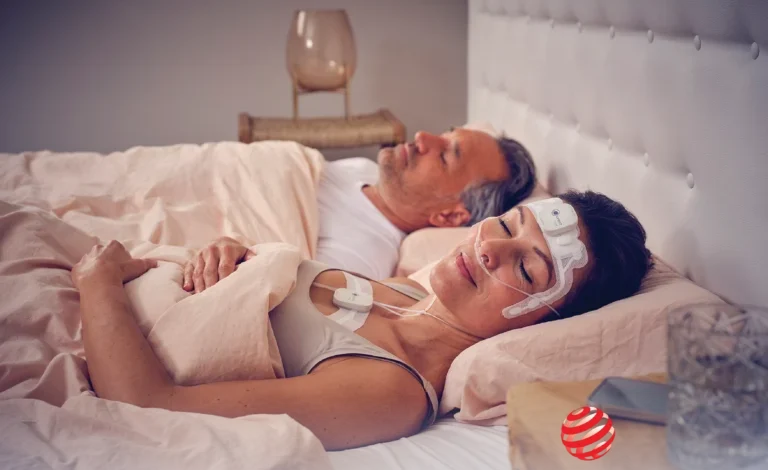
Among the most notable recipients of the 2026 Red Dot Award is Onera Health, a leader in the field of wireless sleep diagnostics. The company was recognized for its Onera hPSG sensors, a patch-based system designed to provide the "gold standard" of sleep testing—polysomnography—without the need for the cumbersome wiring and tethered equipment traditionally found in hospital sleep labs.
The Onera hPSG solution utilizes integrated electronics within a series of wearable patches. These sensors capture a full suite of PSG data, including brain activity, heart rate, respiratory effort, and blood oxygen levels. By eliminating the complex apparatus that often interferes with a patient’s natural sleep patterns, the system offers a more accurate reflection of a typical night’s sleep while facilitating "decentralized" applications. This allows clinicians to monitor patients remotely, significantly reducing the overhead costs and wait times associated with in-lab sleep studies.
Ruben de Francisco, founder and CEO of Onera Health, noted that this third Red Dot win underscores a long-term commitment to bridging the gap between clinical efficacy and home-based comfort. According to de Francisco, the recognition serves as a testament to the team’s ability to push the boundaries of design while maintaining the rigorous standards required for medical-grade data. The Onera hPSG system is increasingly viewed as a critical tool in addressing the massive backlog of undiagnosed sleep apnea cases worldwide, which affects an estimated one billion people globally.
Resmed and the Humanization of CPAP Therapy
Resmed, a global titan in the sleep and respiratory care market, secured an award in the "Innovative Design" category for its AirTouch F30i CPAP full-face mask. The AirTouch F30i represents a departure from traditional medical-grade plastics and silicone, utilizing a fabric-wrapped frame to enhance the tactile experience for the user.
The Red Dot jury praised the mask for its "thoughtful selection of materials," noting that the integration of soft fabrics helps mitigate the "medicalized" feel of the device. This is a critical factor in patient compliance; clinical data suggests that nearly 50% of patients prescribed CPAP therapy struggle with long-term adherence, often citing discomfort and the intrusive nature of the equipment as primary reasons for discontinuation.
Justin Leong, Resmed’s chief product officer, emphasized that the design process for the AirTouch F30i was rooted in real-world patient needs. By focusing on a "softer feel," the company aims to transform the CPAP mask from a necessary medical burden into a device that users feel comfortable wearing night after night. This shift toward "lifestyle-integrated" medical design is a growing trend in the industry, where the goal is to reduce the stigma and physical discomfort associated with chronic condition management.
Neurostimulation and AI: The Somnee Smart Sleep Headband
In the realm of wearable sleep enhancement, the Somnee Smart Sleep Headband was honored for its ability to translate complex neuroscientific principles into a consumer-friendly format. The device integrates clinical-grade EEG technology into a lightweight, comfortable headband intended for overnight wear.

The Somnee system uses hydrogel electrodes to record real-time brain activity, which is then analyzed by an onboard artificial intelligence engine. Based on this data, the headband provides personalized neurostimulation—gentle electrical pulses designed to nudge the brain into the optimal frequencies for sleep. The Red Dot jury specifically highlighted the device’s success in maintaining all-night comfort while housing sophisticated electronic components.
The implications of the Somnee headband extend beyond simple tracking. By providing active intervention through neurostimulation, it represents a new category of "smart" sleep aids that do more than just report data; they actively attempt to improve the user’s sleep architecture. This reflects a broader trend in the 2026 awards toward "active" wearables that utilize AI to personalize treatment in real-time.
Global Innovation and Emerging Players
The 2026 awards also showcased the global nature of innovation in sleep technology. Hefei Synaire Medical Technology Co received recognition for its SynAura CPAP, a device noted for its sleek interface and quiet operation. Similarly, Resvent Medical Technology Co Ltd was honored for its RXiBreeze+ APAP and PAP systems.
These awards highlight the increasing competitiveness of the international market, particularly from manufacturers in Asia who are focusing on high-end design to compete with established Western brands. The RXiBreeze+ series, for instance, emphasizes a compact footprint and intuitive user navigation, catering to a modern demographic that values both portability and ease of use.
Market Context and Public Health Implications
The recognition of these technologies comes at a pivotal moment for global public health. Sleep disorders, particularly Obstructive Sleep Apnea (OSA) and chronic insomnia, are linked to a host of comorbid conditions, including cardiovascular disease, Type 2 diabetes, and cognitive decline. Despite the prevalence of these conditions, the majority of sufferers remain undiagnosed due to the historical limitations of sleep laboratory capacity.
Supporting data from the American Academy of Sleep Medicine (AASM) and other international bodies suggest that the shift toward home-based testing and "user-friendly" therapy is essential for closing the diagnostic gap. The global home sleep testing market is projected to grow at a compound annual growth rate (CAGR) of over 10% through 2030, driven largely by the types of innovations recognized by the Red Dot jury.
Furthermore, the integration of AI and machine learning into these devices—as seen in the Somnee headband and the data processing units of the Onera system—allows for "longitudinal" monitoring. Unlike a single-night lab study, which provides only a snapshot of a patient’s health, these home-based tools allow for the collection of data over several weeks or months, providing a much more comprehensive view of sleep health and treatment efficacy.
Conclusion: The Future of Sleep Health Design
The 2026 Red Dot Awards for sleep medicine technology signal a transition in how the medical community and the public perceive healthcare devices. The move away from "sterile" and "clinical" designs toward "empathetic" and "lifestyle-oriented" products is no longer just an aesthetic choice; it is a clinical necessity aimed at improving patient outcomes through increased compliance and better data.
By honoring products that excel in the "four principles of good design," the Red Dot jury has validated the idea that medical efficacy and user comfort are not mutually exclusive. As Onera Health, Resmed, and Somnee continue to refine their respective technologies, the focus remains on making the "gold standard" of care accessible to anyone, anywhere, without the constraints of the traditional clinical environment. The success of these designs likely sets a new benchmark for the industry, where the next generation of medical devices will be expected to be as intuitive and comfortable as they are scientifically advanced.