Barron Trump Joins SOLLOS Yerba Mate Inc. as Director in New Beverage Venture

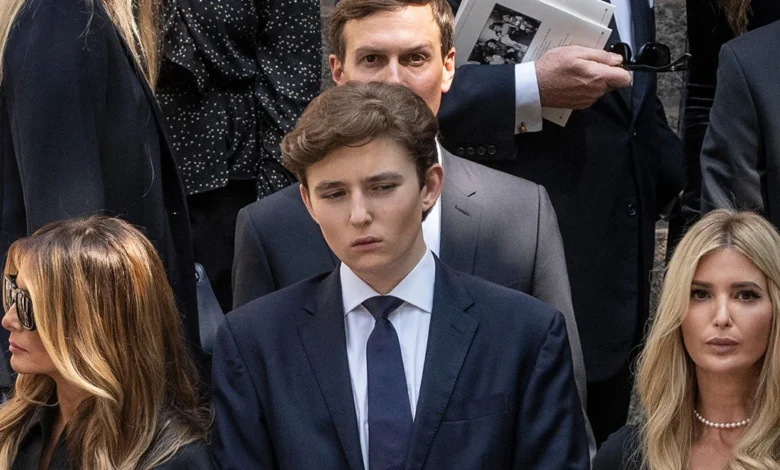
Barron Trump, at 20 years old, has been formally appointed as one of five directors for SOLLOS Yerba Mate Inc., a burgeoning beverage startup based in South Florida poised for its inaugural product launch. Corporate filings submitted in January 2026 in both Florida and Delaware officially list the youngest Trump as a key figure in this new venture. A subsequent filing with the U.S. Securities and Exchange Commission, under the company name Soulstice, Inc., details the sale of $1 million in equity through a private offering. The company is preparing to introduce its first ready-to-drink beverage, featuring pineapple and coconut flavors, packaged in 12-packs, with a scheduled market debut in May 2026.
SOLLOS Yerba Mate is centered around the revitalizing properties of yerba mate, a traditional South American herbal tea derived from the dried leaves of the Ilex paraguariensis plant. This indigenous tree, native to South America, yields a beverage steeped in centuries of cultural tradition across Argentina, Uruguay, Paraguay, and Brazil. Known for its natural caffeine content, yerba mate has experienced a surge in global popularity, finding a growing niche in the United States as consumers increasingly seek alternatives to conventional energy drinks. The preparation typically involves drying the leaves, often over a fire, and then steeping them in hot water to create a robust and invigorating infusion.
The brand’s ethos is further illuminated by descriptions on LinkedIn, where Spencer Bernstein, a Villanova University student and former Oxbridge Academy peer of Barron Trump, characterizes SOLLOS as "a lifestyle beverage brand built around clean [and] functional ingredients." The name "SOLLOS" itself is a thoughtful construct, drawing from the Spanish word for sun, "SOL." The "SOL" component represents the dawn and the commencement of a day, while "LOS," an inversion of "SOL," symbolizes the sunset and the day’s conclusion. Together, SOLLOS encapsulates the full diurnal cycle, embodying the philosophy that "It Begins Where It Ends."
Corporate Foundations and Seed Funding
Sollos Yerba Mate Inc. was initially incorporated in Delaware on December 3, 2025. Subsequently, on January 12, 2026, it was registered in Florida as a foreign profit corporation, a standard procedure for businesses established in one state seeking to operate in another. This dual-state registration strategy is common among startups, allowing them to leverage Delaware’s well-established and investor-friendly corporate laws while maintaining a tangible operational presence in their chosen home state.
According to a Form D filed with the SEC on January 23, 2026, the company successfully raised $1 million in its private offering, with the entirety of the funds already secured. The first sale occurred on January 8, involving a single investor. Notably, the filing specifies that the proceeds were not designated for payments to executives, directors, or promoters listed in the document. This rapid and complete closure of the seed round suggests a significant level of investor confidence, indicating that SOLLOS is more than a casual undertaking, despite the public record not identifying the sole investor.
Barron Trump is listed among the five directors, which include Spencer Bernstein, Rodolfo Castello, Stephen Hall, and Valentino Gomez. Spencer Bernstein holds the position of Chief Operating Officer. Both Hall and Bernstein share a history with Barron Trump, having attended Oxbridge Academy in Palm Beach together, underscoring a frequent pattern in early-stage ventures where personal networks play a crucial role in leadership formation. Rodolfo Castello is identified on LinkedIn as a business analyst at McKinsey & Company, bringing valuable analytical expertise to the team.
Product Development and Market Entry
The company’s initial business registration documents, filed in January, indicated a launch target of April 2026. However, this date has since been revised to May 2026. A notable detail concerning the company’s registered address is its location at a $16 million, five-bedroom residence in Palm Beach, a property owned by businessman Jay Weitzman, a long-time friend of the Trump family. Weitzman confirmed to Newsweek that he has no investment in SOLLOS but explained that his grandson, Spencer Bernstein, resides with him, and the company uses his address. This arrangement has been presented as straightforward, with no suggestion of impropriety.
SOLLOS Yerba Mate positions itself as a premium lifestyle brand targeting health-conscious consumers, with a particular focus on the South Florida market. In communications with Newsweek via LinkedIn, the SOLLOS team elaborated on their product strategy: "In the foreseeable future, Sollos will only have one recipe. We didn’t set out to make a flavor lineup; we set out to make the perfect drink. Most brands launch with five flavors, hoping you’ll like one of them. We spent all of our time, energy, and resources obsessing over a single recipe until it was flawless." This deliberate focus on a singular, perfected recipe is a distinctive branding choice, mirroring strategies employed by other successful niche beverage brands. By concentrating on one meticulously developed product, SOLLOS aims to establish a strong identity and differentiate itself in a crowded marketplace.
A recent LinkedIn post from April 8 showcased video clips of the beverage cans moving through a production facility. The cans, featuring a light blue hue, are emblazoned with the "SOLLOS" logo set against a vibrant orange and yellow graphic sun. Stephen Hall, currently a student at the University of Notre Dame and also an alumnus of Oxbridge Academy, confirmed that the company is gearing up for a spring consumer launch, with the official date now set for May 2026.
Barron Trump’s Preceding Business Engagements
The SOLLOS venture marks Barron Trump’s latest foray into the business world. Prior to this, in July 2025, he co-founded Trump, Fulcher & Roxburgh Capital Inc., a real estate company. This firm was reportedly dissolved following the 2024 presidential election, with no immediate plans for re-establishment during his father’s second term. A former partner informed Newsweek that the dissolution was a strategic move to avoid media scrutiny during the election cycle, with intentions to relaunch at a later date.
Before his involvement in real estate, Barron Trump explored the cryptocurrency domain. By September 2025, he was recognized as a "DeFi visionary" for World Liberty Financial. According to The New York Times, Steve Witkoff, a real estate investor with ties to the Trump family, envisioned Barron’s role as a means to counter the proliferation of memecoins and to provide him with early business experience. DeFi, or decentralized finance, encompasses financial services built on blockchain technology that operate independently of traditional banking institutions. He had previously co-founded the cryptocurrency platform World Liberty Financial alongside his father and brothers, Donald Trump Jr. and Eric Trump.
SOLLOS represents a notable shift in Barron Trump’s entrepreneurial trajectory. This is his first direct engagement in the consumer products sector, focusing on a tangible product intended for everyday purchase. For Barron, a sophomore at NYU’s Stern School of Business, this move into the retail sector signifies a significant step, building upon his prior interests in real estate and cryptocurrency. He transferred to the Washington D.C. campus after his freshman year in Manhattan.
The extent of Barron Trump’s day-to-day involvement in SOLLOS operations remains to be fully clarified. While his name is officially listed on corporate filings, the specifics of his active participation in daily management are not publicly detailed. Spencer Bernstein, on LinkedIn, indicated his decision to "postpone my final semester at Villanova University to focus on something I’ve been building for the past 8 months," elaborating that he and co-founder Stephen Hall, along with close friends, have been working on SOLLOS Yerba Mate since the end of the previous school year. Hall and Bernstein are the individuals publicly stepping away from their academic pursuits to manage the company full-time.
The Science and Appeal of Yerba Mate
For consumers unfamiliar with SOLLOS, understanding the core ingredient is key. Yerba mate is not merely a passing trend in the functional beverage market; it boasts a long history of consumption supported by a growing body of scientific research. The herb is rich in various bioactive compounds, including purine alkaloids like caffeine and theobromine, polyphenols such as phenolic acids and flavonoids, and terpenes like saponins and carotenoids, in addition to essential minerals and vitamins. Its methylxanthine content, primarily caffeine (ranging from 1-2% of dry weight) and theobromine (0.3-0.9%), along with trace amounts of theophylline, contributes to its stimulating effects.
With approximately 80 milligrams of caffeine per cup, yerba mate offers a comparable stimulant level to a standard cup of coffee. Like other caffeinated beverages, it can enhance energy levels and reduce feelings of fatigue. Caffeine also influences neurotransmitter activity in the brain, potentially improving mental focus and cognitive performance.
The perceived smoother energy profile of yerba mate compared to coffee is often attributed to its unique chemical composition. The presence of theobromine is believed to mitigate some of the more intense physical effects associated with caffeine, such as jitters, allowing drinkers to experience alertness and mental clarity without an elevated heart rate or discomfort. While these effects are largely based on anecdotal evidence and self-reported experiences, they are supported by the plant’s biochemical makeup.
Emerging research suggests potential benefits for cardiovascular health. Yerba mate contains antioxidant compounds, including caffeoyl derivatives and polyphenols, which may offer protection against heart disease. Human studies have indicated that yerba mate consumption can lead to reduced cholesterol levels. A 2019 study involving 119 overweight females found that daily yerba mate intake resulted in decreased total and LDL (bad) cholesterol over a 12-week period. The same study also observed a reduction in triglyceride levels when yerba mate was incorporated into a calorie-restricted diet.
Further analysis published in BMC Nutrition explored the impact on postmenopausal women, a demographic at higher risk for cardiovascular issues. This research indicated that individuals consuming over one liter of mate infusion daily exhibited significantly lower incidences of coronary disease, dyslipidemia (abnormal cholesterol or fat levels), and hypertension. Lower serum glucose levels were also noted in the higher-consumption group. While these findings are encouraging, the study’s design limits the ability to establish definitive causal relationships.
It is important to acknowledge potential health considerations. Prolonged, high-temperature consumption of yerba mate, particularly when combined with alcohol or nicotine, has been linked to an increased risk of certain cancers, including those of the stomach, kidney, lung, and mouth. However, the risk appears to be associated with specific consumption patterns rather than moderate intake of chilled, prepared beverages like those SOLLOS plans to offer. Individuals with a personal or family history of these conditions should consult with their healthcare provider.
Market Landscape and Competitive Dynamics
SOLLOS Yerba Mate is entering a dynamic and rapidly expanding market. The global energy drink sector, a primary competitor and related category, was valued at approximately $85 billion to $90 billion in 2025 and is projected for substantial growth in the coming decade. Within the broader functional beverage market, which encompasses drinks offering specific health benefits beyond basic hydration, the U.S. market generated $48.5 billion in revenue in 2024. Projections indicate this segment will reach $77.97 billion by 2030, exhibiting a compound annual growth rate of 8.3% between 2025 and 2030.
This competitive environment includes established players like Guayaki, which has been a significant presence in the U.S. yerba mate market since the mid-1990s. These established brands benefit from existing shelf space, loyal customer bases, and extensive distribution networks. The global energy drink market itself is anticipated to expand from its 2025 valuation of $85-$90 billion to exceed $125 billion to $157 billion by the early 2030s, reflecting a widespread demand for beverages offering functional benefits. SOLLOS Yerba Mate’s entry into this lucrative but competitive arena will necessitate strategic branding, innovative product positioning, and an astute understanding of evolving consumer trends.
A significant trend supporting SOLLOS’s market entry is the increasing consumer preference for "clean label" and plant-based energy solutions. Approximately one in four U.S. consumers report being influenced by natural ingredients and low/reduced sugar claims when purchasing energy drinks. A brand like SOLLOS, with its focus on a single, clean recipe and a distinct South Florida identity, could potentially carve out a unique market niche, especially with a recognizable name attached to its directorship. However, the journey from a $1 million seed round to substantial market penetration is challenging, with a high attrition rate for startups.
Early reactions from traditional yerba mate enthusiasts online have indicated some skepticism. Online forums, such as Reddit’s r/yerbamate, have featured critical commentary, highlighting a common tension when culturally significant products are adapted for mainstream consumer markets. This dynamic, however, may not impede sales within the broader U.S. market, where the traditional consumption methods of yerba mate are less familiar.
Unanswered Questions and Future Outlook
Several aspects of the SOLLOS Yerba Mate story remain open to further clarification. Barron Trump’s precise level of involvement in the company’s day-to-day operations is not yet publicly documented. The verified information confirms his role as a director, the company’s use of the SOLLOS Yerba Mate name in Florida, and the $1 million private equity offering by its Delaware entity. Key questions persist regarding the extent of his hands-on engagement, the timeline for broad retail distribution, and SOLLOS’s ultimate market positioning—whether as a premium lifestyle beverage, a mass-market energy drink, or a hybrid.
The company’s registered address, linked to Jay Weitzman, a known Trump associate whose parking business holds federal contracts, has drawn attention from government watchdog organizations. Dylan Hedtler-Gaudette, director of government affairs at the Project on Government Oversight (POGO), described the connection as potentially "fishy from the standpoint of government ethics and conflicts of interest." Weitzman’s explanation regarding his grandson’s residency at the address offers a straightforward rationale, and the company has faced no legal scrutiny. Nevertheless, this detail warrants continued observation as SOLLOS expands.
The broader business legacy of the Trump family is also a significant factor. As noted by Fox Business, the SOLLOS brand may inherently benefit from substantial name recognition, irrespective of the active participation of its most prominent director. Historically, the Trump name has been a powerful commercial asset across various ventures. The ultimate success of SOLLOS, whether driven by product merit, brand association, or a combination thereof, will begin to unfold as the May 2026 launch date approaches.
Implications for Consumers and the Market
For existing yerba mate consumers, SOLLOS represents a new option within a familiar product category. For those newly curious about yerba mate due to this news, scientific research suggests that moderate consumption offers promising benefits for energy, mental focus, and potentially cardiovascular health, with the same general cautions applicable to any stimulant. Recommended consumption limits typically range from 1-3 servings daily, avoiding extremely high temperatures and potential contraindications for pregnant individuals or those with pre-existing heart conditions.
From a business perspective, the confirmed directorship of Barron Trump in SOLLOS Yerba Mate Inc., as evidenced by corporate and SEC filings, is the central verifiable fact. The company has secured $1 million in funding, completed initial production, and is on schedule for a May 2026 launch of its pineapple-coconut flavored 12-packs. The degree of Barron Trump’s day-to-day operational involvement remains an open question. The full narrative of SOLLOS’s development and market impact will likely emerge gradually, offering insights into the confluence of wellness trends, startup culture, and the evolving business acumen of a prominent young public figure.