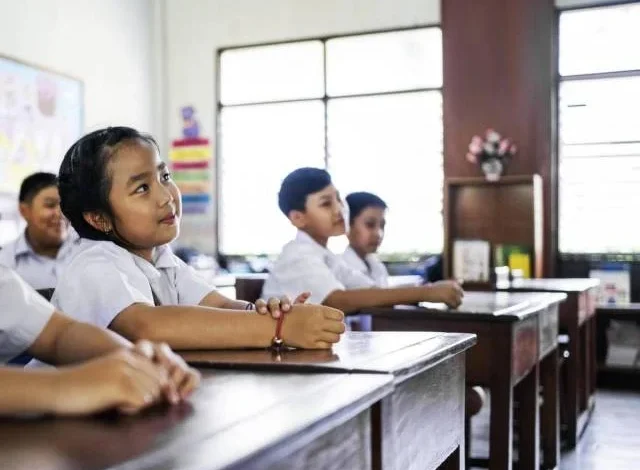
Educators worldwide are profoundly re-evaluating the fundamental purpose of schooling, shifting focus beyond academic knowledge to encompass the holistic formation of students’ identities, attitudes, and behaviors. This global movement, often termed character education, is increasingly recognized as critical for nurturing successful individuals and responsible citizens in an interconnected yet complex world. Recent research underscores the developmental significance of personality traits, ethical frameworks, and prosocial behaviors, positing them as indispensable components of a comprehensive educational experience.
The Evolving Landscape of Education: A Historical Context
The concept of character education is not novel; it echoes ancient philosophies from Aristotle’s pursuit of eudaimonia (flourishing) through virtuous living to Confucian ethics emphasizing moral cultivation. Historically, education in many societies inherently included moral instruction, often intertwined with religious teachings or societal norms. In the 19th and early 20th centuries, public education systems in many Western nations, including the United States, explicitly incorporated character building, teaching virtues like honesty, diligence, and respect. However, the mid-20th century saw a gradual decline in overt character education, largely due to a heightened emphasis on academic achievement, standardized testing, and concerns about imposing specific moral frameworks in increasingly diverse societies. The focus shifted towards cognitive development, often at the expense of socio-emotional and ethical learning.
The resurgence of interest in character education in the late 20th and early 21st centuries can be attributed to several factors. Growing concerns about youth mental health, rising rates of bullying, declining civic engagement, and a perceived erosion of social cohesion have prompted educators and policymakers to reconsider education’s broader responsibilities. Furthermore, employers increasingly highlight the importance of "soft skills" or "21st-century skills" such as critical thinking, collaboration, empathy, and resilience—qualities deeply rooted in character development—as essential for workforce readiness. This renewed focus signifies a collective acknowledgment that schools are not merely knowledge factories but vital institutions for shaping individuals who can navigate personal challenges, contribute positively to their communities, and thrive in dynamic environments.
Defining Character Education: A Spectrum of Approaches
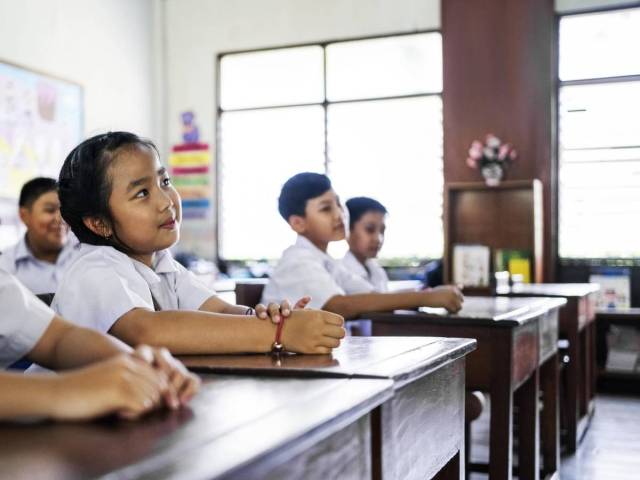
The precise definition of character education varies significantly across cultures and national contexts, influenced by unique historical narratives, prevailing societal values, and pedagogical traditions. This diversity gives rise to a dynamic tension between traditionalist and progressive educational philosophies.
Traditionalist perspectives often ground character in a society’s established history, customs, and practices. These approaches typically emphasize the identification and transmission of specific virtues, often through moral storytelling, historical examples, and adherence to established authority and group norms. The aim is to instill a common moral vocabulary and a shared understanding of ethical conduct derived from a collective heritage.
In contrast, progressive viewpoints frame character as a civic and political obligation, often encouraging students to critically examine cultural standards and received wisdom. This approach prioritizes a democratic process, fostering dialogue and exploration of which moral principles resonate most deeply with individual students. Progressive character education often emphasizes critical thinking, ethical reasoning, and the development of an informed conscience capable of contributing to societal improvement.
Despite these differing philosophical underpinnings, interviews with educators globally reveal a shared conviction: character education represents a return to one of education’s foundational purposes. Many teachers express a profound vocational calling to form well-rounded individuals, a role that often feels diminished when curricula are narrowly focused on content delivery. The prevailing sentiment is that while values themselves are often implicitly understood, the explicit structures and opportunities for practicing and sharing these values within school environments are frequently absent.
Integrating Character into Everyday Learning: Global Case Studies
The most effective character education initiatives are not standalone programs but are deeply interwoven into the fabric of daily schooling. This integrated approach ensures that character development is an ongoing, pervasive process rather than an isolated subject.

Singapore’s Holistic Approach: Character and Citizenship Education
Singapore stands as a prominent example of a nation that has explicitly integrated character education into its national curriculum, known as Character and Citizenship Education (CCE). Drawing from both Eastern and Western traditions, CCE is seen as integral to students’ holistic development. Ng May Gay, a research fellow at the Singapore Centre of Character and Citizenship Education, emphasizes the importance of parental involvement and support in fostering discussions about character at home.
Singapore’s CCE framework adopts an integrated approach that addresses the development of values, character, social-emotional well-being, and citizenship dispositions. This framework posits that flourishing extends beyond individual success or academic achievement to encompass social harmony, collective responsibility, and the common good. As Gay states, "Singapore affirms personal aspirations and excellence, but at the same time we are also a communitarian society. As [students] grow in character and competence, they remain grounded in belonging and responsibility to the community." This dual emphasis on individual excellence and collective responsibility reflects Singapore’s unique socio-political context and its multicultural society’s need for strong social cohesion.
The holistic nature of CCE intentionally embeds reflection into every lesson and experience. Students are prompted to consider their personal growth, their relationships with others, and the ethical implications of their choices. This process-oriented assessment, as Gay explains, "will create a meaningful shift in the teaching and learning by moving from an outcome-driven to a process-oriented approach. It really positions assessment as being ongoing, collaborative, reflective, and I feel that this is essential for nurturing responsible, reflective citizens." This systematic integration ensures that character development is not an add-on but an intrinsic part of the learning journey. The Ministry of Education in Singapore publishes detailed guides and resources for teachers, outlining specific learning outcomes and pedagogical strategies for CCE at various grade levels, reinforcing its systemic importance.
Spain’s Competency-Based Integration: The Invisible Thread
In Spain, character education is less frequently named as a distinct subject in policy documents but is nonetheless embedded within a broader competency-based curriculum. Verónica Fernández Espinosa, a professor at Universidad Francisco de Vitoria and director of the Virtues and Values Education Centre, notes that character elements are typically found in areas such as citizenship education, school climate and relationships, well-being programs, tutoring, and digital competence.

However, this implicit integration presents a challenge. As Fernández Espinosa observes, "From my research perspective, this creates an important reality: Character is present in intentions, but it is often diffused in implementation and can be reduced to ‘values talk’ or civic content unless schools adopt an intentional whole-school approach." This highlights a critical insight: for character education to be effective, it requires deliberate design and consistent application across the entire school environment, rather than being a peripheral or ad-hoc activity. It suggests that character education serves as an essential thread, holding together and enriching the overall learning experience, preventing it from fragmenting into disconnected academic silos.
Cultural and Spiritual Foundations of Character
Beyond national curricula, character education often finds deep resonance within cultural and spiritual traditions, offering rich frameworks for moral formation.
Islamic Psychology and the Concept of Fitrah
Maneeza Dawood, a research scientist at Stanford SPARQ and research director of Muraqaba Education, explains how Islam views character as intrinsic to human nature, encapsulated by the concept of fitrah. This perspective posits that humans are born with an innate inclination towards goodness and morality. As Dawood articulates, "It comes from a space of abundance rather than deficit, with the goal of character development to refine what already exists in our nature. In contrast, a lot of contemporary character education tends to focus on the deficit and correction side. Starting from that place of abundance rather than deficit could really change the way character education is approached in schools today."
From an Islamic perspective, virtues such as patience (sabr), gratitude (shukr), and jihad al-nafs (the struggle against one’s lower self or ego) are not merely desirable traits but religious duties that strengthen an individual’s relationship with God and foster moral accountability. This integration of ethical behavior into acts of worship naturally infuses character education into daily life, making moral formation a continuous spiritual endeavor. This approach, rooted in the refinement of inherent good, offers a powerful alternative to models focused primarily on remediation or behavior modification. Many faith-based schools globally, regardless of specific religion, often leverage similar theological or philosophical underpinnings to instill virtues and ethical frameworks, demonstrating the powerful role of spiritual traditions in character development.

Ubuntu in African Character Development
In many African countries, the philosophy of Ubuntu plays a foundational role in character development. Research indicates that Ubuntu defines the individual through their humanity and interdependence with others, fostering virtues such as hospitality, friendliness, caring, sharing, compassion, generosity, openness, sympathy, and empathy. It embodies the profound understanding that "I am because we are."
Peter Kingori, director for character education programs at the Center for Character and Leadership in Nairobi, Kenya, emphasizes the central role of Ubuntu and the discussion of love in their programming. "In Africa you have to talk about love," Kingori states, highlighting its power to transcend tribal, racial, and ethnic boundaries, encouraging individuals to embrace each other as brothers and sisters. This philosophy actively counters individualism and selfishness, prompting students and educators to cultivate a consciousness that extends beyond self-interest to focus on collective well-being and unity.
Kingori further elaborates on the emphasis on building strong relationships across all levels of the school community: "How can they build relationships—the relationships between the teacher and the principal, the school and the community, the teachers and our teaching staff, and, of course, the teacher and the learner. How can they be mentored? How can they be guided? How can they be connected with each other? We always say that a problem shared is a problem half-solved." This communal approach not only strengthens individual character but also builds resilient, supportive communities within and beyond the school gates.
Fostering Student Agency for Internalized Values
A critical dimension of effective character education involves empowering students to internalize values as part of their authentic sense of self, rather than perceiving them as external requirements. This agency ensures that moral development is self-driven and sustainable.

Argentina: Autonomy and Self-Reflection
Verónica Perez Mendoza, director of the Dandelion Center for Character and Leadership in Argentina, champions an approach that transforms education by promoting a culture of virtues that fosters human flourishing. Her methodology centers on surrounding students with meaningful role models and creating environments conducive to self-reflection and collaborative growth. A cornerstone of her work is granting students greater autonomy, inviting them to critically reflect on their actions and motivations, thereby integrating virtues into their core identity.
"It empowers students in a way, because it’s telling them—what you do matters," Perez Mendoza explains. "Who you choose to become, and who you choose to be really matters. Not only does it matter to society, but also it matters for your own happiness." This emphasis on personal significance transforms character education from a prescriptive exercise into a deeply personal journey of self-discovery and ethical formation. It aligns with developmental psychology principles that emphasize intrinsic motivation and self-determination in value acquisition.
Challenges in Individualistic Societies: The United States Context
Highly individualistic societies, such as the United States, present unique challenges to fostering collective values and a sense of shared purpose. Cheryl Maurana, provost and founding director of the Kern National Network for Flourishing in Health, points to widespread polarization and disconnection as indicators of a system that has often prioritized productivity and individual achievement over the human qualities essential for sustaining individuals and communities. These cultural forces can complicate efforts to share and internalize positive values.
Maurana observes, "We’re in a period of profound uncertainty and strain. But that’s where you really need to have your own inner set of strengths. If you don’t want to be told what to do, you’ve got to have some core value that you’re part of a greater good." Even within deeply individualistic cultures, people inherently seek meaning, contribution, and belonging. Internalization of values begins when individuals can connect their personal goals and aspirations to a larger, shared purpose—whether it be a commitment to community, democratic ideals, environmental stewardship, or contributing to future generations.

For educators in such societies, it is crucial to articulate that character education does not advocate for self-sacrifice but rather illuminates the profound truth that individual flourishing is inextricably linked to the flourishing of others. This reframing helps bridge the gap between individual autonomy and collective responsibility, fostering a sense of interdependence. Initiatives like Social-Emotional Learning (SEL) in the U.S., championed by organizations such as the Collaborative for Academic, Social, and Emotional Learning (CASEL), aim to address these needs by developing competencies like self-awareness, self-management, social awareness, relationship skills, and responsible decision-making, directly contributing to character development.
Implications and the Future of Education
The global re-emphasis on character education reflects a growing consensus that schools must play a more comprehensive role in preparing students for life, not just for tests. The urgency surrounding this movement is palpable, as societies grapple with the complex demands of the 21st century—from rapid technological change to increasing social fragmentation.
The implications of robust character education are far-reaching:
- Enhanced Student Well-being: Students who develop strong character traits, such as resilience, empathy, and self-regulation, are better equipped to manage stress, build healthy relationships, and navigate life’s challenges, leading to improved mental health outcomes.
- Improved Academic Performance: Research increasingly links social-emotional competencies and character strengths to better academic engagement, motivation, and achievement.
- Stronger Communities and Civic Engagement: Character education cultivates responsible citizens who understand their rights and duties, engage in ethical decision-making, and contribute positively to their local and global communities. This includes fostering critical thinking and media literacy, which are vital for democratic participation.
- Workforce Readiness: Employers consistently seek individuals with strong ethical foundations, teamwork skills, adaptability, and emotional intelligence—qualities that are direct outcomes of effective character development. A 2018 World Economic Forum report on the Future of Jobs highlighted these "human skills" as increasingly important alongside technical expertise.
- Global Citizenship: In an interconnected world, understanding diverse moral frameworks and developing virtues like intercultural empathy and respect are essential for fostering global peace and cooperation.
As educators worldwide continue to grapple with educational systems that have often overemphasized measurable outcomes at the expense of holistic human development, the question is no longer whether character belongs in education, but how it can be meaningfully, sustainably, and culturally responsively embedded into every aspect of the learning experience. The diverse global approaches offer a rich tapestry of insights, demonstrating that while the specific manifestations may differ, the core aspiration to cultivate virtuous, responsible, and flourishing individuals remains a universal educational imperative.