The practice of partner stretching, often referred to as assisted stretching or therapeutic partner movement, has evolved from traditional yoga lineages into a recognized modality for improving musculoskeletal health and interpersonal communication. While solo stretching remains a staple of physical fitness, the integration of a second individual allows for mechanical advantages—such as increased leverage and resistance—that are difficult to achieve independently. This collaborative approach to physical maintenance has gained traction in wellness circles, blending biomechanical benefits with the psychological advantages of shared physical activity.
The Biomechanics and Physiological Benefits of Assisted Stretching
At its core, partner stretching utilizes the principles of Proprioceptive Neuromuscular Facilitation (PNF). PNF stretching is a set of stretching techniques commonly used in clinical and sports medicine to enhance both active and passive range of motion. By involving a partner, the recipient can achieve a deeper stretch by relaxing the musculature more completely, as the partner provides the necessary stabilization and support to move the limb through a range of motion that might otherwise trigger a protective guarding reflex.
Research indicates that static stretching—the most common form—is most effective when muscles are warm. When performed with a partner, the external force applied by the assistant can help in lengthening the fascia and muscle fibers more efficiently than gravity alone. Furthermore, the rhythmic nature of synchronized breathing and movement during these exercises has been shown to lower cortisol levels, potentially reducing stress and enhancing the parasympathetic nervous system’s response.
Historical Context and Evolution of Partner Modalities
The historical lineage of partner-based physical movement traces back to ancient Eastern practices, most notably Thai Yoga Massage and AcroYoga. These traditions prioritized the concept of "metta," or loving-kindness, through physical touch and support. In the late 20th and early 21st centuries, these practices were adapted into the Western fitness lexicon. The transition from strictly therapeutic settings to general wellness programs reflects a growing public interest in holistic health.
In recent years, fitness centers and yoga studios have increasingly incorporated "partner sessions" as a response to the rising trend of social fitness. According to recent data from the Global Wellness Institute, the demand for "connective" wellness—activities that foster social interaction alongside physical health—has seen a 15% year-over-year increase in urban demographics. This shift is partially attributed to the societal impacts of increased screen time and sedentary work environments, which have left a large portion of the workforce dealing with "tech neck," rounded shoulders, and lumbar tension.
Systematic Approach to Partner-Assisted Movement
The execution of any partner-based physical activity necessitates a strict adherence to safety protocols. Experts emphasize that the hierarchy of movement—which identifies the "base" (the supporting individual) and the "recipient" (the individual receiving the stretch)—must be established before any physical contact occurs.
1. Front Body Elongation and Lumbar Decompression
The front body stretch is frequently utilized to counteract the physiological effects of prolonged sitting. By positioning the recipient on the floor and the base in a chair, the base provides a stable anchor. As the base gently applies traction to the recipient’s wrists, the chest and intercostal muscles are opened. This facilitates a deeper breath, which is essential for oxygenating muscle tissue. Clinically, this movement assists in reversing the kyphotic posture—the forward curvature of the spine—that is prevalent among modern professionals.
2. Scapular Alignment and Upper Back Relief
The upper back and shoulder stretch is designed to target the rhomboids and trapezius muscles. By utilizing the base’s feet as a fulcrum against the recipient’s upper back—ensuring that pressure is applied only to muscular tissue and never directly onto the spinal column—the base creates a leverage point that allows the recipient to safely retract their shoulders. This movement mimics the thoracic extension found in advanced yoga postures, providing a mechanical "reset" for individuals who spend significant time at desks. The addition of lower back pressure point release, where the base uses controlled pressure on the erector spinae muscles, further enhances the therapeutic output of this exercise.
3. Full-Body Integration and Strength Stability
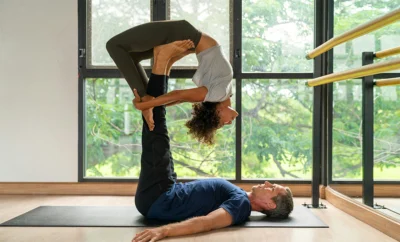
The final, more complex maneuver involves the base utilizing their legs to lift the recipient. This requires a higher level of physical competency, as it necessitates core stabilization from the base and trust from the recipient. This exercise is often categorized as a "trust-building" movement. From a physiological standpoint, it serves as an eccentric exercise for the base’s quadriceps and a passive extension for the recipient. It is critical that practitioners only attempt this after mastering basic static stretches, as it involves significant shifting of the center of gravity.
Safety Protocols and Communication Standards
The most significant risk associated with partner stretching is the over-extension of joints, which can lead to ligamentous strain. Industry standards for partner-assisted stretching mandate the "three-point communication" rule:
- Verbal Confirmation: Both parties must agree on the intensity level before the movement begins.
- Real-time Feedback: The recipient must provide immediate verbal cues if they experience sharp pain or discomfort, which is a clear indicator to stop or decrease pressure.
- Controlled Release: Stretches must be exited as slowly as they were entered to prevent muscle spasms or sudden shifts in blood pressure.
Broader Implications for Workplace and Social Wellness
The integration of partner stretching into daily routines has broader implications for workplace culture and domestic wellness. As companies seek to mitigate the costs associated with musculoskeletal disorders—which the Occupational Safety and Health Administration (OSHA) notes are a leading cause of workplace injury—short, guided stretching sessions have become a focus of corporate wellness initiatives.
Beyond the clinical benefits, there is a clear psychological dimension. Studies on "co-regulation"—the ability to soothe or support another person’s nervous system—suggest that physical connection through movement can foster empathy and reduce conflict. By engaging in a cooperative physical task, participants report a heightened sense of team cohesion and improved communication skills.
Future Outlook on Assisted Stretching
As the wellness industry continues to emphasize functional mobility over high-impact exercise, partner stretching is positioned to remain a central component of preventative care. Future developments in this field are likely to involve more structured professional training for instructors, ensuring that partner-based movements are taught with the same rigor as traditional strength training.
In conclusion, the practice of partner stretching offers a multifaceted approach to health that transcends the physical. By combining the mechanical benefits of PNF stretching with the social requirements of clear communication and trust, practitioners can address the physical consequences of sedentary lifestyles while simultaneously strengthening interpersonal bonds. Whether utilized in a professional setting or within the home, the key to efficacy remains consistency, safety, and a shared commitment to the principles of supported movement. As data continues to support the efficacy of assisted stretching, it is expected that these techniques will become a standard recommendation for those looking to maintain long-term physical health and mobility.