Large Scale Study Reveals Strong Link Between Parasomnias and Psychiatric Disorders with Depression Patients Showing Threefold Risk Increase


A groundbreaking analysis of 372,000 sleep clinic patients has established a definitive and significant association between parasomnias—a category of sleep disorders involving unusual behaviors or experiences—and various psychiatric conditions. The research, which represents one of the largest datasets ever compiled on the subject, indicates that individuals diagnosed with depression are nearly three times more likely to experience frequent parasomnias compared to the general population. This discovery suggests that behaviors such as sleepwalking, night terrors, and sleep-related eating are not merely benign nocturnal disturbances but may serve as critical clinical indicators of underlying mental health struggles. By repositioning these behaviors as potential diagnostic markers, the study advocates for a more integrated approach to psychiatric evaluations, where sleep history is treated with the same urgency as mood and cognitive symptoms.
Understanding the Spectrum of Parasomnias
Parasomnias encompass a wide range of disruptive, sleep-related events that occur during specific stages of the sleep cycle. Traditionally, these events were viewed as isolated physiological glitches, often dismissed as "quirks" of the nervous system. However, the clinical definition describes them as complex motor or sensory phenomena that happen while falling asleep, during sleep, or during the transition between sleep and wakefulness.
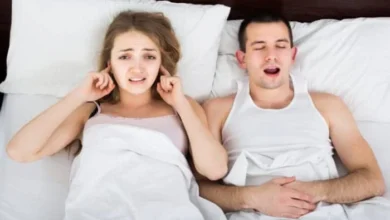
The study categorized several distinct types of parasomnias to better understand their prevalence and correlation with mental health. Sleep talking, or somniloquy, was identified as the most common manifestation. While often harmless, frequent and aggressive sleep talking can signal high levels of stress or emotional turmoil. Sleep hallucinations, another category analyzed, involve vivid, often frightening sensory experiences that occur at the edges of sleep. Sleep-related eating disorders involve compulsive eating while in a state of partial arousal, often with no memory of the event the following morning. Perhaps the most well-known are sleepwalking (somnambulism) and sleep paralysis, the latter of which involves a temporary inability to move or speak while waking up, often accompanied by intense fear and a sense of a "presence" in the room.
Methodology and Scope of the Fifteen-Year Analysis
The scale of this research provides it with a level of statistical power rarely seen in sleep medicine. The data was meticulously gathered from 240 accredited sleep centers across 30 U.S. states over a fifteen-year period, spanning from 2004 to 2019. This longitudinal approach allowed researchers to observe trends across a diverse demographic and geographical landscape, ensuring that the results were not skewed by regional factors or short-term environmental stressors.
The study participants, totaling approximately 372,000 individuals, were asked to self-report the frequency of their parasomnia episodes. To ensure clinical relevance, the researchers focused on the intensity of these experiences, comparing patients who reported having parasomnias "often" or "always" against those who experienced them "a few times" or "never." This distinction was vital for filtering out occasional, stress-induced incidents and focusing on chronic patterns that suggest a deeper neurological or psychiatric link. By utilizing such a massive cohort, the study was able to control for various confounding factors, such as age, gender, and other co-occurring sleep disorders like obstructive sleep apnea.
Statistical Breakdown of Sleep Disturbances
The results of the analysis provide a clear map of how parasomnias manifest within the clinical population. Approximately 16% of the participants—roughly one in every six people—reported experiencing at least one type of parasomnia on a regular basis. This high prevalence underscores the fact that these disorders are far more common than previously assumed in the medical community.
When broken down by specific type, the data revealed the following:
- Sleep Talking: 8.8% of participants.
- Sleep Hallucinations: 6.0% of participants.
- Sleep-Related Eating: 4.8% of participants.
- Sleep Paralysis: 2.1% of participants.
- Sleepwalking: 1.7% of participants.
While these percentages may seem modest in isolation, their cumulative impact on public health is significant. The study’s most striking finding, however, was the correlation with depression. The data showed that individuals with chronic parasomnias were 2.72 times more likely to have a formal diagnosis of depression. This "threefold risk" represents a massive statistical leap, suggesting a bidirectional relationship where sleep disturbances and depressive symptoms may exacerbate one another.
The Intersection of Neurology and Psychiatry
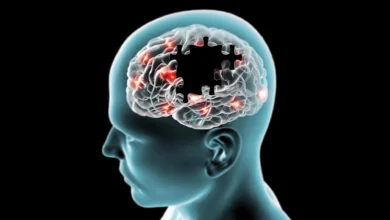
The link between parasomnias and psychiatric disorders is rooted in the complex chemistry of the brain. Both sleep regulation and mood stabilization rely on the same neurotransmitters, specifically serotonin, dopamine, and norepinephrine. When the balance of these chemicals is disrupted—as is the case in major depressive disorder—the brain’s ability to transition smoothly between sleep stages is compromised.
For instance, sleepwalking and night terrors typically occur during non-rapid eye movement (NREM) sleep, specifically during the deep sleep stage. In patients with depression, the architecture of NREM sleep is often fragmented. This fragmentation creates "micro-arousals," where the brain is caught between a state of deep sleep and wakefulness, providing the perfect environment for parasomnias to occur. Similarly, sleep paralysis and hallucinations are often tied to the REM (Rapid Eye Movement) cycle. Depression is known to alter REM latency—the time it takes to enter the first REM cycle—and increase REM density, which may explain why these specific disturbances are so prevalent in psychiatric patients.
Expert Analysis and Clinical Implications
Medical professionals and sleep specialists have reacted to the study with a call for updated screening protocols. The findings suggest that when a patient presents with frequent sleepwalking or sleep-related eating, the clinician’s first instinct should be to screen for mood disorders. Conversely, when a patient is being treated for depression, doctors should proactively inquire about unusual sleep behaviors that the patient might be too embarrassed to mention.
"For too long, we have treated sleep and mental health as two separate silos," notes the study’s implications. "This data proves that they are inextricably linked. A parasomnia is often the ‘smoke’ that leads us to the ‘fire’ of a psychiatric condition."
Furthermore, the study highlights the role of medications. Many antidepressants, particularly Selective Serotonin Reuptake Inhibitors (SSRIs), are known to influence sleep architecture. While they are essential for treating depression, they can sometimes trigger or worsen certain parasomnias. This research provides a framework for physicians to better manage the side effects of psychiatric medications by monitoring sleep behaviors as a part of the treatment plan.
Broader Impact on Public Health and Future Research
The implications of this study extend beyond the walls of the sleep clinic. In a broader public health context, the recognition of parasomnias as clinical markers could lead to earlier intervention for mental health disorders. Early diagnosis of depression is one of the most significant factors in successful treatment outcomes; if sleep behaviors can act as an early warning system, lives could be substantially improved.
The study also opens the door for future research into the "chicken or the egg" causality of these conditions. Does a chronic sleep disorder eventually trigger a depressive episode by exhausting the brain’s regulatory systems, or does the onset of depression manifest first through the medium of sleep? Longitudinal studies following patients from childhood through adulthood will be necessary to answer these questions, as many parasomnias like sleepwalking are common in children but usually disappear by adolescence. Their persistence into adulthood is, in itself, a red flag that this study helps to validate.
Practical Takeaways for Patients and Providers
The research concludes with several actionable points for both the medical community and the general public. First, the normalization of discussing sleep behaviors is essential. Patients often feel that sleep talking or sleepwalking is a personal eccentricity rather than a medical symptom. Public health campaigns could help reframe these experiences as legitimate health data points.
Second, the study emphasizes the need for comprehensive sleep studies (polysomnography) for psychiatric patients who report poor sleep quality. While many psychiatric evaluations focus on "insomnia" (the inability to sleep), they often overlook "quality" and "behavior" during sleep.
Finally, the study serves as a reminder of the holistic nature of human health. The brain does not stop functioning when we sleep; rather, it enters a different mode of processing. When that processing becomes "glitched" through parasomnias, it is a clear signal that the brain’s overall health requires attention. By integrating sleep science into the heart of psychiatric practice, the medical community can offer more nuanced, effective, and compassionate care to those struggling with mental health conditions. As this massive analysis of 372,000 patients proves, what happens in the dark of night can shed significant light on the state of our mental well-being during the day.
Related posts: