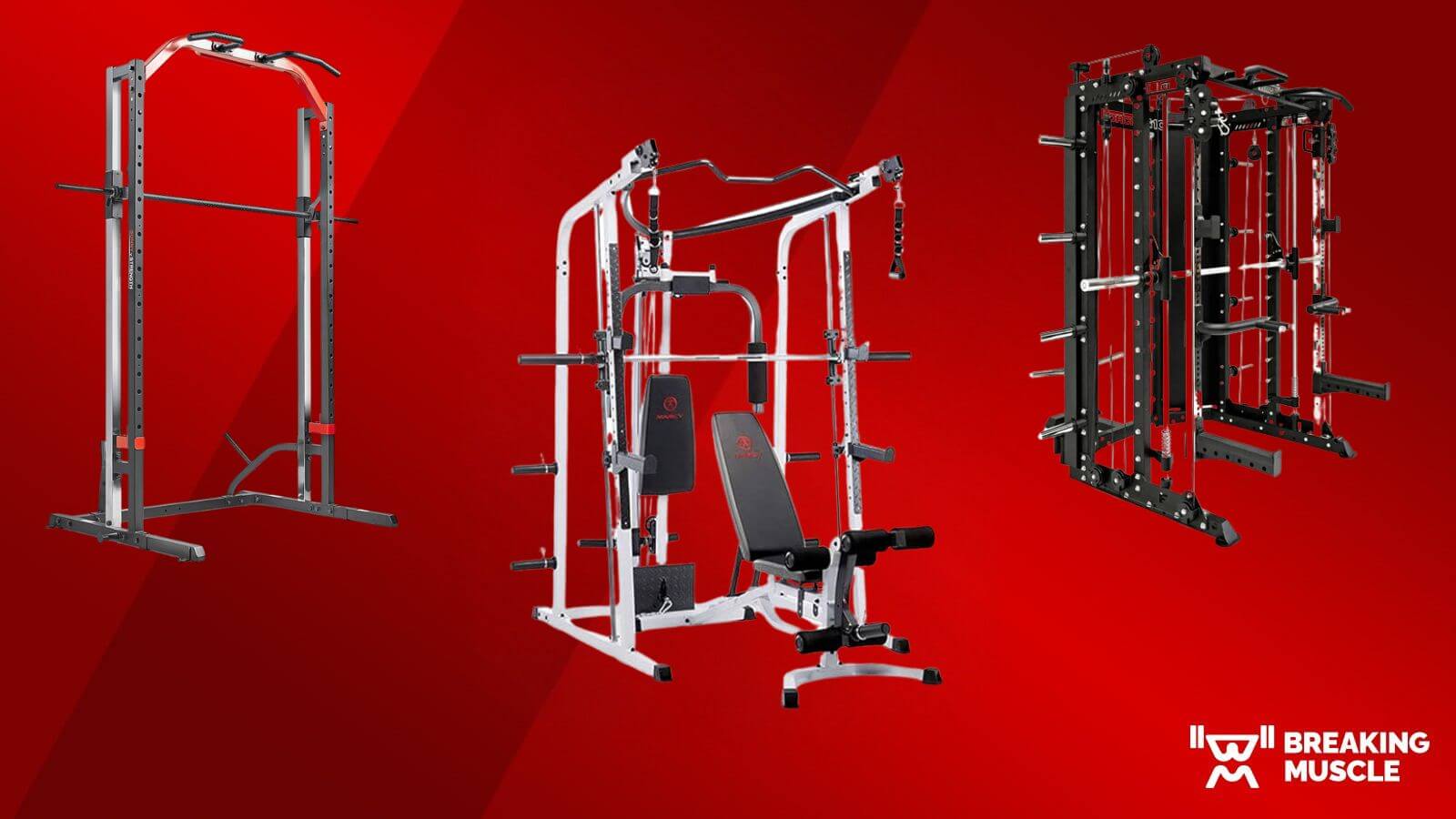
While the treadmill has long held its iconic status in commercial fitness establishments, few pieces of equipment rival the Smith machine in terms of widespread recognition and utility within a gym setting. Renowned for its remarkable versatility and inherent functionality, this robust tool for muscle development enjoys popularity among lifters across all experience levels, from novices to seasoned athletes. However, the benefits of a Smith machine are no longer exclusive to those holding a gym membership. What was once considered a niche item for dedicated home gyms has steadily evolved into a cornerstone for many fitness enthusiasts seeking to build comprehensive personal training spaces. Offering unparalleled protection for compound movements like bench presses, back squats, and deadlifts without the necessity of a human spotter, the Smith machine represents a prudent investment for individuals aiming to forge the ultimate garage or home gym.
The burgeoning market now presents a diverse array of options, ranging from traditional, dedicated Smith machines to sophisticated all-in-one home gym solutions. This abundance can understandably lead to a degree of overwhelm for prospective buyers. Fortunately, an exhaustive due diligence process undertaken by a team of expert product testers has meticulously sieved through the myriad choices, identifying only the cream of the crop. This rigorous evaluation involved a deep dive into various critical elements, including the quality of build materials, the smoothness and consistency of the bar path, and the overall value proposition. After thorough dissection of each component, the extensive list was refined to a select five premier models for 2025.
Further enriching this analysis, valuable insights were garnered from Mauro S. Maietta, District Fitness and Education Manager for Crunch Fitness. His expert perspective illuminated the core benefits of Smith machines and underscored the crucial factors consumers should prioritize when navigating their purchase decision.
This content is meant to be informative, but should not be taken as medical advice. It is not intended for use as diagnosis, prevention, or treatment of health problems. Always speak with your doctor before starting any new supplement or exercise regimen.
The Evolution of the Smith Machine in Home Gyms
The journey of the Smith machine from commercial gym staple to home gym essential is a testament to its enduring appeal and adaptability. Invented in the 1950s by Rudy Smith, a manager at Vic Tanny’s gym in Los Angeles, the machine was initially conceived to provide a safer, more controlled environment for barbell exercises, particularly for those training without a spotter. Its fixed vertical (or slightly angled) path quickly made it a favorite, allowing lifters to focus on muscle activation and pushing limits without worrying about stabilizing the bar. For decades, its size and cost largely confined it to commercial settings.
However, the landscape of fitness has shifted dramatically, particularly in recent years. The rise of the home gym movement, catalyzed by technological advancements and changing lifestyle preferences, has spurred manufacturers to innovate. Modern Smith machines are often integrated into multi-functional trainers, power racks, or even offered as space-saving attachments, making them accessible to a wider audience with varying space and budget constraints. This evolution signifies a broader trend in fitness equipment design: the demand for versatility, safety, and efficiency packed into a compact footprint.
Core Benefits of Incorporating a Smith Machine into Your Routine
A Smith machine is far more than just a piece of equipment; it’s a strategic asset for any home gym, offering distinct advantages that cater to a broad spectrum of fitness goals and user needs.
Enhanced Stability and Safety for Solo Training
One of the primary appeals of the Smith machine lies in its inherent safety features. Unlike free weights, where the lifter is solely responsible for stabilizing the barbell across multiple planes of motion, the Smith machine guides the bar along a fixed path. This crucial design element significantly reduces the risk of injury, especially during heavy lifts or when fatigue sets in. Mauro M. Maietta, District Fitness and Education Manager for Crunch Fitness, emphasizes this point: "The Smith machine helps the athlete feel supported and gives them greater control and stability when performing an exercise."
This controlled environment is particularly beneficial for new lifters. It allows them to concentrate intensely on mastering proper form and muscle engagement without the added complexity of bar stabilization. Dr. Christopher Mohr, PhD, RD, reinforces the importance of form: "Maintaining correct form is important for avoiding injuries and maximizing the effectiveness of your workouts. Beginners might benefit from working with a personal trainer initially or taking a beginner class to learn proper techniques." The Smith machine acts as a foundational tool in this learning process, providing a scaffold for technique development.
An Unofficial Spotter: Training Without Limits
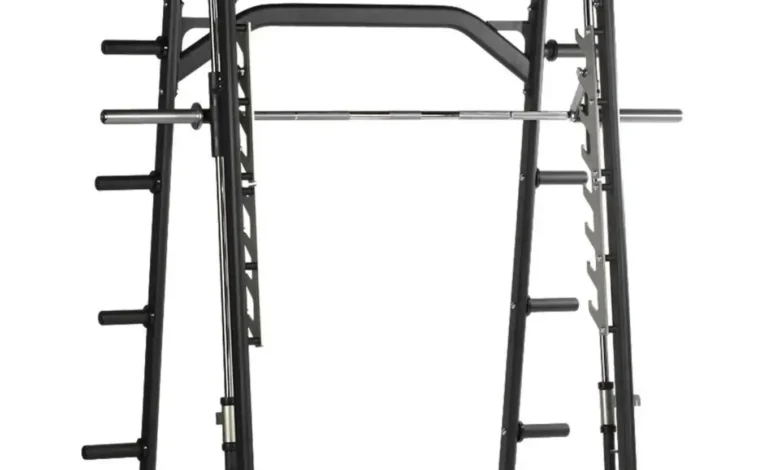
For individuals who prefer to work out alone or lack a consistent training partner, the Smith machine serves as an invaluable "spotter." Equipped with multiple lockout points along its track and adjustable safety stoppers, the bar can be quickly and securely racked at any point during a lift. This feature empowers lifters to push their limits, attempt new personal bests, and train to muscular failure with confidence, knowing that a safety net is always in place.
This inherent safety mechanism directly supports the principle of progressive overload, a cornerstone of muscle growth and strength development. Progressive overload involves gradually increasing the demands placed on the musculoskeletal system over time. As Mohr explains, "This continual challenge helps your muscles grow stronger. It’s important to start with manageable increments to prevent injury." The Smith machine facilitates this by allowing lifters to safely experiment with heavier weights or higher repetitions, knowing they can bail out without assistance if needed.
Aiding Injury Rehabilitation and Mobility Enhancement
The guided motion and built-in stability of a Smith machine make it an exceptional tool for individuals returning from injury or those managing mobility limitations. By controlling the range of motion and removing the need for complex stabilization, it allows for targeted muscle activation and strength rebuilding in a low-risk environment. This controlled progression can be vital for gradually increasing strength and joint stability before transitioning back to more dynamic free-weight exercises.
Maietta advises a cautious approach for rehabilitation: "The fixed range of motion is not for everyone, so be sure to speak with your local fitness professional and listen to your body and joints if you feel any discomfort or pain during the planned movements." Starting with lighter weights to acclimate to the machine’s movement pattern is key before gradually increasing resistance.
Unparalleled Versatility in Exercise Selection
Beyond its safety advantages, the Smith machine boasts an impressive array of exercise possibilities, making it a true "Swiss army knife" of the weight room. As Maietta aptly puts it, "The Smith machine can be seen as the Swiss army knife of the weight room since it allows for several strength training exercises in its fixed vertical path, ranging from squats to overhead pressing movements."
For leg day, users can perform various squat and lunge variations with enhanced stability. Upper body training benefits immensely, allowing for bench presses (flat, incline, decline) and overhead presses without the need to stabilize a free bar, enabling a focus on muscle isolation. High-end models, particularly all-in-one trainers like the Force USA G15, extend this versatility further by integrating cable systems for exercises such as cable crossovers, chest flys, triceps extensions, and low rows, effectively transforming a single footprint into a multi-station gym.
How We Picked and Tested the Best Smith Machines for 2025
The increasing prevalence of Smith machines within the home gym community has prompted a significant expansion of testing protocols by our team. This commitment has led to the development of a comprehensive evaluation framework designed to meticulously assess a wide range of brands and models. The goal is to provide a thorough and objective analysis of key factors that profoundly influence the user’s workout experience.
Our rigorous testing methodology for Smith machines, encompassing everything from traditional standalone units to sophisticated all-in-one trainers with integrated cable systems, employs a granular 1-5 scoring system across several critical categories:
- Build Quality and Materials: This evaluates the gauge of steel used, the quality of welds, the type of bearings or guide rods (e.g., linear bearings for smoothness), the finish (powder coat durability), and the overall structural integrity. A machine built with heavy-duty components and precision engineering will naturally score higher.
- Bar Path Smoothness: The hallmark of a good Smith machine is a fluid, resistance-free bar movement. Testers manually move the bar through its full range, assessing for any sticking points, friction, or lateral play. The quality of the guide rods and linear bearings is paramount here.
- Stability: This assesses how firmly the machine remains anchored during use, especially under heavy loads. Testers perform various exercises, including squats and presses with significant weight, to check for wobbling, shaking, or any perceived instability.
- Versatility: This metric considers the range of exercises that can be performed on the machine, the number of lockout points, the adjustability of safety stoppers, and the integration of additional features like pull-up bars, dip stations, cable pulleys, or landmine attachments.
- Footprint and Dimensions: Evaluates how much space the machine occupies, taking into account its height, width, and depth. This is crucial for home gym users where space is often a premium. Compactness without compromising functionality is highly valued.
- Knurling Quality: The texture and grip provided by the barbell’s knurling are critical for safety and performance, especially during heavy lifts. Testers assess the aggressiveness and consistency of the knurl pattern. A "passive" knurl, often found on budget models, receives lower marks.
- Weight Ratios (for cable systems): For machines with integrated cable systems, the pulley ratio (e.g., 1:1, 2:1, 4:1) is evaluated for its impact on perceived weight and resistance effectiveness. A 1:1 ratio offers true weight, while higher ratios reduce the effective load, which can be beneficial for lighter exercises or beginners but less ideal for maximum resistance.
- Assembly Complexity: While not directly impacting workout performance, the ease or difficulty of assembly is a significant factor for home gym owners. Estimates of "man-hours" and the necessity for professional installation are considered.
- Value for Money: This comprehensive rating weighs all the above factors against the machine’s price point. It considers whether the features, build quality, and overall performance justify the investment.
- Warranty and Customer Service: The manufacturer’s warranty policy, return procedures, and responsiveness of customer support are evaluated, as these directly impact the long-term ownership experience.
This meticulous approach ensures that our recommendations are based on tangible performance, robust construction, and a clear understanding of the user experience.
Our Picks for the Best Smith Machines of 2025: A Detailed Review
Best All-in-One Smith Machine: Force USA G15 All-in-One Trainer
The Force USA G15 stands as a testament to multi-functional fitness engineering, designed for those who demand a comprehensive training solution within a single footprint. Priced around $5,500, this machine is a significant investment, yet its capabilities justify its position as a premium offering. Our lead product tester awarded it an impressive 4.5 out of 5 stars for versatility, a score reflecting its ability to facilitate an extensive array of exercises through its integrated functionalities.
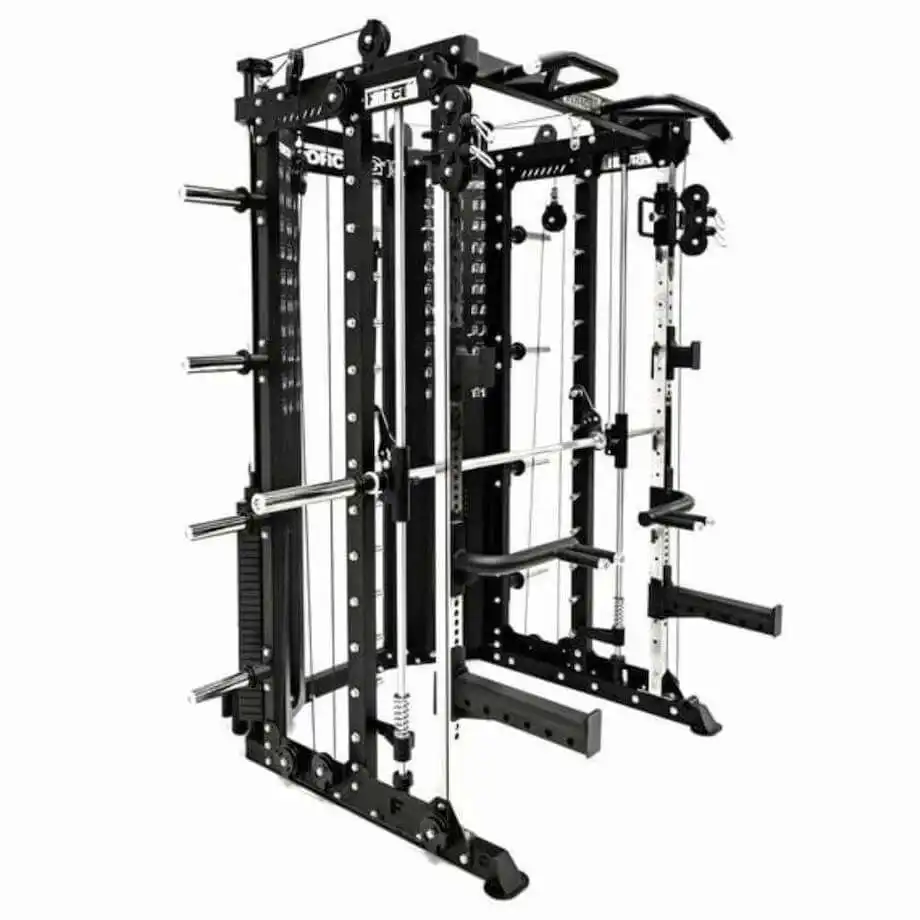
At nearly 1,000 pounds, the G15 is a behemoth, skillfully combining a functional trainer, a half rack, and a Smith machine into one exceptionally sturdy unit. Its dimensions – over 6 feet wide, 4 feet deep, and approximately 7 feet tall – earned it a 4-star rating for footprint. While not the most compact option available, its ability to consolidate multiple workout stations makes it an efficient choice for home gyms where space, though potentially generous, is still a consideration.
Durability and construction are paramount for a machine of this caliber, and the G15 delivers, scoring 4 out of 5 stars. Our tester remarked, "This thing is like a tank. Once it’s assembled, it’ll basically be stuck in place." This unwavering stability is further bolstered by dual 289-pound weight stacks. However, a minor point of contention arose regarding the cable pulley material; the use of nylon instead of aluminum resulted in a less smooth operation and potentially reduced long-term durability compared to metal counterparts.
A distinguishing feature of the G15 is its selectable pulley ratios, allowing users to switch between 2:1 and 4:1. This means the perceived weight can be half or a quarter of the actual loaded weight, catering to different exercise types or user strength levels. While our tester expressed a preference for a 1:1 ratio for maximum resistance effectiveness, he conceded that "the 2:1 or 4:1 ratios will be adequate for most people working out from home."
The G15 arrives with a comprehensive suite of attachments, including J-hooks, safety spotter arms, multi-grip dip handles, a multi-grip pull-up bar, band pegs, and a low row footplate. For those seeking to unlock even greater training potential, the optional $700 G15 Upgrade Kit adds three more strength training stations, three functional attachments, a TV mount, and four storage shelves.
Despite its impressive feature set, two aspects received notable critique: assembly and value. The assembly process is considerable, with our expert recommending "at least 20 man-hours" for full setup. Opting for professional assembly incurs an additional $800. In terms of value, rated 3.5 out of 5 stars, the tester noted that for a nearly $6,000 unit, improvements could be made to component quality, particularly the built-in barbell. "The knurling is super passive and not going to allow for an adequate grip for the user if you were to go heavy on any Smith machine movements," he explained, highlighting a critical oversight in a premium-priced unit.
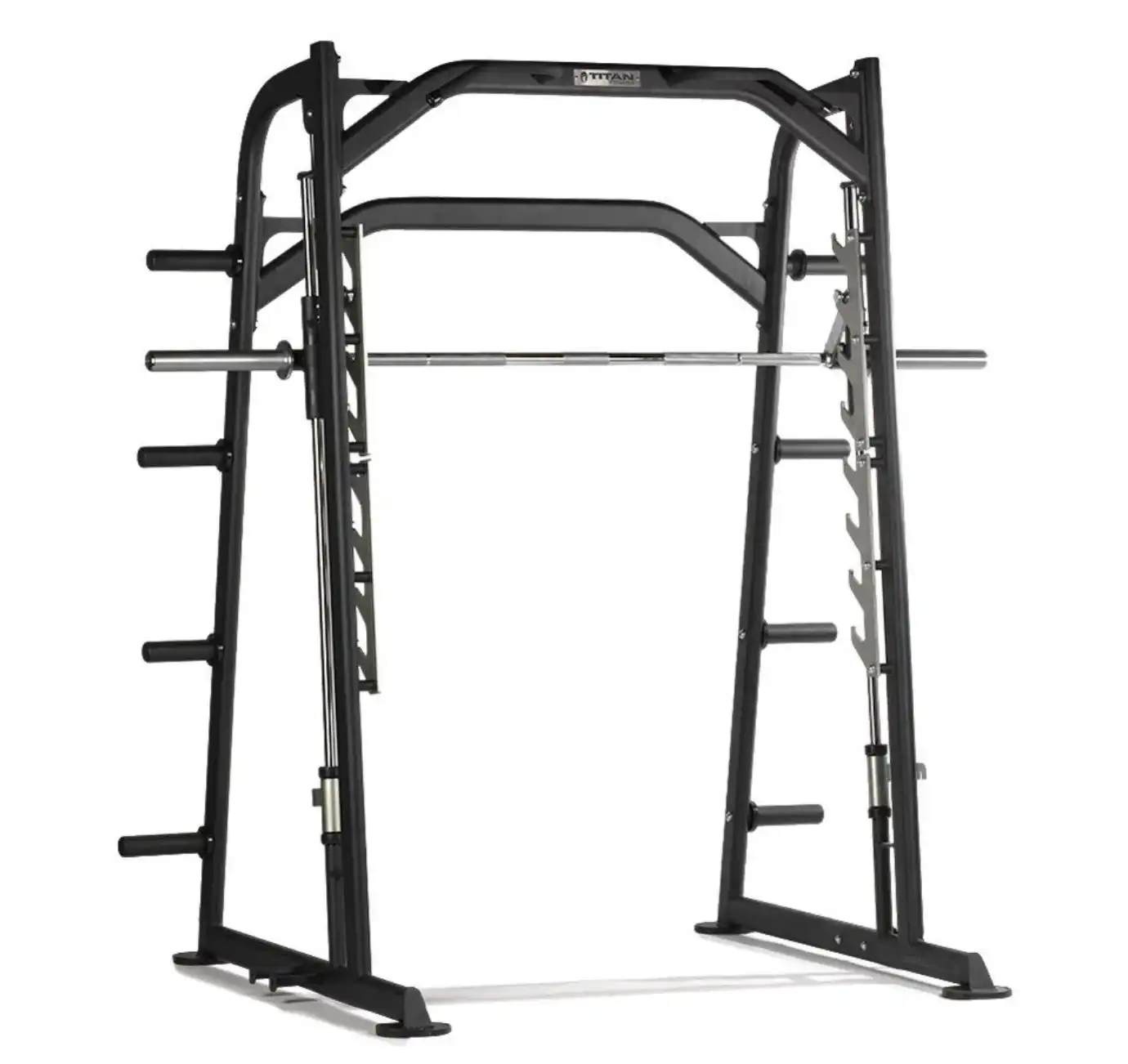
Best Standalone Smith Machine: Titan Fitness Smith Machine
For individuals seeking a robust, all-in-one solution for full-body workouts without the premium price tag of integrated functional trainers, the Titan Fitness Smith Machine presents a compelling option. While it may not offer the same breadth of versatility as the Force USA G15, its significantly more accessible price point, around $1,700, makes it an attractive proposition.
Our seasoned product tester put the Titan Smith Machine through its paces across a variety of strength training sessions and was particularly impressed by the smooth glide of the barbell and its ergonomic angled design. A standout feature for beginners and those working with lighter loads is the counterbalanced barbell, which reduces the effective weight of the 45-pound bar to a mere 15 pounds. This thoughtful design element facilitates easier initiation of movements and allows users to focus purely on the working weight.
However, echoing a common critique among Smith machines, the knurling on the Titan bar left something to be desired. "It’s fine for a Smith machine, but it’s definitely not the most grippy bar," our tester noted, suggesting that while functional, it might not provide optimal purchase for maximal lifts.
Ergonomics, on the other hand, received high praise, earning a 4 out of 5-star rating. The single-axis, angled design was found to enhance muscle activation during lower-body exercises like Smith machine squats and lunges, promoting a more natural movement pattern for many users. Crucially, the machine’s stability was a highlight, with our tester awarding a perfect 5 out of 5-star rating. She reported "no wobbling or shaking" even when lifting heavy, and emphasized the "ultra-smooth" movement of the bar, instilling complete confidence during use.
While the Titan Smith Machine is competitively priced for its feature set, its warranty policy of only one year falls short of industry expectations. Furthermore, the company’s return policy, which levies return shipping costs and a 20% restocking fee, significantly detracted from the customer experience, resulting in a disappointing score of just 2 out of 5 stars in that category. This suggests potential long-term cost implications or frustrations for users needing support or considering a return.
Best Compact Smith Machine Attachment: Bolt Fitness Supply Storm Series Stinger Attachment
For home gym owners who already possess a squat or power rack and are looking to integrate Smith machine functionality without investing in a standalone unit, the Bolt Fitness Supply Storm Series Stinger Attachment offers an ingenious space-saving solution. This universal attachment is designed for seamless integration with any 3" x 3" rack frame utilizing 1" hardware, effectively unlocking a new dimension of training possibilities.
The Stinger attachment earned a robust 4.5 out of 5 stars for versatility. Its design incorporates 12 distinct positions, providing a generous 60 inches of vertical adjustment. This range allows for rapid transitions between diverse exercises, from steep incline bench presses to Romanian deadlifts, thereby enhancing workout efficiency. A notable inclusion is the integrated 43-inch multi-grip pull-up bar, which adds further utility by enabling the development of vertical pulling strength and endurance.
In terms of construction, Bolt Fitness Supply garnered solid marks, scoring 4 out of 5 stars. However, our chief product tester offered a nuanced perspective, advising not to expect the same level of refined craftsmanship typically associated with industry giants like Rogue or REP. "You won’t see the same quality welds or powder coats from Bolt as you will from Rogue or REP," he stated, suggesting a functional yet slightly less polished aesthetic.
Consistent with observations on other models, the knurling on the Stinger’s Smith bar was a point of criticism. Its passive pattern was deemed insufficient to provide a particularly stable grip, especially when handling heavier loads. "You definitely won’t mistake this for an Olympic barbell," our tester remarked, underscoring the difference in tactile experience.
Priced at approximately $1,100, the Stinger attachment sits at the higher end for its category. For context, the Bells of Steel Smith Machine Rack Attachment is considerably more affordable at $800. This pricing, coupled with the prerequisite of owning an existing rack, led to a 3 out of 5-star rating for value. Potential buyers should factor in the cost of a complete setup if they do not already own a compatible power rack.
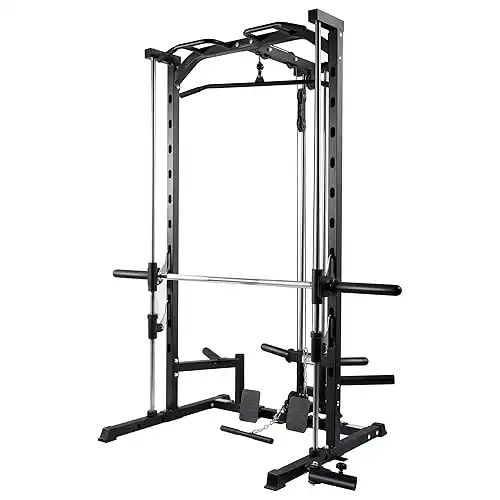
Best Budget Smith Machine: RitFit Smith Machine
For fitness enthusiasts operating under stringent budget constraints, the RitFit Smith Machine emerges as a compelling and highly economical option, earning our stamp of approval as the most affordable yet effective choice. Our top product tester succinctly captured its essence: "If you’re looking for a Smith machine and you’re on an ultra-budget, this is it."
Available on Amazon for around $500, the RitFit machine is priced at less than a third of the Titan Fitness Smith Machine and a mere tenth of the cost of the Force USA G15. While acknowledging that it may not rival the market’s most durable options, its sufficient versatility at such an attractive price point earned it a near-perfect value rating of 4.5 out of 5 stars. Dubbed a "sleeper pick," our tester humorously noted that "the low price covers so many sins."
Despite its budget positioning, the RitFit Smith Machine boasts several commendable strengths. It scored 4 out of 5 for versatility, primarily due to its integrated low row and lat pulldown capabilities, powered by a plate-loaded cable pulley system that supports up to 165 pounds. The machine also comes equipped with practical attachments, including a pin-on landmine row and two multi-purpose pull-up handles, significantly expanding its exercise repertoire.
Furthermore, its compact design makes it particularly suitable for home gym setups with limited space. Weighing a mere 140 pounds, it offers greater portability compared to the heavier, more robust machines on this list.
However, the RitFit Smith Machine is not without its compromises, which are to be expected given its price point. Our tester highlighted concerns regarding its stability and construction, awarding both categories just 3.5 out of 5 stars. The use of lighter build materials and its overall lightweight design meant it did not exhibit the same rock-solid stability as higher-priced alternatives. This makes it less ideal for lifters aiming to consistently move very heavy weights. Nevertheless, considering that one could spend a similar amount on a high-quality Olympic barbell alone, the RitFit Smith Machine remains a solid, functional choice for budget-conscious individuals.

Best Smith Machine Rack Attachment: Bulletproof VTS Lite Rack Attachment
The Bulletproof VTS Lite Rack Attachment represents an innovative leap in home gym versatility, offering a transformative solution for converting an existing squat rack into a fully functional Smith machine within minutes. Priced at approximately $700, this product from Bulletproof Fitness, a lesser-known but increasingly recognized equipment manufacturer, has captured significant attention for its ingenious concept and execution.
While our team had not yet conducted hands-on testing at the time of this review, the conceptual design and reported specifications of the VTS Lite Rack Attachment are highly promising. The Versa Trolley System (VTS) Lite allows users to utilize their own barbell within a guided Smith machine path. A key feature is the use of UHMW plastic for the rollers, a material known for its ultra-durability and smooth gliding properties, frequently seen in high-quality rack components. Weighing only 15 pounds, the VTS Lite is a significantly more user-friendly and manageable alternative to its full-sized counterpart, the 24-pound VTS. Based on its robust material selection and clever engineering, we are confident in awarding the VTS Lite a preliminary construction rating of 4 out of 5 stars.
Bulletproof further impresses with its wide range of compatibility options. The attachment is available in configurations to accommodate various rack sizes (3" x 3", 2" x 3", or 2" x 2" pairs) and offers different hook sizes to match the diameter of the user’s barbell. This commitment to broad compatibility, combined with the enhanced exercise variety it introduces to a standard rack, earns it a preliminary versatility rating of 4.5 out of 5 stars.
Slated for release in May 2025, the anticipation for this product is high. For those seeking a streamlined alternative to a standalone Smith machine, the VTS Lite offers an attractive solution that promises both space and cost savings. Considering its innovative design, versatility, and competitive pricing for a specialized attachment, we assign it a preliminary value rating of 4 out of 5, with the potential for this score to increase upon hands-on testing and confirmation of its real-world performance.
Key Considerations When Choosing a Smith Machine
Selecting the ideal Smith machine for a home gym is a decision that requires careful thought, aligning the machine’s capabilities with individual fitness goals, available space, and budget. Based on our extensive experience as equipment experts and dedicated lifters, here are the critical factors we recommend prospective buyers consider:
Size and Footprint
The physical dimensions of a Smith machine are paramount for home gym environments where space is often at a premium. Prospective buyers must measure their available area meticulously, accounting for not only the machine’s footprint but also the necessary clearance for exercises and movement around the unit. A significant advantage of modern Smith machines, particularly all-in-one trainers, is their ability to consolidate the space typically required for multiple individual workout stations (e.g., power rack, functional trainer, Smith machine). This consolidation can be a game-changer for smaller spaces.
Other Functions and Integrated Systems
Many contemporary home gym Smith machines are designed as multi-functional trainers, offering a suite of workout capabilities within a single convenient machine. Evaluate whether you need or desire additional stations such as a power rack for free weight training, a functional trainer with cable pulleys, a low-row attachment, chin-up/pull-up bars, dip stations, or even anchor points for suspension trainers. The more integrated functions a machine offers, the greater its versatility and potential value, though this often comes with a higher price tag and larger footprint.
Weight Ratio for Cable Systems
For Smith machines that include integrated cable pulley systems (often found in all-in-one trainers), understanding the weight ratio is crucial. A 1:1 ratio means that the weight you load onto the stack is the exact weight you lift, providing direct and maximal resistance. A 2:1 ratio means you lift half of the loaded weight (e.g., 100 pounds loaded feels like 50 pounds). Some advanced Force USA machines, like the G15, even offer switchable 2:1 and 4:1 ratios. Higher ratios can be beneficial for smoother movements, rehabilitation, or for exercises requiring finer resistance adjustments, but they also mean less effective resistance for heavy lifts. Consider your strength level and the types of exercises you’ll primarily use the cables for.
Weight Capacity
The maximum weight capacity of a Smith machine is a critical safety and performance factor. This figure varies significantly between models and often depends on the specific function being used (e.g., the Smith bar capacity versus a rack’s J-hook capacity). Capacities on the machines reviewed typically start around 300 pounds. Ensure that the machine’s stated weight capacity comfortably accommodates your current and projected lifting needs. Underestimating this can lead to equipment failure or injury.
Build Quality and Materials
Beyond simple durability, delve into the specifics of construction. Look for heavy-gauge steel (e.g., 11-gauge), high-quality welds, and robust finishes (like powder coating) that resist rust and wear. The smoothness of the Smith bar’s travel is often determined by the quality of the linear bearings and guide rods; stainless steel rods with high-grade bearings typically offer the best performance. Inspect the quality of pulleys (aluminum is generally superior to nylon), cables, and attachment points. These details contribute significantly to the machine’s longevity and user experience.
Bar Path and Knurling
Some Smith machines offer a strictly vertical bar path, while others feature a slight angle (e.g., 7 degrees), which some users find more biomechanically natural for squats and presses. Test the bar path if possible to see which feels more comfortable for your body mechanics. Additionally, pay close attention to the knurling on the built-in barbell. Good knurling provides a secure grip, crucial for heavy lifting. Many Smith machines, especially budget models, feature passive knurling which can be inadequate for maintaining grip, particularly when hands get sweaty or weights increase.
Assembly and Warranty
The complexity of assembly should not be underestimated. Some all-in-one units can require dozens of hours to assemble, potentially incurring additional costs for professional installation. Factor this time and potential expense into your decision. Furthermore, a robust warranty policy and responsive customer service are crucial for protecting your investment. Review the warranty length and coverage for different components, as well as the company’s return policy and restocking fees.
Best Smith Machine: Final Thoughts
The Smith machine, having evolved from a commercial gym staple to a sophisticated home gym centerpiece, offers a compelling blend of versatility, safety, and efficiency. Since its inception in the 1950s, this groundbreaking equipment has empowered lifters to train effectively and safely, often without the need for a spotter. Today’s market provides a rich tapestry of options, from robust standalone units to ingenious rack attachments and comprehensive all-in-one trainers, making the benefits of a Smith machine accessible to nearly any home gym enthusiast.
Whether your priority is maximum versatility, budget-friendliness, space efficiency, or unparalleled safety during solo workouts, there is a Smith machine designed to meet those needs. By carefully considering factors such as size, integrated functions, weight capacity, build quality, and value, home gym owners can make an informed decision that will significantly enhance their training capabilities and contribute to achieving their strength and fitness goals for years to come. Investing in the right Smith machine is not just about buying equipment; it’s about investing in a safer, more versatile, and more effective home workout experience.
Smith Machine FAQs
Are there different types of Smith machines?
Yes, Smith machines come in several variations, though all perform similar core functions. Some provide a strictly vertical path of motion, while others offer a slightly angled path, which some users find more natural for certain compound movements like squats. Beyond the bar path, the primary distinction lies in their integration: some are dedicated standalone Smith machines, others are compact attachments that convert an existing power rack, and many are designed as all-in-one trainers that combine a Smith machine with a power rack, functional trainer, and other stations. The specific features and design vary significantly by manufacturer.
Can I deadlift on a Smith machine?
Yes, you can perform deadlifts on a Smith machine, but whether it is advisable depends on your individual skills, mobility, and specific training goals. Mauro Maietta suggests asking key questions before attempting deadlifts or similar compound movements: "How is your range of motion? Do you have the proper form or mobility to perform these compound moves?" The fixed bar path can alter the biomechanics of a traditional deadlift, potentially placing different stresses on the body. If you are unsure, Maietta strongly recommends consulting with a local fitness professional who can assess your form and guide you safely. While it offers a controlled environment, it may not perfectly replicate the muscle activation and stabilization required for free-weight deadlifts.
Can you build muscle with a Smith machine?
Absolutely, you can effectively build muscle with consistent use of a Smith machine. It is widely regarded as an excellent option for strength and muscle training, particularly for beginners or those training without a spotter, due to its inherent stability and safety features. The controlled, fixed range of motion allows users to focus intensely on muscle contraction and progressive overload. However, a common drawback is that the fixed path limits the engagement of stabilizing muscles that are heavily recruited during free-weight exercises. For highly sports-specific muscle building or developing full-body functional strength, many experts still advocate for a balanced program that includes free-weight exercises to complement Smith machine training.
Is it OK to squat on a Smith machine?
Yes, squatting on a Smith machine is a common and acceptable practice. The machine’s safety features, including multiple hooks and adjustable stoppers, provide an extra layer of protection, allowing you to push your limits without fear of getting stuck under the weight. As with any exercise, mindfulness of your abilities and proper form are paramount. If you are new to squatting on a Smith machine or unsure about your technique, it is always recommended to consult with a fitness professional. They can help ensure you maintain correct form and execute the movement safely and effectively to maximize benefits and minimize risk of injury.