The Battle of the Oaks: Wesley Vissers’ Leg Development Sparks Intense Debate Against Arnold Schwarzenegger’s Legendary Physique on The Menace Podcast

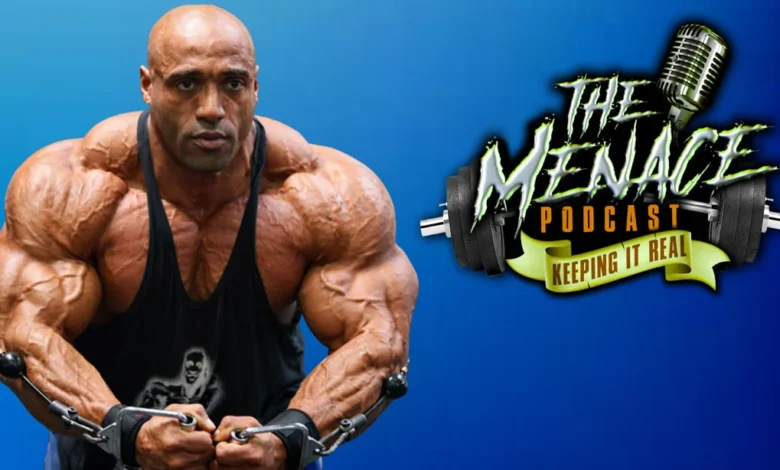
In a recent and highly anticipated episode, number 282, of The Menace Podcast, host Dennis James, alongside his seasoned panel of bodybuilding veterans Milos Sarcev and Chris Cormier, ignited a fervent discussion within the fitness community by comparing the contemporary leg development of Classic Physique competitor Wesley Vissers to that of the iconic seven-time Mr. Olympia, Arnold Schwarzenegger. The debate, prompted by Vissers’ recent impressive leg gains showcased on social media, delves into the ever-evolving standards of bodybuilding aesthetics and the advancements in training methodologies over several decades.
The Genesis of a Comparison: Two Eras, Two Oaks
Wesley Vissers, affectionately known as "The Dutch Oak," has garnered significant attention in the bodybuilding world for his classical physique and remarkable symmetry, often drawing parallels to the legendary "Austrian Oak" himself, Arnold Schwarzenegger. This resemblance, both in nickname and physical presentation, naturally sets the stage for direct comparisons, particularly as Vissers continues to refine his physique. His recent Instagram update, featuring undeniably massive and highly conditioned lower extremities, served as the catalyst for the podcast discussion, raising the audacious question: could Vissers’ legs now surpass those of Schwarzenegger at his peak?
The discussion commenced with Dennis James directly posing the question to his co-hosts: "Do you think Wesley’s legs are smaller than Arnold’s?" Both Chris Cormier, a respected figure in professional bodybuilding and coaching, and Milos Sarcev, renowned for his extensive knowledge of training and nutrition, initially concluded that Wesley’s legs were indeed smaller. However, James, known for his provocative takes and deep insight into contemporary physiques, challenged this consensus, asserting, "No, Wesley’s legs are bigger than Arnold’s legs." This bold statement immediately set the tone for a deeper analysis, moving beyond a simple visual assessment to consider factors like proportion, conditioning, and the historical context of each athlete’s era.
Arnold’s Enduring Legacy: The Benchmark of Muscularity
To fully appreciate the gravity of comparing any athlete to Arnold Schwarzenegger, one must understand the monumental impact of his physique during the Golden Era of bodybuilding. Schwarzenegger’s physique, particularly from the late 1960s through the late 1970s, established the archetype for masculine beauty and muscularity that captivated the world. His immense chest, broad shoulders, and iconic biceps were complemented by a well-developed, albeit sometimes criticized for being less dominant than his upper body, set of legs.
At the zenith of his competitive career, when he dominated the Mr. Olympia stage, Arnold Schwarzenegger’s measurements were meticulously documented and widely cited. His thighs reportedly measured an impressive 28.5 inches, while his calves boasted a substantial 20 inches. These figures, while perhaps not reaching the extreme dimensions seen in later eras of "mass monster" bodybuilding, were considered phenomenal for his time. They represented a pinnacle of natural development and disciplined training, especially given the training knowledge, nutritional understanding, and supplement availability of the era. Schwarzenegger’s leg training, though rigorous, often focused on high volume and fundamental movements like squats, lunges, and leg extensions, emphasizing the "pump" and a full range of motion. The equipment available was rudimentary compared to today’s sophisticated machinery, placing a greater reliance on raw strength, mental fortitude, and basic free-weight principles.
Wesley Vissers: The Modern Contender’s Ascent
In contrast to Arnold’s well-documented statistics, Wesley Vissers’ precise leg measurements have not been publicly disclosed. This lack of concrete data adds an element of subjective judgment to the debate, relying heavily on visual comparisons and expert opinion. However, Vissers’ rapid progression and the sheer visual impact of his recent leg development are undeniable. His dedication to classic aesthetics within the Classic Physique division, which emphasizes symmetry, proportion, and muscularity with a smaller waistline compared to Open Bodybuilding, means that every muscle group must be developed to a high degree of refinement.
The podcast hosts acknowledged Vissers’ journey, with Dennis James noting, "A couple of years ago, for sure, (Visser’s legs were) smaller, (but now now)." This observation highlights Vissers’ commitment to continuous improvement and his successful application of modern training principles to overcome previous physique limitations.
Contextualizing the Comparison: Height and Proportions
An important factor introduced into the discussion by Chris Cormier was the height difference between the two athletes. "Isn’t he an inch or two taller than Arnold?" Cormier asked, seeking a more equitable context for comparison. James confirmed this observation, stating, "Maybe, yeah, cuz (Vissers) is 6’ 3”, Arnold is 6’ 2”." This seemingly minor difference can significantly impact how muscle mass is distributed and perceived. A taller frame can potentially accommodate greater absolute muscle mass without appearing disproportionately large, or conversely, it can make a given measurement appear less massive relative to the overall height. For a fair visual comparison, the length of the limbs, the muscle bellies, and their overall density in relation to the athlete’s height and frame must be considered. While Arnold’s 28.5-inch thighs were on a 6’2" frame, Vissers’ potentially larger, or at least equally impressive, legs would be distributed over a slightly taller stature, which could influence perception of their overall "bigness."
The Evolution of Leg Training: A Paradigm Shift
One of the most compelling aspects of the podcast discussion, and indeed the broader debate, revolves around the significant advancements in leg training methodologies over the past four to five decades. Chris Cormier astutely observed that "the methods behind training legs are more advanced these days, and can perhaps lead to greater results than Arnold’s heyday of the late 70s and early 80s." Milos Sarcev emphatically agreed, stating, "Yeah, whatever Wesley’s doing now, it’s working big time."
This isn’t merely a casual observation; it reflects a fundamental paradigm shift in bodybuilding science and practice. In Arnold’s era, training was often characterized by:
- High Volume: Many sets and reps, often chasing the "pump" with less emphasis on precise intensity or proximity to failure.
- Basic Compound Movements: Squats, leg presses, hack squats, and extensions formed the core, performed with heavy weights but perhaps less understanding of specific muscle fiber activation.
- Limited Scientific Understanding: Exercise science, nutrition, and recovery protocols were not as advanced or widely disseminated as they are today.
- Intuitive Training: Many bodybuilders trained based on feel and tradition rather than empirical data.
The modern approach to leg training, as exemplified by athletes like Wesley Vissers and advocated by experts like Milos Sarcev, has evolved significantly:
- Intensity and Proximity to Failure: The focus has shifted from simply performing many sets to ensuring that each working set is taken to or very near muscular failure, maximizing the stimulus for hypertrophy. This optimizes mechanical tension, a primary driver of muscle growth.
- Progressive Overload: While always a principle, modern training emphasizes meticulously tracking and progressively increasing resistance, reps, or volume over time, ensuring continuous adaptation.
- Targeted Muscle Activation: A deeper understanding of biomechanics allows for more precise exercise selection and execution to target specific heads of the quadriceps, hamstrings, and calves.
- Periodization and Recovery: Training cycles are often periodized to optimize performance and prevent overtraining, with a greater emphasis on recovery protocols, including advanced nutrition, supplementation, and therapeutic techniques.
- Advanced Equipment: Modern gyms offer a wider array of sophisticated machines designed to isolate muscles, provide consistent resistance curves, and minimize injury risk, complementing traditional free weights.
- Nutritional Science: Contemporary bodybuilders benefit from advanced knowledge in macronutrient timing, micronutrient optimization, and the role of various supplements in muscle growth and recovery.
These advancements collectively suggest that a genetically gifted athlete today, applying these refined principles, could potentially achieve a level of muscular development, density, and conditioning that might surpass even the legends of previous generations, particularly in specific muscle groups that were not always the absolute focus of earlier eras.
Implications for Bodybuilding and the Legacy Debate
The discussion on The Menace Podcast is more than just a casual comparison; it taps into broader implications for the sport of bodybuilding.
- The Enduring Relevance of Classic Physique: The Classic Physique division, with its emphasis on aesthetics and proportionality reminiscent of the Golden Era, inevitably invites comparisons to icons like Arnold. Vissers’ success and the debate around his physique underscore the division’s appeal and its role in preserving a certain ideal of bodybuilding.
- Celebrating Progress While Respecting Legacy: The debate does not diminish Arnold Schwarzenegger’s status as a foundational figure in bodybuilding. Instead, it highlights the continuous evolution of the sport. Modern athletes stand on the shoulders of giants, benefiting from the knowledge accumulated over decades. The question is not about who is "better" overall, but rather about specific anatomical achievements and how training has advanced.
- The Subjectivity of "Bigger": The very term "bigger" is subjective. Does it refer to absolute circumference, density, striations, or overall visual impact proportionate to the rest of the physique? The hosts’ differing opinions underscore this complexity. James might be referring to overall muscle mass and density, while Cormier and Sarcev might initially have been thinking about pure circumference relative to Arnold’s legendary numbers.
- Motivation for Aspiring Athletes: Such discussions inspire current and aspiring bodybuilders, demonstrating that even historical benchmarks can be challenged and potentially surpassed through relentless dedication and the intelligent application of evolving scientific principles.
Conclusion: An Ongoing Dialogue
The debate ignited on The Menace Podcast concerning Wesley Vissers’ leg development in comparison to Arnold Schwarzenegger’s is a testament to the dynamic nature of bodybuilding. It underscores the sport’s constant evolution, driven by advancements in training science, nutrition, and a deeper understanding of human physiology. While Arnold’s legacy remains untouchable as a pioneer and global icon, the emergence of athletes like Vissers, who embody the refined aesthetics of the Classic Physique division and leverage modern methodologies, provides compelling evidence that the pursuit of physical perfection continues to reach new heights. Whether Vissers’ legs are definitively "bigger" than Arnold’s at his peak remains a subjective point of contention for many, but the discussion itself serves as a fascinating intersection of history, progress, and the enduring passion for physical excellence in the world of bodybuilding.
For those interested in delving deeper into this intriguing discussion and other breaking bodybuilding news, including insights from the recent FIBO event in Germany, the full episode of The Menace Podcast is available for viewing on the Muscle & Fitness YouTube channel.