The Desensitization of War: How Mediaspeak and Visual Culture Blur Reality and Erode Empathy

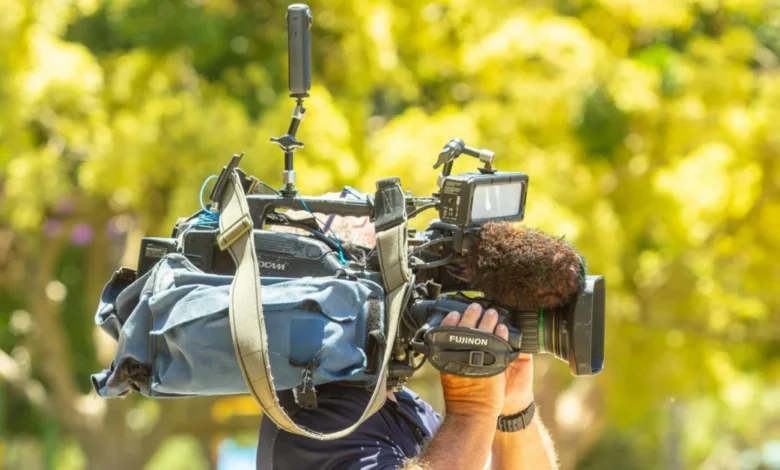
The current global landscape is frequently marked by armed conflicts, and a significant portion of the public’s understanding of these wars is derived from video imagery. This reliance on mediated visuals presents a complex problem concerning the perception of conflict, a phenomenon that predates recent escalations such as the Israeli-American conflict with Iran. Its roots trace back to earlier epochs of modern warfare, fundamentally altering how societies engage with the realities of combat, injury, and death.
The Dawn of Televised War and the Genesis of Mediaspeak
The Vietnam War marked a pivotal moment in the history of conflict reporting. For the first time, mass audiences were regularly exposed to uncensored, often graphic, images of fighting, casualties, and fatalities directly from the battlefield, broadcast into their living rooms. This unprecedented visual access shattered previous illusions of war as a distant, abstract concept, forcing a confrontation with its brutal realities. The emotional distress and widespread public unease generated by these raw depictions spurred a linguistic evolution within media and military discourse. To mitigate the visceral impact of these sights, a new vocabulary began to emerge, borrowing metaphors and rhetorical strategies from fictional narratives and visual entertainment, thereby creating a buffer between the harsh truth and public consciousness.
This phenomenon has since proliferated, leading to the gradual establishment of an extensive lexicon of "mediaspeak" terms applied to real-life military operations and geopolitical events. This specialized vocabulary includes, but is not limited to, phrases such as collateral damage, neutralized, canceled, surgical strike, playbook, rules of the game, high-value target, and gamechanger. Each of these terms serves a distinct, yet interconnected, purpose: to facilitate moral distancing and to soften the grim implications of military actions.
Anatomy of Emotional Flattening and Reframing
The unchecked progression of this interchangeability between the vocabulary of media and the harsh realities of conflict has profound psychological and societal implications. Events that, under normal circumstances, would provoke widespread distress—such as large-scale genocidal attacks on populations with competing claims to land or resources—are routinely subjected to an emotional flattening. Individuals are reclassified as "targets" to be "neutralized," stripped of their humanity and reduced to tactical objectives. Similarly, the use of terms like "canceling" or "eliminating" in the context of human lives serves as an emotional reframing mechanism, designed to evoke minimal or no empathetic response. The word "neutralize," in particular, functions as a psychological buffer, significantly reducing the normal human distress associated with witnessing or contemplating carnage and destruction.
This insidious shift from a direct engagement with reality to the more palatable, often sanitized, "fantasy world" of mediaspeak is further facilitated by its infiltration into everyday discourse. The casual adoption of media-associated terms in common parlance normalizes their underlying assumptions. Individuals might "cancel" social engagements without serious repercussions, just as a salesperson might refer to potential clients as "targets." This everyday usage unwittingly reinforces the desensitizing power of such language, blurring the lines between abstract concepts and concrete, often violent, realities.
The Digital Battlefield: War Games and Surreal Perceptions
The visual and linguistic landscape of modern conflict also shares striking commonalities with computer war games. In both virtual and real-world combat scenarios, "targets" frequently appear briefly on a screen before being "vaporized" in an incandescent flash, creating moments that evoke a peculiar blend of "shock and awe." The repeated exposure to such visually mediated events, whether real or simulated, is often processed through a form of psychological legerdemain that depicts and describes war in cinematic terms. This can lead to perceptions where genuine events are described as "surreal" or "like something out of a movie," phrases indicative of individuals processing reality through entertainment templates.
This detachment from reality, facilitated by a "safe, comfy distance" from televised or streamed violence, has a long historical precedent. From ancient gladiatorial contests to modern-day action films, humans have often found a peculiar fascination in observing simulated violence. Decades of exposure to violence and mayhem in movies and on television screens have conditioned audiences to approach real-life depictions of battlefield horrors with a similar mindset, akin to watching "special effects" in a cinema. Consequently, mediaspeak serves as a readily accessible defense mechanism against uncomfortable emotions, allowing individuals to intellectually acknowledge conflict without fully internalizing its human cost.
Consider a thought experiment: Imagine viewing a graphic video depicting the torture and killing of a young child. The intensity of distress would likely differ significantly if one were told the video was a scene from a horror movie versus documentation from a serial killer’s diary. The former, though disturbing, offers the psychological safety net of fiction, allowing for emotional processing within a predefined, less threatening framework. The latter, however, directly confronts the viewer with unadulterated reality, typically eliciting a far more profound and enduring sense of horror.
This principle is not merely theoretical. Accounts from professionals who routinely encounter extreme violence, such as law enforcement or forensic psychologists, often reveal the psychological toll of direct exposure to unmediated brutality. One such account describes a lecturer at the FBI Academy in Quantico, Virginia, specializing in the neuropsychiatry of serial killers, who was asked to review a video made by a sadistic perpetrator. Despite professional training, the experience was deeply disturbing, leading to prolonged mental distress and disrupted sleep. The suggestion from a colleague to reframe the true-life experience as "not real," but rather an excerpt from a horror movie, offered a surprising degree of psychological relief. By conceptualizing the killer and victim as "actors" in a fictional narrative, the professional was able to mitigate the overwhelming emotional impact, leading to a normalization of sleep and a reduction in distress. While effective in the short term, such a strategy raises profound ethical questions about the long-term implications of mentally transforming reality into fiction.
National Scale Transformations and the Depletion of Humanity
These individual psychological transformations are now occurring on a national, even global, scale. Societies increasingly choose to accept media-inspired euphemisms that actively prevent a direct engagement with, and most importantly, an experiencing of, the true nature of ongoing conflicts. Human cognitive faculties of imagination and creativity, while invaluable for problem-solving and artistic expression, can also be co-opted to transform profoundly difficult, even horrific, events into something less disturbing. While this capacity for psychological defense is beneficial for individual coping in certain contexts, a critical problem arises when this transformation becomes pervasive and unchecked: it slowly depletes the collective capacity to identify with others enduring experiences that most would desperately seek to avoid themselves.
The accompanying vocabulary of mediaspeak is at the core of this issue. Instead of recognizing and confronting the horrific nature of violence, regardless of its form, societies increasingly employ this specialized language to shield themselves from the pain of raw emotion. This process appears relentless, with little respite. For instance, in a hypothetical scenario where Iranian civilians, including women and children, surrounded power stations and other "high-value targets," a temporary ceasefire might be called. The critical question then arises: Was this ceasefire established primarily to prevent the deaths of thousands of non-combatant civilians and the global witnessing of these deaths via video, or was it because no convenient mediaspeak term had yet been devised to adequately obfuscate such an outrageous moral transgression on that scale?
Implications for Public Discourse and Policy
The implications of this pervasive mediaspeak extend far beyond individual psychological states. It fundamentally reshapes public discourse, policy debates, and even international relations. When the public is consistently exposed to sanitized language and visually mediated versions of war, the ability to critically evaluate military actions, question political decisions, and hold leaders accountable is significantly impaired. The abstraction of conflict through euphemisms can lead to:
- Reduced Public Opposition: By making war seem less brutal, it can lower public resistance to military interventions, even those with significant human costs.
- Erosion of Accountability: If civilian casualties are merely "collateral damage," the impetus to investigate and prevent such occurrences diminishes. Political and military leaders may face less scrutiny for actions described in detached, technical terms.
- Distorted Moral Compass: The constant redefinition of violent acts through euphemism can gradually warp a society’s moral compass, making it harder to distinguish between acceptable and unacceptable actions in conflict.
- Barriers to Diplomacy: When one side frames its actions in dehumanizing or clinical terms, it can exacerbate tensions and hinder diplomatic efforts, as the human element of conflict is deliberately ignored or downplayed.
Ethical Imperatives for Media and Society
The media, as purveyors of information, bear a significant ethical responsibility in this context. While the pressures of reporting on fast-moving conflicts are immense, the choice of language and visual framing can profoundly impact public perception. Journalistic integrity demands a commitment to factual, unvarnished reporting that resists the allure of convenient euphemisms. Similarly, policymakers and military strategists have a responsibility to communicate truthfully and transparently, even when the truth is uncomfortable.
Countering the Euphemism: A Call for Critical Engagement
Combating the pervasive influence of mediaspeak and the desensitization it fosters requires a concerted effort at both individual and societal levels. First and foremost, individuals must cultivate a conscious awareness of the distinction between mediated representations and tangible reality. A daily reaffirmation that "This is reality, not a video!" can serve as a vital cognitive anchor. Second, a critical self-assessment is necessary whenever one finds themselves employing or encountering the vocabulary of mediaspeak. Recognizing and questioning these terms can prevent emotional blunting and safeguard sound judgment. For instance, understanding that killing is not merely "taking out" someone, and that the willful homicide of non-combatant women and children constitutes not "collateral damage" but a war crime, is crucial for maintaining moral clarity.
As George Orwell presciently observed over seven decades ago, "Language (often spread through media) makes war more acceptable by disguising its brutality." His words serve as a timeless warning against the manipulation of language to obscure truth and normalize violence. In an era saturated with digital imagery and carefully crafted narratives, the imperative to critically engage with the language of conflict has never been more vital for preserving empathy, fostering accountability, and upholding the fundamental values of humanity.
Copyright Richard M. Restak, M.D., 2026.