Koby Langley: From Decorated Military Officer to Architect of U.S. Olympic and Paralympic Excellence

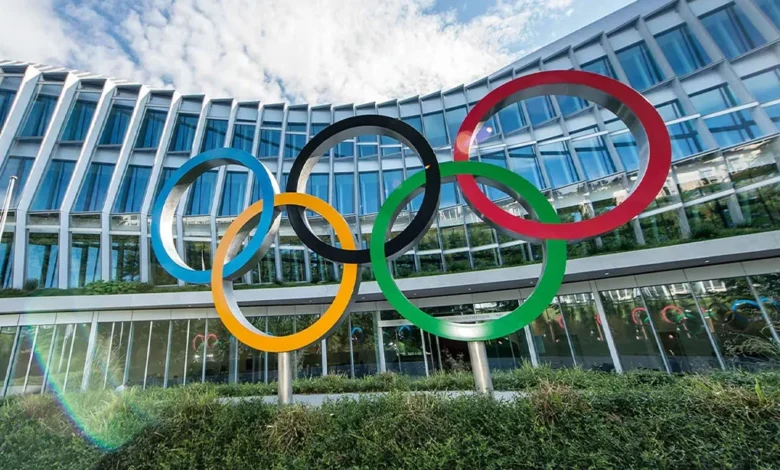
Many Americans share a poignant collective memory: gathering with family, eyes glued to a television screen, witnessing the awe-inspiring spectacle of elite athletes pushing the boundaries of human potential on the Olympic stage. These competitions are not merely sporting events; they represent the culmination of years, often decades, of unwavering dedication to a chosen discipline. They are also powerful platforms where men and women proudly don their nation’s colors, carrying the hopes and aspirations of millions under an intense global spotlight. For Koby Langley, this childhood inspiration has evolved into a profound professional commitment, as he now serves as the Chief Operating Officer of the United States Olympic & Paralympic Committee (USOPC), a role that offers him an unparalleled vantage point into the demanding lives of these world-class competitors.
Langley, who assumed the COO position in October 2025, recalls his early admiration for these athletes’ greatness. However, his current role has deepened his appreciation significantly, offering an intimate understanding of the relentless commitment to excellence required. "I always knew they were elite athletes," Langley states, "but what really impressed me was all the other sacrifices they have to make in order to become elite athletes." This insight underscores a core truth: the pursuit of Olympic glory extends far beyond physical training, encompassing immense personal sacrifices, mental fortitude, and an unwavering, singular focus that defines nearly every hour of their lives.
From U.S. Army Officer to USOPC COO: Koby Langley’s Transformative Journey
While Koby Langley never competed in the Olympic Games himself, his understanding of representing the United States on a grand scale is deeply ingrained. His journey began at the age of 17 when he signed an ROTC contract, setting him on a path to serve in the United States Army. After graduating from the prestigious University of Notre Dame, Langley became a Judge Advocate General (JAG) officer, joining the storied 82nd Airborne Division. His military career saw him deployed twice, including a critical tour during the initial invasion of Iraq in 2003 as part of Operation Shock and Awe. This intense period of service earned him a Bronze Star, a testament to his valor and leadership in combat.
Reflecting on his time in uniform, Langley emphasizes the transformative power of being pushed beyond one’s perceived limits. "When you work in parts of the military that really push you, and I think the 82nd pushed me by being in combat, you come out with a sense of confidence and a belief that you can do much more than what you originally thought you could do," he shares. This crucible of experience forged a resilient leader, equipping him with invaluable skills in crisis management, strategic planning, and motivating diverse teams under pressure – attributes that would prove essential in his subsequent civilian career and his current leadership role at the USOPC.
A Dedicated Advocate: Post-Military Service and Public Leadership
Upon concluding his distinguished military career, Langley seamlessly transitioned into a new chapter of public service, dedicating himself to advocating for veterans and their families. His post-military endeavors began by actively supporting an Iraq War veteran’s successful campaign for election to Congress, demonstrating his commitment to ensuring veterans’ voices were heard at the highest levels of government. Following this, Langley joined the Department of Veteran Affairs, where he contributed to policies and programs designed to support those who had served. His expertise and passion then led him to the Department of Defense, specifically the Pentagon’s Office of Warrior Care and Transition Policy, a critical role focused on ensuring comprehensive care and support for wounded, ill, and injured service members and their families.
Langley’s impressive trajectory continued when he joined the Obama administration, tasked with leading their Veteran and Military Family Constituency team. This role placed him at the nexus of policy and community engagement, working to address the needs of military families nationwide. Prior to his appointment as COO of the USOPC, Langley’ served as a prominent leader at the American Red Cross. He steadily climbed the organizational ranks, eventually overseeing the entire Northeast division. In this significant leadership capacity, he managed a team of 600 dedicated staff and volunteers, navigating a nine-figure budget while responding to countless emergencies and humanitarian crises. This extensive experience in large-scale operations, resource management, and high-stakes decision-making proved to be a pivotal preparation for his current responsibilities. "All that experience ultimately was what led me to being here," Langley affirms, acknowledging the cumulative impact of his diverse leadership roles.
Inside One Olympic Plaza: The Colorado Springs Training Center
"Here" for Koby Langley is the USOPC Training Center in Colorado Springs, Colorado, a sprawling 34-acre campus that serves as the vital heartbeat and primary support system for hundreds of American athletes. Since November 2025, Langley has been immersed in the dynamic environment of One Olympic Plaza, witnessing firsthand the relentless pursuit of excellence by athletes who devote their lives to mastering their crafts. This facility is a testament to the USOPC’s comprehensive commitment, providing a holistic ecosystem designed to prepare athletes – mind, body, and soul – for the world’s biggest sporting stage.
The Colorado Springs center offers an extensive array of resources, including state-of-the-art training facilities, advanced sports science laboratories, comprehensive mental health services, expert nutritional guidance, and even financial stipends in certain cases to alleviate the economic pressures on aspiring Olympians and Paralympians. These critical services are available to both resident athletes living on campus and non-resident participants who utilize the facilities. Walking the grounds, surrounded by iconic symbols like Olympic torches and the very spaces where legends such as Michael Phelps honed their skills to become the most decorated Olympian in history, is an experience Langley deeply cherishes. "The Olympic torch is personally my favorite," he shares. "I love the fact that we have a lot of our Olympic torches here in Colorado Springs and that we light that at the beginning of every Olympics and Paralympics. Wouldn’t miss that for the world." This sentiment reflects a profound connection to the history and enduring spirit of the Games that permeates the campus.
Team USA’s Triumphs: A Recap of the 2026 Winter Olympics
The USOPC’s commitment bore fruit spectacularly at the 2026 Winter Olympics in Milano-Cortina, Italy. Team USA fielded its largest contingent in American Winter Olympic history, with 232 athletes competing across various disciplines. Koby Langley proudly reports that this outing was one of the most successful winter efforts ever for the United States, highlighted by a national record of 12 gold medals. Among these historic victories were triumphant performances by both the Men’s and Women’s Hockey teams, capturing gold and electrifying audiences back home. "One of the best, without a doubt," Langley proclaimed, underscoring the exceptional achievements of the American delegation. The success in Milano-Cortina not only celebrated individual and team triumphs but also showcased the effectiveness of the USOPC’s athlete development and support programs.
The Road to Los Angeles 2028: Preparing for a Home Games
However, in the world of elite sports, there is little time for complacency. The triumph of the 2026 Winter Games has quickly given way to intense preparation for the upcoming 2028 Summer Games, which will be hosted on American soil in Los Angeles, California. The prospect of a home Olympics ignites a unique fervor, with countless athletes already deep into their training regimens, striving to qualify and earn the honor of representing the red, white, and blue in front of a home crowd.
Langley and his dedicated team at the USOPC are simultaneously working on multiple fronts: ensuring robust support for these aspiring athletes and meticulously preparing the nation to serve as a gracious and efficient host for the global spectacle. The logistical and operational challenges of organizing an event of this magnitude are immense, requiring intricate coordination across numerous stakeholders, from local government agencies to international sports federations. Yet, Langley’s extensive background in the military and various government roles has equipped him with a unique skill set to navigate such complex undertakings. While his current service to the nation differs from wearing a uniform on the battlefield, his leadership at the USOPC represents another profound way he contributes to the United States’ standing on the world stage.
Langley articulates the deeper significance of the Olympic movement: "The Olympics are a place for peaceful competition, and you have to have those spaces." He also points to the historical roots of the Games, noting, "This actually started by bringing in former military members and veterans and having them compete as a way to continue their physical fitness and demonstrate the capabilities of their country." This perspective highlights the enduring connection between athletic prowess, national representation, and the broader ideals of unity and peaceful global engagement. Hosting the Games in Los Angeles in 2028 will not only be a showcase for American athletes but also an opportunity for the nation to project these values globally.
World Class Athlete Program (WCAP): Where Soldiers Become Olympians
The inspirational narratives within Team USA are rich and varied, often featuring individuals who have also served their country in uniform. Koby Langley draws attention to remarkable stories like that of Katie Verderber, an Army veteran whose military career ended with a medical retirement in 2019 following a spinal injury sustained in Afghanistan. Verderber’s journey of resilience led her to discover wheelchair curling in 2024, culminating in her selection for the 2026 U.S. Paralympic team. "Watching her compete… grit, humility, determination, all of those things that she learned when she was in the military. That’s really what military members and veteran athletes bring," Langley observes, underscoring the invaluable qualities that service instills.
For the select few Americans who possess both the experience of military service and the extraordinary talent to represent Team USA at the Olympics, there are specialized programs designed to support their dual aspirations. The World Class Athlete Program (WCAP), operated by both the U.S. Army and the U.S. Air Force, is a prime example. These programs are meticulously structured to enable active duty, Reserve, and National Guard members to pursue their Olympic and Paralympic dreams while simultaneously fulfilling their military duties. WCAP athletes participate in a diverse range of sports, from wrestling and shooting to bobsled and track and field, promoting service in the military through community engagement and inspiring future generations.
Langley speaks with immense pride about programs like WCAP, recognizing their profound impact. "It has a proven track record since 1948. Over 450 soldiers have represented the United States at the Olympics, and they have earned a total of 112 medals. WCAP is an amazing program," he states. This historical success underscores WCAP’s critical role in identifying and nurturing talent within the armed forces, allowing these exceptional individuals to serve their nation in two distinct yet equally impactful ways: defending freedom and pursuing athletic excellence on the global stage.
Beyond the Gym: Why Training Like an Olympian Builds Success in Life
Koby Langley understands that countless children and families, inspired by the performances in Italy and anticipating the excitement of Los Angeles 2028, harbor their own Olympic dreams. While many of these aspirations may face obstacles or doubts, Langley offers a powerful message of optimism and encouragement. He urges individuals to pursue these dreams relentlessly, emphasizing that even if the ultimate goal of reaching the Olympic podium remains elusive, the journey itself cultivates invaluable life skills that transcend the athletic arena.
"There are so many things about being or training to be an elite athlete that even if you never make it to the medal stand, they translate into skills that will make you an asset for any organization that is looking for people to perform well under pressure. Keep going," Langley advises. The discipline, resilience, goal-setting, teamwork, and ability to perform under immense pressure that are honed in the pursuit of athletic excellence are universally transferable. These qualities are highly sought after in virtually every professional field, from corporate leadership to scientific research. The lessons learned through dedication, perseverance, and overcoming adversity on the path to athletic mastery lay a robust foundation for success in any endeavor, empowering individuals to "level up" in ways that can lead to greater achievements than if they had never dared to pursue greatness.
Koby Langley’s journey from a decorated military officer to the Chief Operating Officer of the USOPC exemplifies this very principle. His life story is a testament to the power of commitment, service, and the relentless pursuit of excellence, whether on the battlefield, in government, or at the helm of an organization dedicated to inspiring a nation through sport.
To learn more about the USOPC and its mission, visit their official website. You can also connect with Koby Langley on LinkedIn to follow his work and insights.
M&F Military Editor Rob Wilkins contributed to this Fit to Serve article.