The Science of Intentional Well-being
The concept of a happiness calendar is rooted in the burgeoning field of positive psychology, which shifts the focus from merely treating mental health disorders to actively cultivating human flourishing. Research conducted over the past two decades suggests that well-being is not a static trait but a skill that can be developed through consistent, intentional practice.
Data from the American Psychological Association (APA) indicates that chronic stress remains a primary health concern for adults globally, with significant correlations between high stress levels and physical ailments such as hypertension, cardiovascular disease, and weakened immune function. By providing a day-by-day roadmap, the Greater Good Science Center aims to lower the barrier to entry for individuals attempting to adopt mindfulness practices. Rather than requiring significant time investments or financial resources, these micro-habits—often taking less than ten minutes a day—are designed to shift cognitive patterns toward a more optimistic and resilient outlook.
A Chronology of the Happiness Movement
The development of structured happiness curricula can be traced back to the late 1990s, when Martin Seligman, the former president of the American Psychological Association, helped formalize positive psychology as a legitimate academic discipline. Since then, the movement has expanded from university lecture halls into the mainstream, with digital tools like the Happiness Calendar becoming increasingly popular during the post-pandemic era.
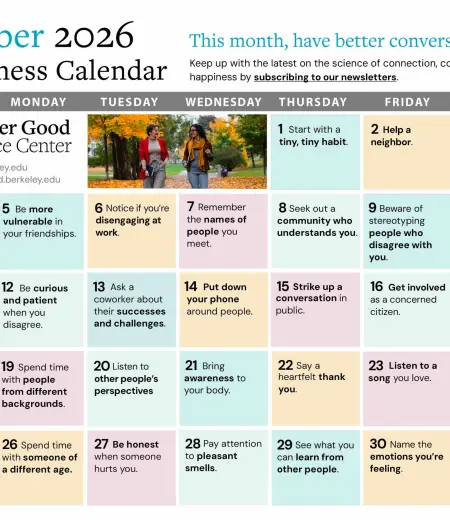
October 2026 marks a specific point in this timeline where digital literacy meets mental health advocacy. Following the integration of mobile-first health apps into the daily lives of millions, the Greater Good Science Center has refined its approach to reach a wider demographic. The transition from physical calendars to interactive, clickable PDF formats reflects a broader trend in health-tech, where accessibility is prioritized to ensure that mental health tools are available to users regardless of their technical proficiency.
Understanding the Methodology
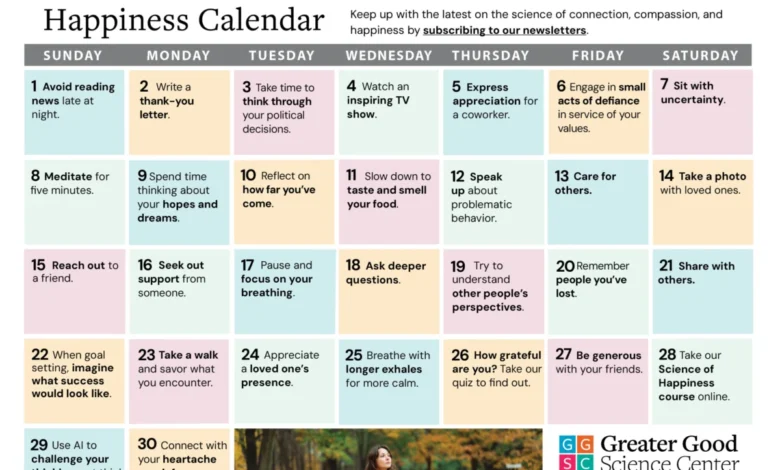
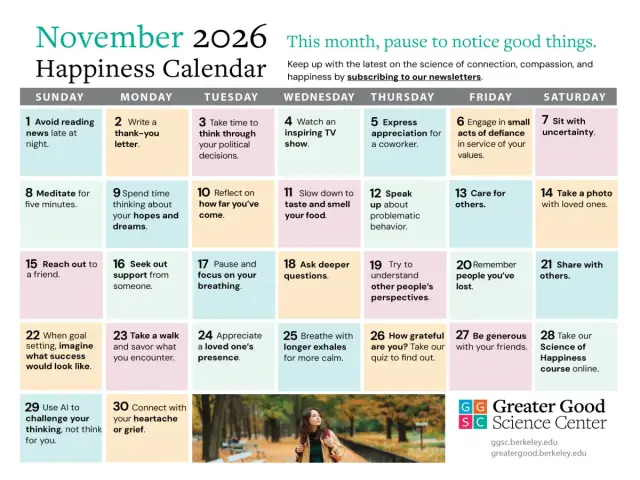
The calendar for October 2026 is curated by Kira M. Newman and the editorial team at the Greater Good Science Center, who draw upon peer-reviewed studies to select each day’s prompt. These prompts are not arbitrary; they are selected based on their efficacy in boosting subjective well-being.

For instance, several days within the October calendar emphasize "savoring"—the process of noticing and appreciating positive experiences. Psychological studies have consistently shown that savoring acts as a buffer against negative emotions. When individuals engage in active savoring, they stimulate the brain’s reward centers, which can counteract the "hedonic treadmill," a phenomenon where humans quickly return to a relatively stable level of happiness despite positive or negative events.
Furthermore, the calendar incorporates social connection exercises. Given that loneliness has been identified by the Surgeon General as a public health epidemic with mortality risks comparable to smoking 15 cigarettes a day, the inclusion of prompts related to community engagement and social outreach is a deliberate public health strategy.

Navigating the Digital Interface
The release of the October 2026 calendar comes with specific technical considerations. As users move toward more diverse browsing environments, the Greater Good Science Center has provided troubleshooting resources for those utilizing Google Chrome or other browsers that may struggle with PDF rendering. This attention to user experience (UX) is crucial in the digital health sector; research shows that friction in the user interface is one of the leading causes of user drop-off in health-tracking applications. By providing clear guidance on Adobe Reader integration and browser compatibility, the organization ensures that the psychological benefits of the calendar are not hindered by technical hurdles.
Broader Impact and Public Health Implications
The implications of widespread adoption of these simple daily practices are significant. If even a small percentage of a population engages in daily gratitude or mindfulness, the aggregate impact on healthcare costs could be substantial. Preventive mental health care is often underfunded compared to reactive clinical interventions. By providing open-access resources, the Greater Good Science Center functions as a bridge between high-level academic research and public application.

Critics of such tools sometimes argue that they represent a "commodification of happiness" or suggest that systemic issues, such as economic instability or workplace burnout, cannot be solved by individual mindset shifts. However, proponents argue that individual resilience is a necessary component of broader social change. When individuals are less prone to burnout and more emotionally regulated, they are better equipped to advocate for structural changes in their workplaces and communities.
Expert Perspectives on Habit Formation
Dr. Sarah Jenkins, a behavioral psychologist specializing in habit formation, notes that the success of a calendar-based approach lies in the psychological concept of "implementation intentions." By deciding in advance exactly when and where a specific habit will be performed—as the calendar encourages users to do each morning—individuals are significantly more likely to follow through on their intentions.

"The calendar provides a structural scaffolding for the brain," Dr. Jenkins explains. "By turning abstract concepts like ‘gratitude’ or ‘kindness’ into a daily to-do item, it removes the cognitive load of decision-making. The user doesn’t have to think about what to do to improve their day; they simply look at the calendar and execute the task."
Looking Ahead: The Role of Digital Mental Health
As we look toward the remainder of 2026, the strategy behind the Happiness Calendar appears to be one of sustainable engagement. The Greater Good Science Center has implemented a subscription model, allowing users to receive these resources automatically, thereby reducing the "initiation cost" of finding new content each month. This model mirrors successful patterns in habit-tracking software, where consistent prompts act as a nudge toward desired behaviors.

The organization’s focus on the month of October specifically addresses the seasonal shift. As days shorten in the Northern Hemisphere, many individuals experience a decline in mood related to reduced sunlight exposure. By centering the calendar around "noticing good things," the editors are providing a proactive, non-pharmacological response to the common seasonal dip in mental well-being.
Conclusion and Future Outlook
The Greater Good Science Center’s Happiness Calendar for October 2026 stands as a testament to the intersection of behavioral science and digital communication. While it remains a simplified tool compared to clinical therapy, its value lies in its scalability and accessibility. By translating complex psychological theories into actionable, daily steps, the project serves as a model for how educational institutions can directly influence public wellness.

For those interested in participating, the calendar remains available through the organization’s portal, with ongoing support provided for digital integration. As public health discourse continues to emphasize the necessity of holistic well-being, such tools are likely to become increasingly integral to the daily lives of those navigating the complexities of the modern world. Whether through the practice of daily gratitude, intentional social connection, or the simple act of pausing to reflect, the October 2026 Happiness Calendar provides a framework for resilience in an uncertain time.
By prioritizing these small, evidence-based interventions, the Greater Good Science Center continues to fulfill its mission of expanding the reach of psychological research, ultimately fostering a more intentional and compassionate society. As the month progresses, the ongoing feedback from the user community will likely inform future iterations, ensuring that the tool remains responsive to the evolving needs of its global audience.