From Consumer Novelty to Clinical Frontier: Making Sense of the Data Flood From Wearable Health Trackers

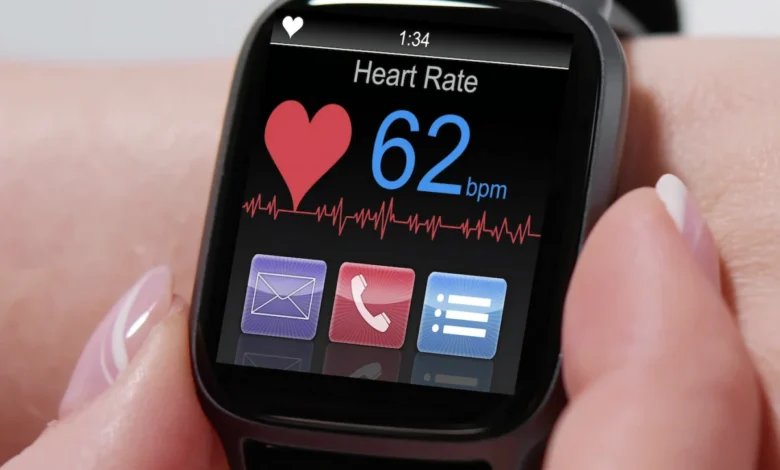
The modern healthcare landscape is undergoing a profound paradigm shift driven by the exponential growth of consumer-grade wearable technology. Devices that once served as simple step counters or casual sleep trackers have evolved into sophisticated physiological monitoring tools capable of tracking continuous glucose levels, heart rhythms, blood oxygen saturation, and body temperature variations. This technological evolution bridges the historic divide between consumer wellness and clinical diagnostics. As millions of individuals routinely stream biometric data from their wrists, rings, and patches, the medical community faces both an unprecedented opportunity for early disease detection and a formidable challenge in managing, interpreting, and validating a relentless influx of continuous health data.
To understand the current trajectory of remote health monitoring, it is instructive to examine the technological lineage that paved the way. In the 1960s, biophysicist Norman J. “Jeff” Holter revolutionized cardiology by commercializing a portable electrocardiogram—widely known as the Holter monitor. Before Holter’s innovation, clinicians relied entirely on in-clinic ECG snapshots, a diagnostic methodology fundamentally limited by sampling bias. Transient cardiac arrhythmias, intermittent palpitations, and episodes of unexplained syncope frequently occurred outside the clinical window, leaving underlying pathologies undetected until patients suffered severe or fatal cardiovascular events. Holter’s portable device liberated cardiac monitoring from the physical confines of the hospital, enabling ambulatory data collection over extended periods.
Reflecting on the philosophy of decentralized diagnostics, Holter famously noted in a 1983 historical retrospective that medicine should no more assess a patient’s overall physiology from a single clinical snapshot than a mining engineer would assay a mountain of ore by testing a single rock. For decades, however, continuous ambulatory monitoring remained strictly within the domain of prescription-based, medical-grade equipment managed by healthcare professionals.

The twenty-first century fractured this clinical monopoly, establishing two parallel tracks: regulated medical devices designed explicitly for clinical environments, and consumer wellness gadgets produced by technology giants such as Apple, Fitbit, Samsung, Garmin, and Oura. While medical devices adhered to rigorous statutory validation frameworks, consumer products operated under general wellness guidelines, prioritizing user engagement and lifestyle insights over diagnostic precision.
In recent years, however, technological advancements and shifting regulatory postures have rapidly blurred the boundaries between these two categories. A milestone in this convergence occurred when the U.S. Food and Drug Administration cleared Dexcom’s Stelo, marking the first over-the-counter continuous glucose monitor available directly to consumers without a prescription. Concurrently, software ecosystems have expanded to unify disparate data streams. Apple’s HealthKit framework aggregates electronic health records, diagnostic lab results, and third-party wearable metrics into a centralized repository. Similarly, wellness companies like WHOOP have forged strategic partnerships with clinical diagnostic laboratories such as Quest Diagnostics to integrate wearable metrics with traditional blood testing biomarkers.
These commercial integrations have forced regulatory bodies to adapt to a digital health landscape moving at unprecedented speed. During the Consumer Technology Association’s CES trade show, federal health regulators announced significant updates to agency guidance governing wearable technologies and artificial intelligence-enabled medical devices. These regulatory adjustments aim to accelerate the commercialization and clinical integration of innovative digital health tools. Furthermore, the Centers for Medicare & Medicaid Services, alongside the FDA, initiated specialized pilot programs—namely the ACCESS and TEMPO initiatives—designed to facilitate insurance reimbursement for remote monitoring wearables targeted at prevalent chronic conditions such as hypertension, type 2 diabetes, and major depressive disorder.
Parallel to these regulatory updates, federal research initiatives are actively funding the next generation of physiological monitoring. The Advanced Research Projects Agency for Health launched the Delphi program, a federal initiative dedicated to supercharging the development of low-cost wearable and ingestible biosensors. Delphi aims to create continuous self-monitoring ecosystems capable of tracking complex biochemical markers that have historically evaded non-invasive detection, including circulating hormones, inflammatory immune markers, and therapeutic drug concentrations in the bloodstream.

The public health implications of this technological expansion are substantial. Real-world applications have demonstrated the life-saving potential of consumer wearables. Countless individuals have reported seeking medical evaluation after receiving unsolicited smartwatch notifications regarding asymptomatic atrial fibrillation or dangerously elevated resting heart rates. In the realm of metabolic health, continuous glucose monitors have allowed users to visualize real-time physiological responses to dietary intake, sleep deprivation, physical exertion, and psychological stress. Emerging clinical literature suggests that even individuals without diabetes can derive modest behavioral benefits from observing how lifestyle choices directly influence their glucose variability. Furthermore, population-level epidemiological studies have consistently correlated the adoption of wearable activity trackers with increased baseline physical activity and improved cardiovascular conditioning.
Despite these clinical benefits, the transition of consumer wellness data into the diagnostic arena exposes a significant regulatory and methodological gap. Traditional diagnostic medicine operates under stringent validation frameworks. Hospital laboratories are governed by the federal Clinical Laboratory Improvement Amendments and accredited by expert organizations such as the College of American Pathologists. Before a laboratory-developed test can be utilized for patient management, it must undergo rigorous in-house analytical and clinical validation to ensure high sensitivity, specificity, and reproducibility.
Consumer wearables, by contrast, frequently rely on proprietary algorithms that generate composite wellness scores rather than raw physiological measurements of established clinical biomarkers. Metrics commonly featured on consumer devices—such as “sleep scores,” “recovery indexes,” or “readiness ratings”—synthesize diverse physiological inputs, including heart rate variability, skin temperature, and accelerometer-derived movement data. However, individual manufacturers weight these variables using closed-source algorithms that lack standardization and rarely correlate with independent, validated predictors of specific pathological conditions.
Empirical studies underscore the limitations inherent in consumer-grade sensor technology. While commercial sleep trackers generally demonstrate acceptable reliability in identifying total sleep duration and morning wake times, their accuracy diminishes significantly when attempting to differentiate complex sleep stages. Similarly, heart rate variability measurements can vary widely between different hardware brands, and because standardized clinical thresholds for baseline heart rate variability do not exist, clinicians cannot reliably use these consumer-generated metrics for diagnostic purposes.

Large-scale clinical evaluations of wearable screening tools further illustrate the operational complexities of population-level monitoring. In a landmark, Apple-supported clinical study involving nearly 419,300 adult participants utilizing a smartwatch irregular pulse detection application, more than 2,000 individuals received automated notifications alerting them to a potential irregular heart rhythm. However, subsequent clinical workups confirmed a diagnosis of atrial fibrillation in only about one-third of the participants who sought medical follow-up. This discrepancy highlights a fundamental challenge: while consumer wearables possess a high capacity for large-scale screening, they simultaneously generate substantial volumes of false positives, placing heavy burdens on healthcare systems facing existing clinical capacity constraints.
The integration of artificial intelligence into the digital health ecosystem introduces an additional layer of complexity. Patients are increasingly turning to generative AI chatbots for primary medical inquiries, while healthcare providers rapidly adopt AI-driven tools for clinical documentation, differential diagnosis formulation, and decision support. In theory, large language models could serve as sophisticated intermediaries capable of synthesizing massive streams of wearable biometric data into actionable clinical insights. In practice, however, unconstrained AI models risk misinterpreting poorly standardized physiological signals, amplifying false-positive alarms, and exacerbating clinician burnout through unnecessary diagnostic referrals.
Experts argue that for wearable technology to mature safely within the healthcare continuum, data must transition from passive notification to active intervention. Rather than merely alerting a user to an anomalous reading, an effective digital health ecosystem must leverage intelligent software to identify genuinely at-risk patients, facilitate meaningful behavioral modifications, and ensure vulnerable individuals do not fall through the cracks of an overburdened medical infrastructure. If artificial intelligence is to successfully bridge raw biometric data and clinical action, it must function as a reliable patient advocate—proactively tracking adverse physiological trends and coordinating timely clinical oversight.
Beyond clinical validation and algorithmic accuracy, the exponential proliferation of wearable health data raises urgent legal and ethical concerns regarding data privacy. Unlike traditional medical records governed by the Health Insurance Portability and Accountability Act, consumer health data collected by commercial wearables generally falls outside federal privacy protections. Consequently, manufacturers often retain broad discretion regarding data retention, sharing, and commercial monetization. Consumer health telemetry sold to open-market data brokers can potentially be acquired by third parties, corporate employers, insurers, or law enforcement agencies, enabling external entities to infer highly sensitive personal attributes, including chronic stress levels, emotional states, mental health status, and private behavioral routines.

Recognizing these regulatory loopholes, federal lawmakers have periodically introduced legislative safeguards, such as the SMARTWATCH Data Act and the Health Information Privacy Reform Act, which seek to extend robust privacy protections to health information generated outside traditional clinical settings. Despite these pressing privacy and standardization hurdles, the medical community’s overarching outlook toward wearable technology remains overwhelmingly optimistic.
As regulatory agencies streamline approval pathways, reimbursement models adapt to remote monitoring, and advanced biosensors expand our physiological visibility, the healthcare paradigm is steadily shifting from reactive acute care to proactive preventive medicine. If the decentralized medical laboratory of the future is to succeed across our daily lives, it must be constructed with the same rigorous adherence to validation, transparency, interpretability, and clinical accountability that has defined diagnostic medicine for generations. By holding consumer health technology to these elevated standards, modern medicine can fulfill the visionary legacy established by Jeff Holter more than half a century ago.