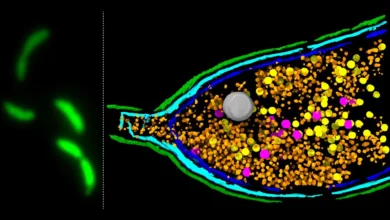
Newfound Helicobacter Strains Uncover Hidden Health Threats in Elusive Pygmy Sperm Whales

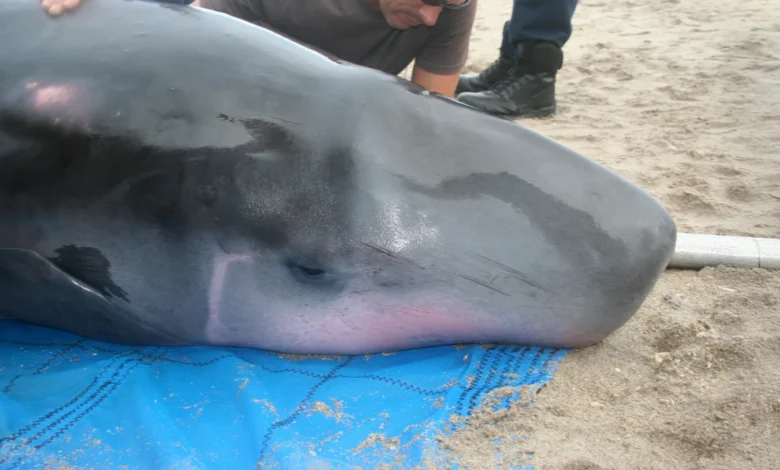
Pygmy sperm whales (Kogia breviceps) stand as some of the most enigmatic marine mammals, their lives largely shrouded in the vast, deep expanses of the ocean. Spending the majority of their existence far from human observation, these cetaceans typically navigate in small, secretive groups, undertaking profound dives to hunt their preferred prey of squid and fish. Their quiet, reclusive nature and infrequent appearances at the surface have historically presented immense challenges to scientists, limiting opportunities for direct study in their natural habitat. This inherent elusiveness means that much of the scientific understanding regarding Kogia breviceps has, by necessity, been gleaned from a somber source: individuals that wash ashore, a phenomenon known as stranding. These events are particularly prevalent along the southeastern coast of the United States, an area where pygmy sperm whales appear with a frequency rarely matched by other large marine mammal species. It is through the meticulous examination of these stranded animals that researchers have begun to piece together critical insights into their biology, behavior, and, increasingly, their health challenges.
Decades of Data Reveal Hidden Pathologies
A recent landmark study, born from over two decades of dedicated research into marine mammal strandings, has shed new light on the hidden health problems plaguing these deep-diving whales. Researchers from Florida Atlantic University’s Harbor Branch Oceanographic Institute, in collaboration with leading institutions including the University of Florida’s College of Veterinary Medicine, Colorado State University, and Marine Mammal Pathology Services, embarked on a comprehensive review of historical stranding records and meticulously preserved tissue samples. Their extensive work culminated in a groundbreaking discovery: the identification of three novel Helicobacter genotypes never before documented in pygmy sperm whales. This significant finding, detailed in the Journal of Wildlife Diseases, marks a crucial advancement in understanding the biology and potential vulnerabilities of this understudied species. Beyond its immediate implications for pygmy sperm whales, the research also ignites broader inquiries into how bacterial infections might be influencing the health and resilience of marine wildlife and, by extension, the overall vitality of ocean ecosystems.
The study’s foundation rests on data collected from 1999 through 2020, a period during which FAU Harbor Branch responded to a substantial 59 pygmy sperm whale strandings. Crucially, post-mortem examinations, or necropsies, were diligently performed on a remarkable 80% of these animals. These systematic examinations are invaluable, transforming tragic events into opportunities for scientific discovery. Without the ability to study these deceased animals, many of the physiological and pathological insights into Kogia breviceps would remain entirely unknown. It was during these initial necropsies that scientists occasionally noted the presence of unusual stomach lesions and, in four specific cases, observed distinct spiral-shaped, or "spirilliform," bacteria within stomach tissue samples. This initial observation served as the catalyst for the deeper molecular investigations that followed.
Unmasking Novel Bacterial Genotypes
Following these preliminary findings, the research team undertook a rigorous re-examination of the preserved tissue samples. Employing a sophisticated array of techniques, including histopathology (the microscopic study of diseased tissues), advanced molecular testing, and precise DNA sequencing, they delved into the microbial landscape of the whales’ gastrointestinal systems. This exhaustive analysis ultimately revealed the existence of several previously unknown Helicobacter genotypes, distinct from any previously cataloged strains. The researchers, recognizing the significance of their discovery, formally named these novel strains Kogia Helicobacter 1, Kogia Helicobacter 2, and Kogia Helicobacter 3.
Dr. Annie Page, D.V.M., Ph.D., a senior author of the study and an associate research professor and clinical veterinarian at FAU Harbor Branch, emphasized the broader context of these findings. "Helicobacter bacteria have long been associated with gastrointestinal disorders in humans and other animals, including chronic gastritis, ulcers, and even gastric cancer," she noted. "To find novel strains of these bacteria in a deep-diving whale species is intriguing and underscores the pervasive nature of these microbes across diverse hosts."
Further genetic analysis provided fascinating insights into the evolutionary relationships of these newly identified bacteria. Wendy Marks, corresponding author and a research coordinator of the marine wildlife veterinary medicine and research lab at FAU Harbor Branch, elaborated on these distinctions. "Two of the genotypes, Kogia Helicobacter 1 and 2, are genetically similar to known Helicobacter species previously found in other cetaceans – such as dolphins and porpoises – and even in humans," Marks explained. This genetic kinship suggests a potential shared evolutionary history or even possibilities of cross-species transmission within marine environments. However, the third genotype, Kogia Helicobacter 3, presented a more divergent genetic lineage. "Kogia Helicobacter 3 belongs to a more divergent lineage," Marks continued, "which emphasizes the possibility that there are far more undiscovered bacteria in the ocean than we realize." This finding highlights the vast, unexplored microbial biodiversity within marine ecosystems and the potential for unique pathogens adapted to specific hosts or environments. Interestingly, researchers discovered both Kogia Helicobacter 1 and 3 co-existing within the forestomach tissue of a single whale, suggesting that these animals can harbor multiple strains simultaneously.
The Clinical Picture: Gastrointestinal Distress in Whales
The presence of these novel Helicobacter strains was not an isolated finding; it was consistently linked to discernible health issues within the host animals. Each of the four whales that tested positive for Helicobacter exhibited clear and significant signs of gastrointestinal disease upon post-mortem examination. This strong correlation between bacterial presence and pathological changes is a critical aspect of the study’s findings.
Dr. Page detailed the specific pathologies observed: "All four whales that tested positive for Helicobacter had visible gastric pathology. We saw signs of gastritis, gastric ulcers, fibrosis, and nematode infestations. In one case, there was also colitis, which suggests that the infection may not be limited to the stomach." Gastritis refers to inflammation of the stomach lining, while gastric ulcers are open sores that can cause pain, bleeding, and impaired digestion. Fibrosis, the thickening and scarring of connective tissue, indicates chronic injury and repair processes within the stomach wall. The co-occurrence of nematode infestations further complicates the pathological picture, as parasites can also contribute to gastrointestinal damage and potentially create an environment conducive to bacterial proliferation. The discovery of colitis, inflammation of the colon, in one whale raises the important question of whether Helicobacter infections in pygmy sperm whales might extend beyond the stomach, affecting other parts of the digestive tract.
While the researchers did not definitively conclude that Helicobacter was the direct cause of death in any of the whales, the repeated presence of these inflammation, ulcers, tissue scarring, and other digestive problems strongly suggests that the bacteria could contribute significantly to chronic illness and diminished health over time. Chronic infections, even if not immediately lethal, can weaken an animal, making it more susceptible to other diseases, nutritional deficiencies, or environmental stressors, ultimately impacting its survival. This mirrors what is known in human medicine, where Helicobacter pylori infection, while often asymptomatic, is a major cause of chronic gastritis, peptic ulcers, and a significant risk factor for gastric cancer.
Helicobacter: A Global Marine Health Concern
The discovery of Helicobacter in pygmy sperm whales adds another layer to our understanding of these bacteria within marine mammal populations. Helicobacter was first reported in marine mammals in 2000, a relatively recent finding in the history of marine veterinary science. Since that initial detection, related bacteria have been identified in a growing number of cetacean species across the globe, indicating a widespread presence. In some of these animals, Helicobacter infection has been associated with a range of debilitating symptoms, including low energy levels, loss of appetite, regurgitation, persistent stomach ulcers, and chronic inflammation. Many of these clinical signs bear a striking resemblance to the symptoms observed in infected humans, underscoring a shared physiological vulnerability across diverse mammalian lineages.
The implications of these findings for vulnerable whale populations are profound. "Whales, like humans, appear to be susceptible to certain microbial infections that we’re only beginning to understand," Marks emphasized. "If chronic Helicobacter infections are causing health issues in these animals, it could have implications not only for individual whale health, but for entire populations – especially for species that are already vulnerable." Pygmy sperm whales are generally considered a data-deficient species by the IUCN Red List, meaning there is insufficient information to assess their conservation status definitively. However, any factor that could contribute to chronic illness or reduced fitness within such a species warrants serious concern, as it could hinder their ability to reproduce, forage effectively, and withstand other environmental pressures like climate change, pollution, or entanglement.
Because pygmy sperm whales are notoriously difficult to study in their natural deep-ocean environment, the true prevalence of these newly identified Helicobacter bacteria within the wider population remains unknown. Similarly, the long-term effects of these infections on individual whales and their overall population health require further investigation. Additional research, including broader sampling efforts and controlled studies if feasible, will be crucial to determine the extent to which these infections contribute to illness, stranding events, or broader population-level health problems. This will involve developing specific diagnostic tools and potentially exploring treatment strategies, though intervention in wild cetaceans is complex and often impractical.
The Indispensable Value of Long-Term Stranding Research
This groundbreaking project underscores the invaluable contribution of sustained, long-term marine mammal stranding response programs to scientific discovery and conservation efforts. These programs, often operating with limited resources and facing the logistical challenges of responding to unpredictable events, serve as critical sentinels for ocean health. Without the dedicated efforts of organizations like FAU Harbor Branch and their collaborators, many insights into the health of cryptic species like the pygmy sperm whale would simply not be possible.
Dr. Page articulated this sentiment eloquently: "This research underscores the value of long-term marine mammal stranding response programs. Without the ability to study these stranded animals over decades, we never would have discovered these bacteria. Every whale tells a story, and sometimes that story leads us into entirely new scientific territory." This statement highlights the profound importance of patiently accumulating data over extended periods, even when immediate answers are not apparent. The cumulative knowledge gained from each necropsy builds a comprehensive picture, allowing researchers to identify trends, detect emerging threats, and ultimately inform conservation strategies.
The collaborative nature of this study also merits recognition. The project successfully brought together a diverse team of experts from multiple institutions, including Jessy Castellanos-Gell, Ph.D.; Steven Tillis, Ph.D.; James F.X. Wellehan, D.V.M., Ph.D., DACZM; and April Childress, all from the College of Veterinary Medicine, University of Florida; Nicole Pegg, FAU Harbor Branch; David Rotstein, D.V.M., Marine Mammal Pathology Services; Sushan Han, D.V.M., Ph.D., Diagnostic Medicine Center, Colorado State University; and Steve Burton, director of stranding and population assessment, FAU Harbor Branch. This interdisciplinary approach, combining expertise in veterinary medicine, pathology, microbiology, and marine mammal biology, was essential for the complex molecular and histopathological analyses performed.
Crucially, this vital research was made possible through the generous support of the Florida State Specialty License Plate Program via the "Protect Florida Whales" grant, which is administered by the Harbor Branch Oceanographic Institute Foundation. Such funding mechanisms are indispensable for sustaining long-term monitoring and research initiatives that are fundamental to understanding and protecting marine ecosystems.
In conclusion, the discovery of novel Helicobacter genotypes in pygmy sperm whales represents a significant leap forward in marine mammal health research. It not only deepens our understanding of an exceptionally elusive species but also serves as a poignant reminder of the interconnectedness of microbial life, animal health, and the broader health of our oceans. As anthropogenic pressures continue to mount on marine environments, understanding the subtle yet profound impacts of bacterial infections becomes increasingly critical for effective conservation and stewardship of our planet’s diverse marine life. The silent stories told by stranded whales continue to provide invaluable lessons, guiding scientists toward a more complete understanding of the ocean’s hidden complexities and its inhabitants’ vulnerabilities.