What is the bronchus structure function and conditions? This exploration delves into the intricate world of the bronchi, the air passages that carry oxygen deep into our lungs. We’ll uncover their anatomical layout, their vital physiological roles, and the common diseases that can affect them. From the branching patterns of the bronchi to the mechanisms of breathing, and the impact of various conditions, this comprehensive overview will equip you with a better understanding of this essential part of our respiratory system.
The bronchi, branching from the trachea, are crucial for air delivery to the alveoli, the tiny air sacs where gas exchange occurs. Their structure, comprised of cartilage, smooth muscle, and epithelium, allows for both rigid support and flexibility. Understanding these components is essential to grasping how the bronchi facilitate airflow and defend against inhaled particles.
Bronchus Anatomy
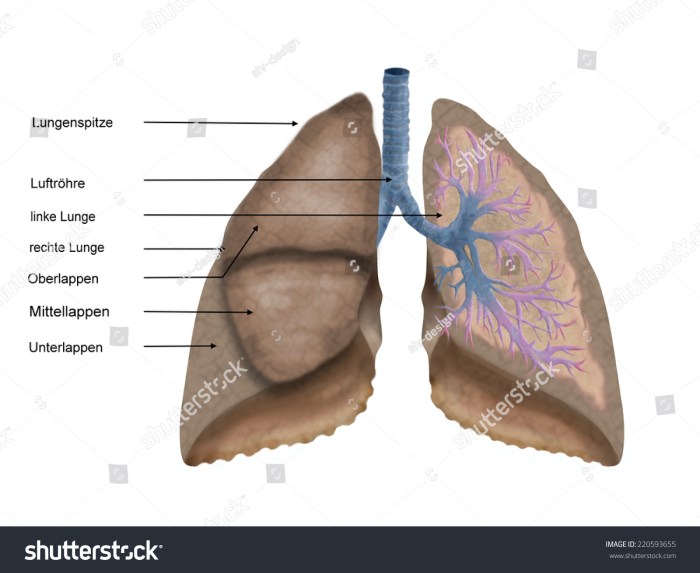
The bronchi are the airways that carry air from the trachea to the lungs. Understanding their structure is crucial for comprehending respiratory function and recognizing various respiratory diseases. Their intricate branching pattern and specialized histological features allow for efficient gas exchange.
Understanding the bronchus’ structure, function, and potential conditions is crucial for overall respiratory health. Proper breathing mechanics, including spinal extension and flexion exercises, can significantly impact lung function. Exercises like those found at spinal extension and flexion exercise can help improve posture and breathing capacity, ultimately influencing the effectiveness of the bronchus in carrying air to the lungs.
This, in turn, can contribute to a healthier respiratory system.
Bronchial Branching Patterns
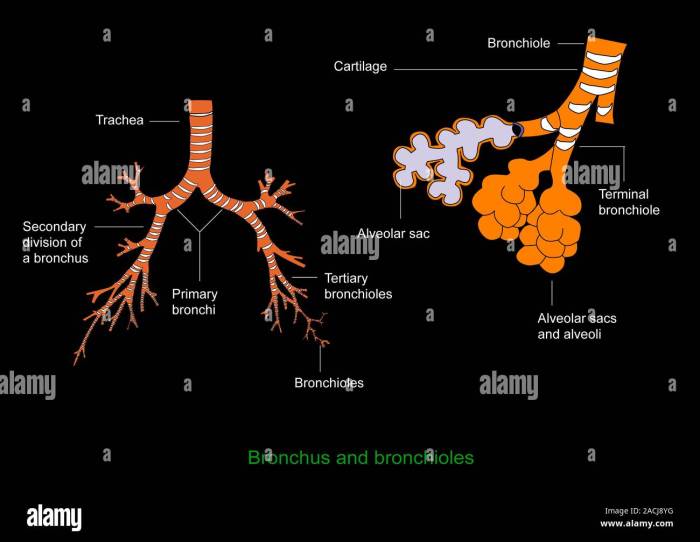
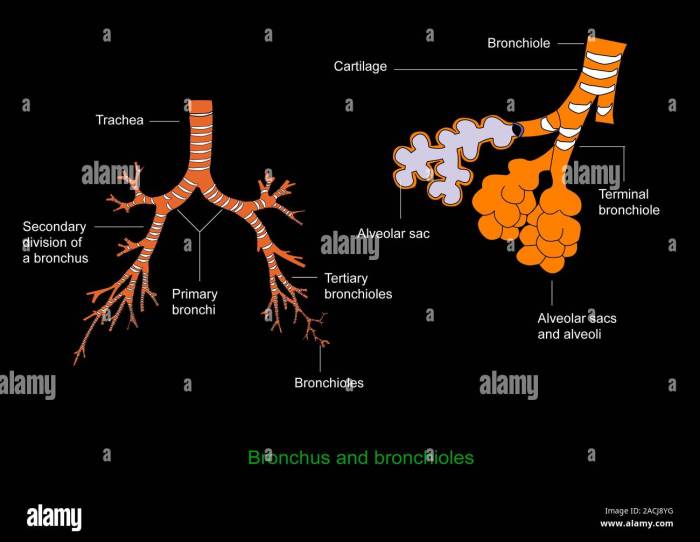
The bronchi exhibit a complex branching pattern, resembling an upside-down tree. This branching structure maximizes surface area for gas exchange within the lungs. Air enters the trachea and then bifurcates into the right and left main bronchi. These primary divisions continue to branch into smaller and smaller airways, ultimately forming the bronchioles, which lead to the alveoli, the tiny air sacs where gas exchange occurs.
Types of Bronchi
Different types of bronchi exist, each with unique anatomical characteristics. These distinctions are crucial for understanding their roles in the respiratory process. The main bronchi, the primary branches from the trachea, are the largest. Lobar bronchi further divide the main bronchi, supplying air to specific lobes of the lungs. Segmental bronchi, even smaller, divide further, serving distinct lung segments.
The bronchioles are the smallest branches, lacking cartilage, and play a vital role in regulating airflow.
Bronchus Characteristics Table
| Bronchus Type | Location | Diameter (mm) | Wall Thickness (mm) |
|---|---|---|---|
| Main Bronchi | Entering the lungs, near the trachea | 10-12 | 2-3 |
| Lobar Bronchi | Within the lung lobes | 5-8 | 1.5-2.5 |
| Segmental Bronchi | Within the lung segments | 2-5 | 0.5-1.5 |
| Bronchioles | Further branching from segmental bronchi | <1 | 0.1-0.5 |
Bronchial Wall Components
The bronchial wall is composed of several layers, each contributing to its function. A typical bronchial wall includes:
- Epithelium: This lining is a pseudostratified columnar epithelium, containing goblet cells that produce mucus. This mucus traps inhaled particles and pathogens, preventing them from reaching the alveoli. The cilia on the epithelial cells move the mucus upwards, towards the throat, for expulsion.
- Lamina Propria: This layer is a connective tissue layer beneath the epithelium. It contains elastic fibers and blood vessels. It plays a role in maintaining the structure of the bronchus.
- Cartilage: Rings or plates of hyaline cartilage provide structural support to the larger bronchi, preventing them from collapsing during breathing. The amount of cartilage decreases as the bronchi branch, becoming less prominent in the bronchioles.
- Smooth Muscle: A layer of smooth muscle surrounds the cartilage. This muscle can contract or relax, influencing the diameter of the airways, and thus, airflow. This is a crucial component in regulating airflow and responding to stimuli such as allergens or irritants.
Diagram of Bronchial Branching, What is the bronchus structure function and conditions
Imagine a tree with the trachea as the main trunk. The main bronchi branch off into two large branches, one for each lung. Each main bronchus further divides into lobar bronchi, supplying the different lobes within the lung. These lobar bronchi subdivide into smaller segmental bronchi, each leading to a specific segment of the lung. The segmental bronchi continue to branch into progressively smaller bronchioles, which finally terminate in the alveoli.
The branching pattern is a complex network that allows for efficient air distribution throughout the lungs.
Bronchus Physiology
The bronchi, branching extensions of the trachea, play a crucial role in the respiratory system. Beyond simply carrying air, they actively participate in the complex process of respiration. This section delves into the intricate functions of the bronchi, exploring their role in air conduction, airflow regulation, mucus clearance, and defense mechanisms.The bronchi are not mere conduits. Their intricate structure and physiological mechanisms are finely tuned to optimize gas exchange and protect the delicate lung tissue from harmful agents.
Understanding these mechanisms is critical for appreciating the importance of the bronchi in maintaining overall respiratory health.
Understanding the bronchus’ structure, function, and potential conditions is crucial for overall respiratory health. Think about how important proper joint function is for mobility, like in a total knee replacement. A successful rehabilitation protocol after a total knee replacement, such as the one outlined in this guide rehabilitation protocol after a total knee replacement , emphasizes the importance of restoring the joint’s structural integrity.
Ultimately, healthy bronchi ensure efficient airflow, crucial for respiration and overall well-being.
Functions of the Bronchi in the Respiratory System
The bronchi serve as essential conduits for air, directing it into the lungs. This intricate network allows for efficient distribution of air throughout the vast alveolar surface, maximizing the opportunity for gas exchange. They are also vital for regulating airflow, adapting to varying respiratory demands.
Role of the Bronchi in Conducting Air
The bronchi effectively transport air from the trachea to the bronchioles, which eventually lead to the alveoli. This intricate system ensures that air reaches all parts of the lungs. The progressive branching of the bronchi reduces the airway diameter, increasing the surface area for gas exchange and allowing for efficient airflow. This structural adaptation is crucial for effective respiration.
Role of the Bronchi in Regulating Airflow
The bronchi play a dynamic role in regulating airflow, adjusting to changes in respiratory demand. This regulation is accomplished through the processes of bronchodilation and bronchoconstriction. The ability to modulate airflow is critical for maintaining adequate ventilation during various activities, from rest to strenuous exercise.
Mechanisms of Bronchodilation and Bronchoconstriction
Bronchodilation and bronchoconstriction are two opposing processes that control the diameter of the bronchi. Bronchodilation, an increase in the diameter, is primarily mediated by the sympathetic nervous system, releasing norepinephrine, which relaxes smooth muscle in the bronchi. Conversely, bronchoconstriction, a decrease in diameter, is primarily triggered by the parasympathetic nervous system, releasing acetylcholine, causing bronchiolar smooth muscle contraction.
Other factors, such as allergens, irritants, and exercise, also influence these processes. Asthma, for instance, is characterized by chronic bronchoconstriction, often triggered by allergens.
Understanding the bronchus’s structure, function, and potential conditions is crucial for overall respiratory health. Think about how these intricate tubes, branching off the trachea, facilitate airflow to the lungs. However, sometimes things go awry, leading to issues like bronchitis or asthma. Exploring alternative approaches like those discussed in cbd for adhd benefits considerations and uses for different health concerns might spark interest in potential holistic solutions, but it’s essential to remember that these methods shouldn’t replace traditional medical advice when it comes to respiratory health.
Ultimately, the bronchus’s structural integrity and proper function are vital for a healthy respiratory system.
Factors Influencing Bronchodilation and Bronchoconstriction
Numerous factors influence the processes of bronchodilation and bronchoconstriction. These factors include:
- Neural Control: The autonomic nervous system, specifically the sympathetic and parasympathetic branches, plays a crucial role in regulating bronchiolar tone.
- Chemical Factors: Substances like histamine, released during allergic reactions, and other inflammatory mediators can trigger bronchoconstriction. Conversely, epinephrine, released in response to stress or exercise, promotes bronchodilation.
- Physical Factors: Physical activity, exercise, and changes in atmospheric pressure can also affect the diameter of the bronchi, altering airflow accordingly.
Role of the Bronchi in Mucus Clearance and Defense
The bronchi actively participate in mucus clearance, removing inhaled particles and pathogens. Mucus secreted by goblet cells in the epithelium traps foreign substances, while cilia, hair-like projections on the epithelial cells, propel the mucus upward toward the pharynx for removal. This crucial defense mechanism protects the lungs from harmful inhaled pathogens and irritants.
Role of the Bronchi in Defense Against Inhaled Pathogens
The bronchi employ various mechanisms to defend against inhaled pathogens. These include:
- Mucus Secretion: The production of mucus traps inhaled pathogens, preventing them from reaching the deeper parts of the respiratory system.
- Ciliary Action: Cilia, tiny hair-like structures lining the bronchi, propel the mucus and trapped pathogens upward toward the pharynx for expulsion.
- Immune Cells: Macrophages and other immune cells within the bronchi actively engulf and destroy pathogens.
Contrasting Conducting and Respiratory Zones
| Feature | Conducting Zone | Respiratory Zone |
|---|---|---|
| Primary Function | Transport air to the respiratory zone | Gas exchange |
| Structures | Trachea, bronchi, bronchioles | Respiratory bronchioles, alveolar ducts, alveoli |
| Presence of Gas Exchange | No | Yes |
| Mucus and Cilia | Present, vital for mucus clearance | Present, but less prominent |
Bronchial Conditions
The bronchi, crucial for air passage, are susceptible to various diseases. Understanding these conditions is vital for recognizing symptoms, initiating timely intervention, and ultimately improving patient outcomes. These conditions can significantly impact the structure and function of the airways, leading to a wide range of symptoms and complications.A multitude of factors can contribute to bronchial diseases, ranging from environmental irritants to genetic predispositions.
Recognizing the specific structural and functional changes associated with each condition is paramount for effective diagnosis and treatment.
Common Bronchial Diseases
Various diseases and conditions can affect the bronchi, leading to diverse symptoms and complications. Categorizing these conditions based on their primary characteristics provides a structured understanding of their impact on the respiratory system.
Classification of Bronchial Conditions
This table categorizes common bronchial conditions based on their primary characteristics:
| Category | Description | Examples |
|---|---|---|
| Inflammatory | Conditions characterized by inflammation of the bronchial lining. | Acute bronchitis, asthma (in some phases), allergic rhinitis |
| Obstructive | Conditions that narrow or block the airways, hindering airflow. | Chronic bronchitis, asthma (in exacerbations), cystic fibrosis, bronchiectasis |
| Neoplastic | Conditions involving abnormal growth of cells in the bronchi, potentially leading to tumors. | Bronchial carcinoma (lung cancer), benign tumors |
Pathophysiology of Asthma
Asthma is a chronic inflammatory disorder of the airways characterized by variable and recurring symptoms, airflow obstruction, and bronchospasm. The inflammatory response in asthma leads to the release of inflammatory mediators, such as histamine and leukotrienes, which cause the bronchial smooth muscles to contract. This contraction narrows the airways, hindering airflow. Simultaneously, the airways become inflamed and swollen, further contributing to airflow obstruction.
“The hallmark of asthma is the reversible bronchoconstriction that leads to symptoms like wheezing and shortness of breath.”
Pathophysiology of Chronic Bronchitis
Chronic bronchitis is characterized by a persistent cough with mucus production for at least three months of the year, for two consecutive years. The persistent inflammation and irritation of the bronchial lining lead to mucus hypersecretion. Over time, this can cause the airways to become thickened and scarred, further impairing airflow. The chronic inflammation and mucus accumulation can result in structural changes within the bronchi, including goblet cell hyperplasia and thickening of the bronchial walls.
Pathophysiology of Cystic Fibrosis
Cystic fibrosis is a genetic disorder affecting the exocrine glands, leading to thick, sticky mucus production. This mucus buildup primarily affects the lungs, pancreas, and other organs. In the lungs, the thick mucus obstructs the airways, leading to recurrent lung infections. Repeated infections and inflammation cause structural damage to the airways, resulting in the formation of scar tissue.
The structural changes further compromise the function of the bronchi, impairing their ability to clear mucus and leading to irreversible airflow obstruction.
Mechanisms of Symptoms
The structural and functional changes in the bronchi, associated with these conditions, result in various symptoms. For instance, the narrowing of airways in asthma leads to wheezing and shortness of breath. The persistent cough in chronic bronchitis is a direct consequence of mucus accumulation and inflammation. In cystic fibrosis, the thick mucus obstructs the airways, leading to coughing and difficulty breathing.
Diagnostic Procedures: What Is The Bronchus Structure Function And Conditions
Unveiling the mysteries of bronchial conditions often hinges on accurate diagnostic procedures. These methods, ranging from simple imaging to invasive techniques, provide crucial information for determining the nature and extent of the problem, ultimately guiding treatment strategies. Understanding these procedures is essential for both clinicians and patients in navigating the diagnostic journey.
Common Diagnostic Methods
Various methods are employed to evaluate bronchial conditions, each with its strengths and limitations. These range from non-invasive techniques like chest X-rays to more involved procedures such as bronchoscopy. Careful selection of the appropriate method is critical for obtaining the most accurate and relevant information.
- Chest X-rays: A cornerstone of initial evaluation, chest X-rays offer a rapid and relatively inexpensive method for assessing the overall structure of the lungs and chest. They can reveal the presence of abnormalities like infiltrates, fluid accumulation, or enlarged mediastinal structures. However, their resolution is limited, and subtle abnormalities might be missed. This method is particularly useful for detecting large-scale problems and ruling out certain possibilities, but often needs to be followed up with more sophisticated tests.
- Computed Tomography (CT) Scans: CT scans provide detailed cross-sectional images of the lungs and airways, offering a higher resolution than chest X-rays. They are valuable in identifying subtle abnormalities, assessing the extent of lesions, and evaluating complex structures. The use of contrast agents enhances visualization, providing critical information for intricate diagnoses. However, CT scans involve exposure to ionizing radiation, a consideration in frequent use.
This imaging technique is crucial in detecting and evaluating a wide range of bronchial conditions.
- Magnetic Resonance Imaging (MRI): MRI offers another powerful imaging technique for visualizing the lungs and airways, particularly useful in certain cases. MRI’s strength lies in its ability to provide detailed images of soft tissues, often superior to CT in visualizing specific structures and identifying potential pathologies. However, the process can be more time-consuming than CT and might be less accessible in some settings.
The ability of MRI to distinguish between different tissue types is valuable in cases where detailed anatomical information is essential.
Bronchoscopy
Bronchoscopy is a procedure that involves inserting a flexible or rigid tube with a camera (bronchoscope) into the airways. This allows direct visualization of the bronchial tree, enabling examination of the airways and collection of samples for analysis.
- Indications: Bronchoscopy is indicated for various conditions, including suspected airway obstructions, foreign body aspiration, suspected infections, and evaluation of masses or lesions. It can also be used for obtaining tissue biopsies, removing foreign objects, and administering medications directly into the airways.
- Procedure: The procedure is typically performed under local or general anesthesia. The bronchoscope is passed through the nose or mouth into the trachea and then into the bronchial tree. Images are displayed on a monitor, and the physician can assess the condition of the airways. Samples, such as brushings or biopsies, can be taken for analysis. The procedure can be used to gather a wide variety of information and to treat certain conditions directly.
- Potential Complications: Complications from bronchoscopy, while relatively rare, include bleeding, perforation of the airway, infection, and adverse reactions to sedation. The risk of these complications is carefully weighed against the potential benefits of the procedure. Pre-procedure assessments and careful execution minimize risks. However, potential risks must always be considered and weighed against the benefits of the procedure.
Bronchoalveolar Lavage (BAL)
Bronchoalveolar lavage (BAL) is a procedure where fluid is instilled into the lungs and then withdrawn for analysis. This technique provides valuable information about the cells and proteins in the fluid, offering insights into the presence of inflammation, infection, or other abnormalities.
- Procedure: BAL involves inserting a bronchoscope into the airways, followed by the instillation of sterile saline into the lungs. The fluid is then withdrawn and analyzed. The procedure is typically performed in a controlled manner to minimize potential complications.
- Potential Outcomes: Analysis of the BAL fluid can reveal the presence of abnormal cells, inflammatory markers, or infectious agents, assisting in diagnosing and monitoring various lung diseases. BAL is often used to distinguish between different types of lung disease and to monitor the response to treatment.
Treatment Strategies
Bronchial conditions, ranging from acute infections to chronic diseases like asthma and chronic obstructive pulmonary disease (COPD), require tailored treatment approaches. Effective management aims to alleviate symptoms, prevent exacerbations, and improve overall lung function. A comprehensive treatment plan often involves a combination of medications, lifestyle modifications, and potentially surgical interventions.Treatment strategies for bronchial conditions are highly individualized, considering the specific diagnosis, severity of the disease, and patient’s overall health.
The goal is to optimize lung function, reduce symptoms, and improve the patient’s quality of life. Success depends on consistent adherence to the prescribed treatment plan and ongoing monitoring by healthcare professionals.
Bronchodilators
Bronchodilators are crucial medications for managing bronchial conditions, particularly those causing airway constriction. They work by relaxing the smooth muscles surrounding the airways, thus widening them and improving airflow. This relief from bronchospasm allows for easier breathing.
- Short-acting bronchodilators, like albuterol, provide rapid relief of acute symptoms. They are typically used as needed for exacerbations or to prevent exercise-induced bronchospasm. These medications act quickly, offering immediate symptom relief, but their effects are short-lived.
- Long-acting bronchodilators, such as salmeterol and formoterol, are used for long-term control of symptoms. They maintain airway dilation over extended periods, reducing the frequency of acute episodes. These medications provide sustained bronchodilation, often preventing the need for frequent short-acting bronchodilators.
Corticosteroids
Corticosteroids are powerful anti-inflammatory medications that play a significant role in managing chronic bronchial conditions, especially those involving airway inflammation. They help reduce inflammation within the airways, thus lessening the symptoms of coughing, wheezing, and shortness of breath.
- Inhaled corticosteroids are commonly used for conditions like asthma and chronic bronchitis. They deliver medication directly to the lungs, minimizing systemic side effects. The targeted delivery reduces the amount of medication needed, thereby minimizing the potential for adverse effects.
- Systemic corticosteroids are reserved for severe exacerbations or conditions where inhaled corticosteroids are insufficient. Their broad anti-inflammatory effects can effectively quell inflammation, but their use needs careful consideration due to potential side effects.
Other Medications
Various other medications can be incorporated into a treatment plan, depending on the specific condition and its underlying mechanisms. These include leukotriene modifiers, which can reduce inflammation and bronchoconstriction, and mucolytics, which help thin and clear mucus from the airways. Antibiotics are used to treat infections, while antihistamines may help alleviate allergic reactions.
Surgical Interventions
In some cases, surgical interventions may be necessary to improve lung function or alleviate symptoms.
- Bronchoscopic procedures, such as bronchoscopy, allow visualization and treatment of airway abnormalities. These minimally invasive procedures can remove foreign bodies, collect samples for diagnosis, or deliver medications directly to the affected areas. Bronchoscopy enables precise targeting of interventions, minimizing the need for larger, more invasive procedures.
- Lung volume reduction surgery (LVRS) is an option for select patients with severe emphysema. By removing damaged lung tissue, LVRS can improve lung function and breathing mechanics, leading to improved quality of life. However, this surgery is a major procedure, with associated risks.
Respiratory Rehabilitation
Respiratory rehabilitation programs play a vital role in managing chronic bronchial diseases. These programs focus on improving lung function, reducing symptoms, and enhancing the patient’s overall well-being. These programs typically include education, breathing exercises, and physical training.
- Education about the disease, its management, and potential complications is critical. Patients gain a better understanding of their condition, enabling them to actively participate in their care.
- Breathing exercises help patients improve their breathing techniques, maximizing lung capacity and reducing shortness of breath. These exercises can improve lung function and reduce symptoms.
- Physical training, tailored to the patient’s capabilities, can improve overall fitness and reduce fatigue. This contributes to better management of chronic bronchial diseases.
Comparison of Treatment Approaches
Asthma and COPD, while both affecting the airways, have distinct characteristics requiring different treatment approaches.
| Characteristic | Asthma | COPD |
|---|---|---|
| Inflammation | Prominent | Present, but often less pronounced |
| Airway Response | Variable, reversible | Irreversible, progressive |
| Treatment Focus | Reducing inflammation and bronchospasm | Improving airflow and managing symptoms |
| Medication Emphasis | Inhaled corticosteroids, bronchodilators | Bronchodilators, inhaled corticosteroids, and possibly other medications |
Final Conclusion
In summary, what is the bronchus structure function and conditions? We’ve journeyed through the bronchi’s anatomy and physiology, highlighting their critical role in respiration. We’ve explored the spectrum of conditions affecting these vital air passages, from the structural changes in asthma and chronic bronchitis to the impact of cystic fibrosis. Understanding these complexities allows for better diagnosis and treatment strategies, emphasizing the importance of early detection and personalized care.
Ultimately, this exploration of the bronchi offers a deeper understanding of our respiratory system, paving the way for improved respiratory health.