Sedimentation rate what does it tell about arthritis – Sedimentation rate, what does it tell about arthritis? This exploration dives into the erythrocyte sedimentation rate (ESR) test, examining its connection to inflammatory arthritis. We’ll uncover how this simple blood test can provide valuable clues about arthritis diagnosis, treatment monitoring, and potential underlying issues. Understanding the principles behind ESR, its relationship with arthritis types, and the factors influencing its results is key to interpreting this important diagnostic tool.
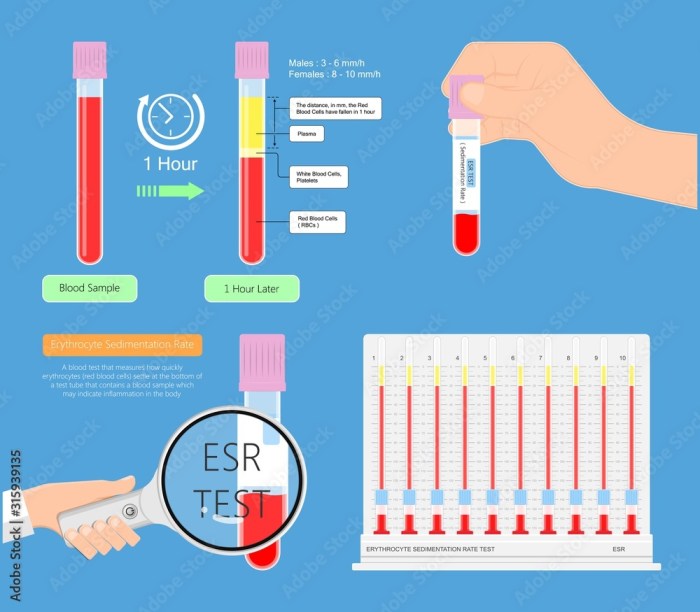
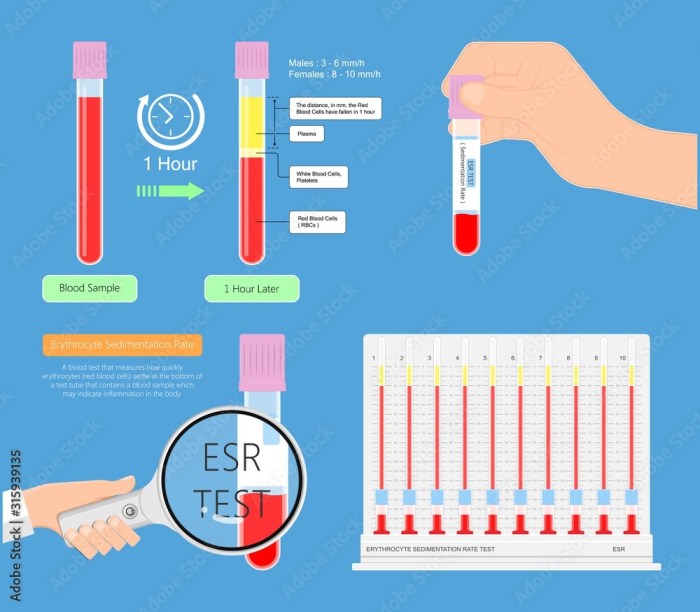
The ESR measures how quickly red blood cells settle in a test tube. Inflammation often increases the rate at which these cells settle, making it a useful marker for conditions like arthritis. This test, while not definitive, is a helpful addition to a doctor’s arsenal, providing insights into inflammation levels. We’ll compare different ESR measurement methods, discuss the role of various arthritis types, and examine factors beyond arthritis that can impact results.
Introduction to Sedimentation Rate

The erythrocyte sedimentation rate (ESR) is a simple blood test that measures how quickly red blood cells settle in a test tube over a specific period. It’s a non-specific marker of inflammation in the body, providing valuable insights into potential underlying health conditions. Understanding the principles behind this test and its relationship to inflammation is crucial for interpreting the results and making informed decisions.The principle of the ESR test relies on the observation that red blood cells tend to clump together (agglomerate) in the presence of certain inflammatory substances in the blood.
These substances, such as fibrinogen, increase the stickiness of the red blood cells, causing them to fall faster to the bottom of the test tube. The faster the rate of sedimentation, the greater the likelihood of inflammation or other conditions impacting the blood’s composition.
Inflammation and ESR Values
Inflammation plays a pivotal role in influencing ESR values. Conditions associated with inflammation, such as infections, autoimmune diseases, and certain cancers, often lead to elevated ESR levels. This is because inflammatory responses release proteins, including fibrinogen, into the bloodstream. These proteins promote the aggregation of red blood cells, accelerating their sedimentation rate. Conversely, conditions that do not involve inflammation, or conditions that reduce fibrinogen levels, may result in a lower ESR.
The ESR is not a specific diagnostic test but rather an indicator of a possible inflammatory process.
ESR Measurement Methods, Sedimentation rate what does it tell about arthritis
Different methods exist for measuring the erythrocyte sedimentation rate, each with its own procedure, advantages, and disadvantages. The choice of method may influence the reported results. Comparing the methods is important for understanding the nuances of this diagnostic tool.
| Method | Procedure | Advantages | Disadvantages |
|---|---|---|---|
| Westergren | A blood sample is added to a Westergren tube, a calibrated glass tube. The tube is placed vertically, and the distance the red blood cells settle in one hour is measured. | More sensitive to minor changes in inflammation; widely used and standardized; relatively inexpensive equipment. | Requires more time for results; more susceptible to technical errors in measurement. |
| Wintrobe | A blood sample is added to a Wintrobe tube, another calibrated glass tube. The tube is placed vertically, and the distance the red blood cells settle in one hour is measured. The Wintrobe method uses a smaller volume of blood. | Quicker results; less blood required; standardized procedure. | Less sensitive to minor changes in inflammation; may not be as precise as the Westergren method; potential for variability in reading results. |
ESR and Arthritis: Sedimentation Rate What Does It Tell About Arthritis
Elevated erythrocyte sedimentation rate (ESR) is a common blood test used to detect inflammation in the body. This inflammation is frequently associated with various types of arthritis, making ESR a valuable diagnostic tool. Understanding the correlation between ESR and arthritis is crucial for accurate diagnosis and appropriate treatment strategies.ESR measures the rate at which red blood cells settle at the bottom of a test tube.
A faster-than-normal rate indicates inflammation somewhere in the body. This inflammation can be a symptom of many underlying conditions, and arthritis is among the most common. A doctor will often order an ESR test in conjunction with other tests and examinations to determine the cause of the inflammation.
ESR and Inflammatory Arthritis
Elevated ESR is a frequent finding in inflammatory arthritis. The inflammation associated with these conditions triggers the release of substances that affect the blood, leading to an increased sedimentation rate. This is a key indicator that the body is fighting an inflammatory process. Rheumatoid arthritis, an autoimmune disease, is a prime example. In this condition, the immune system mistakenly attacks the joints, causing chronic inflammation.
ESR in Arthritis Diagnosis
ESR can be a helpful tool in diagnosing different types of arthritis. While it isn’t definitive, an elevated ESR, coupled with other clinical findings, can suggest the presence of inflammatory arthritis. For instance, if a patient presents with joint pain, swelling, and an elevated ESR, it points towards an inflammatory process. The test can help distinguish between different types of arthritis and guide the diagnostic process.
Limitations of ESR in Arthritis Diagnosis
ESR is a non-specific marker of inflammation. This means that an elevated ESR can occur in many conditions besides arthritis. Therefore, relying solely on an ESR result for an arthritis diagnosis is insufficient. Other diagnostic tools, like imaging studies, joint aspiration, and blood tests for specific markers, are necessary to confirm the diagnosis and identify the specific type of arthritis.
For example, a patient with an elevated ESR might also have an infection or other inflammatory condition.
Potential Causes of False Results
Several factors can influence ESR results, potentially leading to false-positive or false-negative readings. A false-positive result might occur in cases of dehydration, recent strenuous exercise, or certain medications. Conversely, a false-negative result might be seen in patients with very low blood protein levels, anemia, or very recent inflammatory episodes. It is essential to consider these factors when interpreting ESR results, especially in the context of arthritis.
Typical ESR Ranges in Different Arthritis Types
| Arthritis Type | Typical ESR Range (mm/hr) | Explanation |
|---|---|---|
| Rheumatoid Arthritis | 20-100 mm/hr (or higher in severe cases) | Rheumatoid arthritis often shows a significantly elevated ESR due to the chronic inflammatory process. |
| Osteoarthritis | 0-20 mm/hr (or slightly elevated in some cases) | Osteoarthritis is primarily a degenerative joint disease, typically not associated with significant inflammation, hence the lower ESR values. |
ESR and Arthritis: Beyond the Basics
The erythrocyte sedimentation rate (ESR), or sedimentation rate, is a blood test that measures how quickly red blood cells settle at the bottom of a test tube. While often used to assess potential inflammation in the body, including in cases of arthritis, it’s crucial to understand that elevated ESR can arise from a multitude of factors beyond joint inflammation.
This in-depth look delves into those additional factors that influence ESR results.Understanding the factors impacting ESR is vital for accurate interpretation of the test results. A high ESR doesn’t automatically indicate arthritis; other underlying conditions can also cause elevated readings. A thorough medical evaluation is essential to pinpoint the root cause.
Ever wondered what a sedimentation rate test reveals about arthritis? It’s essentially a measure of inflammation in your blood, and high levels often point to an inflammatory condition like arthritis. While not a direct diagnosis, it’s a useful tool in conjunction with other tests. Interestingly, similar inflammatory markers can be explored in other contexts, such as in the role of mood stabilizers in managing the cognitive decline often associated with dementia.
For a deeper dive into that, check out this article on mood stabilizers role in dementia. Ultimately, a comprehensive approach, including a thorough discussion with your doctor, is crucial for understanding the underlying causes of inflammation and managing arthritis effectively.
Factors Affecting ESR Levels
Several factors can influence the ESR, making it a complex test to interpret in isolation. These factors range from general health conditions to lifestyle choices. Careful consideration of these variables is critical for accurate diagnosis and treatment planning.
Age
Age significantly impacts ESR. Generally, ESR values tend to increase with age, especially in older adults. This is largely due to physiological changes associated with aging. For instance, the body’s immune response may become less efficient, or blood viscosity might increase with age, both contributing to a higher sedimentation rate.
Understanding sedimentation rate can offer clues about inflammation, a key factor in arthritis. While we’re on the topic of inflammation, it’s worth exploring the subtle differences between topical retinoids like Retin-A and Retin-A Micro, which can have varying effects on skin, depending on your needs. difference between retin a and retin a micro Ultimately, a high sedimentation rate often suggests an inflammatory condition, which could indicate arthritis.
Knowing the details of your specific situation is important, and consulting with a healthcare professional is always recommended.
Gender
Women typically have lower ESR values than men, particularly during their reproductive years. Pregnancy, menstruation, and hormonal fluctuations can also influence ESR levels. These variations are often considered when evaluating a woman’s ESR results.
Understanding your sedimentation rate can offer clues about potential arthritis issues, but sometimes, the best way to improve your overall well-being is by focusing on your sleep. Improving sleep quality is crucial for overall health, and implementing some simple changes can make a big difference. Check out this guide on how to sleep better in 30 days for some helpful tips.
Ultimately, prioritizing sleep and managing potential arthritis symptoms go hand-in-hand for a healthier lifestyle.
Pregnancy
Pregnancy is another factor known to influence ESR levels. Hormonal changes during pregnancy can affect blood composition and increase the ESR. The elevation in ESR during pregnancy is typically temporary and usually doesn’t signal a serious underlying condition.
Infection
Infections, whether bacterial, viral, or fungal, often trigger an inflammatory response in the body. This inflammatory response can lead to elevated ESR levels. The severity and type of infection can significantly impact the magnitude of the ESR elevation. Examples include acute bacterial infections, viral illnesses, and even chronic infections.
Other Medical Conditions
Beyond infections, numerous other medical conditions can affect ESR levels. These include autoimmune diseases (like lupus or rheumatoid arthritis), cancers, kidney disease, and various cardiovascular issues. Each condition can trigger an inflammatory response, resulting in elevated ESR. For instance, kidney disease can lead to a build-up of waste products in the blood, stimulating an inflammatory reaction that raises ESR.
Impact of Various Factors on ESR
| Factor | Impact on ESR | Explanation |
|---|---|---|
| Infection (bacterial, viral, fungal) | Increased ESR | Inflammation caused by infection leads to elevated ESR. |
| Autoimmune diseases (e.g., rheumatoid arthritis, lupus) | Increased ESR | Chronic inflammation characteristic of autoimmune diseases results in higher ESR. |
| Cancer | Increased ESR | Tumor growth and the body’s response to it can elevate ESR. |
| Kidney disease | Increased ESR | Accumulation of waste products and inflammatory processes in kidney disease often cause increased ESR. |
| Age (older adults) | Increased ESR | Physiological changes associated with aging can increase blood viscosity and ESR. |
| Pregnancy | Increased ESR (temporarily) | Hormonal changes during pregnancy can increase blood volume and ESR. |
| Menstruation | Slight variation in ESR | Fluctuations in hormones during menstruation can cause minor variations in ESR. |
ESR and Arthritis: Sedimentation Rate What Does It Tell About Arthritis
The erythrocyte sedimentation rate (ESR), a simple blood test, plays a crucial role in the assessment and management of various inflammatory conditions, including arthritis. It measures the rate at which red blood cells settle in a test tube over a period of time. A higher sedimentation rate typically signifies an increased level of inflammation in the body. Understanding the clinical significance of ESR in arthritis is essential for clinicians to monitor disease activity, assess treatment response, and guide appropriate management strategies.ESR provides a valuable, non-specific marker of inflammation, but it’s important to remember that it’s not a definitive diagnosis.
Its value is often considered in conjunction with other diagnostic tests and clinical findings. This makes it a valuable tool for monitoring the course of arthritis and guiding treatment decisions.
ESR in Monitoring Treatment Response
The ESR can be a helpful indicator of how well a patient is responding to treatment for arthritis. A decreasing ESR over time often correlates with a reduction in inflammation and an improvement in the patient’s condition. This is particularly true for inflammatory types of arthritis, such as rheumatoid arthritis. A sustained decrease in ESR usually indicates that the treatment is effectively managing the underlying inflammatory process.
Conversely, a persistent or increasing ESR may suggest the need for adjustments to the treatment plan.
ESR Trends and Disease Activity
ESR trends provide valuable insights into the activity and progression of arthritis. A steady increase in ESR often suggests an exacerbation of the disease process, potentially indicating increased inflammation and pain. Conversely, a gradual decrease in ESR typically signifies a lessening of inflammation and an improvement in the patient’s condition. Careful monitoring of ESR trends, along with other clinical parameters, allows clinicians to make informed decisions regarding treatment modifications or adjustments.
For example, a patient with rheumatoid arthritis experiencing a significant increase in ESR may require an increase in their medication dosage to control the inflammation.
Considering ESR Alongside Other Diagnostic Tools
ESR is not a standalone diagnostic tool. Its interpretation should always be considered in conjunction with other diagnostic tests and clinical findings. These may include rheumatoid factor (RF) tests, antinuclear antibody (ANA) tests, complete blood counts (CBCs), imaging studies (such as X-rays or MRIs), and patient-reported outcomes (e.g., pain scores, functional limitations). The comprehensive assessment allows for a more nuanced understanding of the patient’s condition and facilitates more accurate diagnoses and treatment plans.
A high ESR combined with elevated RF and ANA levels, for instance, might strongly suggest rheumatoid arthritis.
Clinical Decision-Making Flowchart
 The flowchart visually represents a simplified clinical decision-making process that incorporates ESR in arthritis assessment. It highlights the importance of considering ESR trends alongside other diagnostic parameters and clinical symptoms. This process ultimately aims to guide clinicians towards the most appropriate treatment plan for each individual patient.The flowchart demonstrates how a patient’s ESR is evaluated alongside other clinical factors.
This helps determine if the arthritis is active, if treatment is effective, or if adjustments to the treatment are needed.
ESR and Arthritis: Sedimentation Rate What Does It Tell About Arthritis
Understanding the inflammatory response in arthritis is crucial for diagnosis and management. The erythrocyte sedimentation rate (ESR), while a valuable tool, doesn’t provide the full picture of the disease. Complementing ESR with other markers can offer a more comprehensive view of the underlying inflammatory processes and the specific type of arthritis involved. This approach allows for a more targeted treatment strategy.While ESR provides a general indication of inflammation, other tests offer more specific information about the inflammatory markers and the extent of the disease.
These alternative methods can aid in differentiating between various types of arthritis and monitoring treatment efficacy. Understanding these additional tests is essential for healthcare professionals to provide the best possible care for their patients.
Alternative and Complementary Tests
ESR, though a widely used marker of inflammation, doesn’t paint the entire clinical picture. Alternative and complementary tests provide additional layers of information crucial for a comprehensive diagnosis and management strategy. These tests focus on specific inflammatory markers and tissue damage, enabling a deeper understanding of the disease process.
Comparison with Other Inflammatory Markers
Various markers provide insights into inflammation, each with its own strengths and limitations. Comparing these markers can offer a more nuanced understanding of the inflammatory response. C-reactive protein (CRP) is another key marker, often used alongside ESR. CRP is more sensitive to acute inflammation, potentially detecting inflammation at earlier stages than ESR. The relative values of ESR and CRP can indicate the severity and nature of the inflammatory process.
For example, a high ESR and CRP could suggest a more aggressive form of arthritis.
Other Laboratory Tests and Imaging Techniques
Beyond inflammatory markers, imaging techniques and other laboratory tests are essential for evaluating joint structure and function. X-rays are often the initial imaging modality, offering insights into bone erosion and joint space narrowing, common features in various forms of arthritis. Magnetic Resonance Imaging (MRI) provides detailed visualization of soft tissues, including cartilage, ligaments, and tendons. MRI can reveal early signs of damage not visible on X-rays, which is particularly useful for early detection and monitoring.
Biomarkers, substances produced by cells and tissues, are emerging as important diagnostic and prognostic tools. Specific biomarkers for particular types of arthritis are being developed, offering potential insights into the disease mechanisms and treatment response.
Additional Measures
- CRP (C-reactive protein): CRP is a blood protein produced by the liver in response to inflammation. Elevated CRP levels indicate an ongoing inflammatory process. Its sensitivity to acute inflammation makes it useful for monitoring the response to treatment and detecting flares. Compared to ESR, CRP is often considered more sensitive in detecting acute inflammatory episodes. A combination of ESR and CRP results can offer a more complete picture of the inflammatory state.
- Imaging (e.g., X-rays, MRI): Imaging techniques provide crucial visual information about the affected joints. X-rays reveal structural damage, such as bone erosion and joint space narrowing, offering insights into the progression of the disease. MRI offers superior soft tissue visualization, enabling the detection of early cartilage damage, which may not be apparent on X-rays. These imaging techniques help determine the extent of joint involvement and guide treatment strategies.
They are vital for evaluating the effectiveness of treatments and monitoring disease progression.
- Biomarkers: Biomarkers are substances produced by cells and tissues that reflect specific disease processes. Research is focused on identifying biomarkers for different types of arthritis, which can help in early diagnosis, monitoring disease activity, and predicting treatment response. The presence of specific biomarkers may indicate a particular type of arthritis, offering insights into disease mechanisms and guiding treatment selection.
For example, elevated levels of certain biomarkers might suggest a higher likelihood of joint damage or a slower response to therapy.
Conclusion
In conclusion, sedimentation rate offers valuable information about arthritis, but it’s crucial to remember that it’s just one piece of the puzzle. Understanding the limitations of ESR and considering it alongside other diagnostic tools and markers like CRP, imaging, and biomarkers is essential for a complete picture. We’ve explored how ESR can assist in diagnosis, treatment monitoring, and understanding potential underlying causes.
This understanding will empower both patients and healthcare professionals in managing arthritis more effectively.