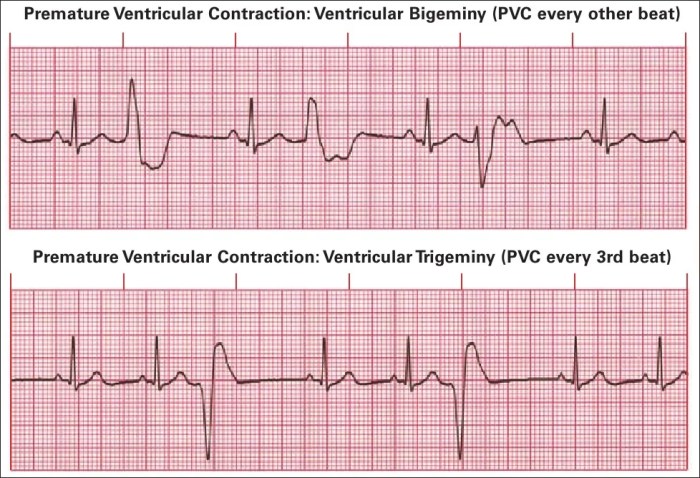
Premature ventricular complexes pvcs – Premature ventricular complexes (PVCs) are a common cardiac rhythm disturbance. This in-depth look explores PVCs, from their definition and characteristics to potential causes, symptoms, diagnosis, management, and complications. We’ll delve into the electrical mechanisms behind PVCs, the role of various factors, and the importance of patient education.
PVCs, often benign, can sometimes indicate underlying heart conditions. Understanding their various types, the diagnostic process, and the available treatment options is crucial for effective management. We’ll also discuss the importance of patient support and available resources.
Definition and Characteristics
Premature ventricular complexes (PVCs) are extra heartbeats that originate from the ventricles of the heart, rather than the sinoatrial (SA) node, which is the normal pacemaker. These extra beats disrupt the normal rhythm of the heart, potentially causing palpitations, skipped beats, or a feeling of fluttering in the chest. Understanding PVCs involves recognizing their different types, electrical origins, and characteristic ECG patterns.
Types of Premature Ventricular Complexes
PVCs can be categorized based on their origin within the ventricles. Unifocal PVCs originate from a single ectopic focus within the ventricle, whereas multifocal PVCs arise from multiple ectopic foci. The differences in the electrical signals generated lead to varying ECG appearances.
Electrical Mechanisms of PVCs
The electrical impulse responsible for a PVC originates from an ectopic focus in the ventricle. This focus, often a region of abnormal automaticity or triggered activity, discharges an impulse before the next normal impulse from the SA node. This early activation of the ventricle leads to a premature ventricular contraction. A re-entrant circuit is another possible mechanism, in which the electrical impulse circulates repeatedly within a closed loop.
Electrocardiographic Characteristics of PVCs
ECG analysis is crucial in identifying PVCs. A characteristic feature is the presence of a premature ventricular complex, which is an abnormally shaped QRS complex that occurs earlier than the next expected sinus beat. The shape of the QRS complex varies depending on the site of origin within the ventricle. The duration of the QRS complex might be wider than normal, often exceeding 0.12 seconds.
This widened complex is a significant indicator of the ventricular origin of the beat. Additionally, the absence of a P wave before the premature QRS complex is a hallmark of PVCs. The T wave may be inverted or have an unusual morphology following the PVC.
Comparison of PVC Types
| Characteristic | Unifocal PVC | Multifocal PVC |
|---|---|---|
| Origin | Single ectopic focus | Multiple ectopic foci |
| QRS Complex Morphology | Uniform shape and duration | Variable shape and duration, reflecting multiple sites of origin |
| Rhythm | Regular between PVCs, often | Irregular rhythm |
| Clinical Significance | Usually benign, but can be associated with underlying heart conditions. | More likely to indicate an underlying heart condition or electrolyte imbalance. |
| ECG Appearance | Consistent pattern of premature beats | Varied pattern of premature beats |
Causes and Risk Factors
Premature ventricular complexes (PVCs) are often a symptom rather than a disease in themselves. Understanding their potential causes and risk factors is crucial for appropriate diagnosis and management. Identifying triggers can help individuals minimize their frequency and associated discomfort.Underlying heart conditions are a significant factor in PVC development. Conditions like coronary artery disease, cardiomyopathy, and heart valve problems can disrupt the normal electrical rhythm of the heart, increasing the likelihood of PVCs.
These conditions often involve structural changes or impaired blood flow, which can lead to electrical disturbances. For example, a damaged heart muscle in cardiomyopathy can lead to abnormal electrical impulses, triggering PVCs.
Potential Causes of PVCs
Several factors can contribute to the occurrence of premature ventricular complexes. Some are lifestyle-related, while others are related to underlying health conditions. Identifying these factors can help in preventative measures.
- Underlying Heart Conditions: Conditions like coronary artery disease (CAD), a narrowing of the arteries supplying blood to the heart, can lead to PVCs. This is because reduced blood flow can stress the heart muscle, potentially leading to electrical disturbances. Similarly, cardiomyopathy, a condition affecting the heart muscle itself, can disrupt the heart’s electrical conduction, making PVCs more likely.
Valvular heart disease, affecting the heart valves’ ability to open and close correctly, can also contribute to PVCs.
- Lifestyle Factors: Certain lifestyle choices can increase the risk of PVCs. Smoking, for instance, damages blood vessels and can lead to a cascade of problems, including heart issues. Excessive caffeine consumption can stimulate the nervous system, potentially affecting heart rhythm. Stress and anxiety can also elevate heart rate and potentially trigger PVCs. High doses of certain medications can trigger or exacerbate PVCs.
- Electrolyte Imbalances: Electrolytes, such as potassium and magnesium, play a vital role in maintaining proper heart function. Imbalances in these electrolytes can disrupt the heart’s electrical activity, increasing the likelihood of PVCs. For example, low potassium levels (hypokalemia) can lead to irregular heartbeats, including PVCs. Likewise, low magnesium levels (hypomagnesemia) can also contribute to PVCs.
- Medications: Some medications can have PVCs as a side effect. This includes certain medications used to treat high blood pressure, heart conditions, or other health issues. These medications can affect the heart’s electrical activity. For example, some diuretics can lead to electrolyte imbalances, potentially triggering PVCs.
Risk Factors for PVCs
Certain factors are strongly associated with an increased risk of developing premature ventricular complexes. Understanding these factors is important for proactive health management.
- Smoking: Nicotine and other toxins in cigarettes can damage blood vessels and affect the heart’s electrical system, increasing the risk of PVCs.
- Caffeine: Caffeine can stimulate the nervous system, potentially increasing heart rate and inducing PVCs. High doses of caffeine can increase the frequency of PVCs.
- Stress: Stressful situations can elevate heart rate and blood pressure, potentially leading to PVCs. Prolonged stress can also contribute to a higher risk of PVCs.
Summary Table of Causes and Risk Factors
| Category | Specific Cause/Risk Factor |
|---|---|
| Underlying Heart Conditions | Coronary artery disease, cardiomyopathy, valvular heart disease |
| Lifestyle Factors | Smoking, caffeine intake, stress, excessive alcohol consumption |
| Electrolyte Imbalances | Hypokalemia (low potassium), hypomagnesemia (low magnesium) |
| Medications | Certain diuretics, some antiarrhythmics, some medications for high blood pressure |
Symptoms and Diagnosis

Premature ventricular complexes (PVCs) are often asymptomatic, meaning many individuals experience them without any noticeable symptoms. However, in some cases, PVCs can lead to noticeable symptoms, and a thorough diagnosis is crucial for understanding the underlying cause and potential implications for overall health. Recognizing the patterns and characteristics of PVCs, particularly through electrocardiogram (ECG) interpretation, is essential for proper diagnosis and management.
Common Symptoms Associated with PVCs
PVCs themselves are often not felt as a distinct sensation. However, certain symptoms can be associated with a high frequency of PVCs or underlying heart conditions that may coexist with them. These symptoms can include palpitations (a feeling of a rapid or irregular heartbeat), shortness of breath, dizziness, lightheadedness, chest discomfort, or even fainting. The intensity and type of symptoms vary significantly depending on the individual and the underlying cause of the PVCs.
Diagnostic Procedures for PVCs
Several diagnostic procedures are used to identify and characterize premature ventricular complexes. The most common and fundamental method is the electrocardiogram (ECG). Holter monitoring, a continuous ECG recording over a 24-hour or longer period, can be used to capture PVCs occurring intermittently. These procedures provide valuable insights into the heart’s electrical activity and aid in identifying the presence and characteristics of PVCs.
ECG Interpretation in PVC Diagnosis
ECG interpretation is critical in diagnosing PVCs. The characteristic pattern of a premature ventricular complex (PVC) is easily identifiable on an ECG tracing. Recognizing these patterns involves understanding the characteristic shape, timing, and position of the PVC on the ECG. The crucial features are the abnormal QRS complex, which is wider and distorted compared to normal sinus beats, and its premature position in the cardiac cycle.
ECG interpretation, therefore, helps determine the presence, frequency, and characteristics of PVCs, leading to a more accurate diagnosis and tailored treatment approach.
Premature ventricular complexes (PVCs) can manifest as a fluttering or skipped heartbeat, a common physical symptom. Sometimes, these PVCs can be a sign of underlying health issues, potentially mimicking some of the physical symptoms of depression, like fatigue or chest pain. Understanding these potential connections is crucial for anyone experiencing PVCs, and further investigation into the root cause is essential, especially if the PVCs are frequent or concerning.
Consulting a doctor is always recommended to rule out any serious issues and to better understand the individual’s health status. physical symptoms of depression can overlap with PVC symptoms, making accurate diagnosis important.
Recognizing PVCs on an ECG Tracing
A premature ventricular complex (PVC) on an ECG is easily distinguished from a normal sinus beat by its characteristic shape. The QRS complex, the part of the ECG representing ventricular depolarization, is significantly wider and distorted in a PVC compared to a normal sinus beat. This distortion is often described as a “bizarre” or “abnormal” shape. The PVC also appears earlier than the expected sinus beat in the cardiac cycle.
The T wave following a PVC may also be inverted or altered.
Premature ventricular complexes (PVCs) can sometimes be a sign of underlying issues, like electrolyte imbalances. One such imbalance could potentially contribute to the formation of calcium oxalate crystals in urine, which can be a cause for concern. Learning more about the connection between these factors can help you better understand the possible causes and treatment options for PVCs.
For more detailed information on calcium oxalate crystals in urine, check out this resource: calcium oxalate crystals in urine. Ultimately, if you’re experiencing PVCs, it’s crucial to consult with a healthcare professional for a proper diagnosis and personalized treatment plan.
Table of Diagnostic Procedures and Significance
| Diagnostic Procedure | Significance |
|---|---|
| Electrocardiogram (ECG) | Provides a snapshot of the heart’s electrical activity, allowing for immediate detection of PVCs. A 12-lead ECG can provide a comprehensive view of the heart’s electrical activity. |
| Holter Monitoring | Captures a continuous ECG recording over a prolonged period (e.g., 24 hours). This is particularly useful for identifying intermittent PVCs that might not be detected during a single ECG. |
| Exercise Stress Test | Evaluates how the heart responds to physical exertion, which can sometimes reveal underlying heart conditions that might be associated with PVCs. Provides information on how the heart responds to exertion, and if PVCs increase during exertion. |
| Echocardiogram | Creates images of the heart, providing insights into the heart’s structure and function. Useful for evaluating the heart’s pumping ability, valve function, and overall health. |
Management and Treatment
Premature ventricular complexes (PVCs) are often a benign finding, but in some cases, they can signal underlying heart conditions that require medical attention. Management strategies focus on addressing the underlying cause if possible, and alleviating symptoms and preventing complications. The approach to PVC management varies widely depending on the individual’s overall health, the frequency and characteristics of the PVCs, and the presence of any associated heart conditions.Effective management of PVCs encompasses a multifaceted approach that combines lifestyle modifications, medications, and, in certain instances, more invasive procedures.
A comprehensive evaluation by a healthcare professional is crucial to determine the most appropriate course of action. Understanding the potential interventions and their suitability for different situations is essential for informed decision-making.
Lifestyle Modifications
Lifestyle choices play a significant role in managing PVCs. Adopting healthier habits can often reduce the frequency and severity of these abnormal heartbeats. These modifications include:
- Smoking cessation: Smoking significantly increases the risk of heart problems and can exacerbate PVCs. Quitting smoking is a crucial step towards improved heart health and reduced PVC occurrence.
- Stress reduction: Chronic stress can trigger PVCs. Practicing stress-reduction techniques such as meditation, yoga, or deep breathing exercises can help manage stress levels and potentially decrease PVC episodes.
- Dietary adjustments: A balanced diet low in saturated fats and sodium, coupled with adequate hydration, can contribute to improved cardiovascular health and potentially reduce PVC frequency.
- Regular exercise: Moderate-intensity exercise can improve cardiovascular function and potentially reduce PVC occurrences. However, individuals with certain underlying heart conditions should consult their doctor before starting or modifying exercise routines.
Medications
Medications are often used to manage PVCs, especially when lifestyle modifications alone are insufficient. The choice of medication depends on various factors, including the underlying cause of the PVCs and the individual’s overall health.
- Antiarrhythmic drugs: These medications are designed to correct abnormal heart rhythms. Different antiarrhythmic drugs work through various mechanisms, targeting specific aspects of the electrical activity in the heart.
- Beta-blockers: These medications are commonly used to slow down the heart rate and reduce the workload on the heart. Beta-blockers can be effective in reducing PVC frequency in some individuals.
- Calcium channel blockers: These medications can help regulate the heart’s electrical activity and potentially decrease PVC occurrence.
Antiarrhythmic Drugs
Antiarrhythmic drugs act on the heart’s electrical conduction system to restore normal rhythm. They can be categorized into various classes based on their mechanism of action.
Class I drugs (sodium channel blockers) work by blocking sodium channels, which helps stabilize the electrical activity in the heart. Class III drugs (potassium channel blockers) prolong the duration of the cardiac action potential, which can help prevent PVCs.
The selection of antiarrhythmic drugs is crucial, as some can have adverse effects or worsen underlying heart conditions. Individual responses to these drugs vary, and careful monitoring is necessary.
Implantable Cardioverter-Defibrillators (ICDs)
In cases where PVCs are frequent, severe, or pose a risk of life-threatening arrhythmias, an implantable cardioverter-defibrillator (ICD) might be considered. ICDs are small devices implanted under the skin that continuously monitor the heart rhythm.
- When PVCs are frequent or associated with a higher risk of sudden cardiac arrest (SCA), an ICD may be necessary to prevent potentially fatal arrhythmias. A healthcare professional can assess the risk of SCA based on the patient’s history, physical examination, and diagnostic tests.
Treatment Comparison
Different treatment options have varying degrees of effectiveness and potential side effects. Lifestyle modifications are often the first line of treatment for PVCs, as they are generally safe and have minimal side effects. Medications are considered when lifestyle modifications are insufficient, and the use of ICDs is reserved for cases with a high risk of life-threatening arrhythmias.
Treatment Options Table
| Treatment Option | Suitability for | Potential Benefits | Potential Risks |
|---|---|---|---|
| Lifestyle Modifications | Most cases of infrequent PVCs | Safe, minimal side effects | May not be effective for all individuals |
| Medications (Antiarrhythmics, Beta-blockers, etc.) | Cases with frequent or symptomatic PVCs | May reduce PVC frequency | Potential side effects, not effective for all individuals |
| Implantable Cardioverter-Defibrillator (ICD) | Cases with high risk of life-threatening arrhythmias | Prevent sudden cardiac arrest | Surgical risk, potential device complications |
Complications and Prognosis
Premature ventricular complexes (PVCs), while often benign, can sometimes lead to more serious complications, particularly with frequent or sustained occurrences. Understanding the potential risks and long-term prognosis is crucial for patients and healthcare providers alike. This section delves into the possible complications, the factors influencing prognosis, and the relationship between PVCs and more significant cardiac events.The long-term prognosis for individuals experiencing PVCs is generally favorable, especially when the underlying cause is identified and managed effectively.
However, the risk of developing more severe heart problems does increase with the frequency and duration of PVCs. Factors such as the cause of the PVCs and the individual’s overall health contribute significantly to the prognosis.
Potential Complications of Frequent or Sustained PVCs
Frequent PVCs, particularly if they are sustained or occur in runs, can put a strain on the heart. This can lead to various complications, affecting the heart’s ability to pump blood efficiently. The heart may not be able to fill completely between beats, reducing its output. Additionally, frequent PVCs can sometimes disrupt the normal rhythm of the heart, potentially leading to more serious arrhythmias.
Factors Influencing Prognosis
Several factors influence the long-term prognosis of patients with PVCs. The underlying cause of the PVCs is crucial. For instance, if PVCs are associated with an underlying heart condition like coronary artery disease, the prognosis might be less favorable compared to cases where PVCs are isolated and not related to a significant heart condition. Furthermore, the frequency of PVCs plays a significant role.
Patients experiencing PVCs intermittently may have a more favorable prognosis than those with frequent or sustained runs of PVCs. Overall health, age, and other contributing factors also influence the prognosis.
Relationship Between PVCs and Risk of Serious Cardiac Events
While isolated PVCs are often harmless, frequent or sustained PVCs can increase the risk of more serious cardiac events, such as ventricular tachycardia or ventricular fibrillation. These conditions can lead to loss of consciousness and even sudden cardiac arrest. The risk of these events is elevated when PVCs are associated with structural heart disease or electrolyte imbalances. Patients with a history of heart attacks or other cardiac issues are also at a higher risk.
Studies have shown a correlation between the frequency and pattern of PVCs and the risk of developing these more severe arrhythmias.
Summary of Complications and Risk Factors
| Complication | Associated Risk Factors |
|---|---|
| Sustained PVCs | Underlying heart conditions, electrolyte imbalances, frequent PVCs, structural heart disease |
| Ventricular Tachycardia | Frequent PVCs, underlying heart conditions, prolonged QT syndrome |
| Ventricular Fibrillation | Sustained ventricular tachycardia, severe heart disease, electrolyte imbalances |
| Reduced Cardiac Output | Frequent PVCs, sustained PVCs, disruption of normal heart rhythm |
Patient Education and Support

Understanding premature ventricular complexes (PVCs) can empower patients to manage their condition effectively. Patient education plays a crucial role in fostering a sense of control and reducing anxiety. This section details the importance of education, provides a sample handout, Artikels support strategies, and lists available resources.
Importance of Patient Education
Patient education about PVCs is vital for managing their experience. Understanding the condition’s nature, potential causes, and management strategies can alleviate anxiety and promote active participation in their care. This knowledge empowers patients to make informed decisions about their health, fostering a collaborative relationship with healthcare professionals. Furthermore, it enables them to recognize symptoms, report them promptly, and adhere to prescribed treatments.
Patient Education Handout, Premature ventricular complexes pvcs
This handout provides essential information about PVCs in a clear and concise manner. It should be tailored to the individual’s needs and comprehension level.
Premature ventricular complexes (PVCs) can be a bit of a mystery, and sometimes, figuring out what’s causing them can be tricky. While I’m not a doctor, I’ve been researching different aspects of health, and one thing I’ve found interesting is the potential connection between diet and heart health. For example, understanding if foods like corn are actually good for you, as detailed in this article on is corn good for you , could potentially play a role in managing PVCs.
Ultimately, it’s crucial to discuss any concerns about PVCs with a medical professional for personalized advice.
Premature Ventricular Complexes (PVCs): A Patient Guide
What are PVCs? PVCs are extra heartbeats that originate in the ventricles of the heart. They are usually harmless but can sometimes indicate an underlying condition. This guide provides information about PVCs, their causes, symptoms, and management.
Causes of PVCs: Stress, caffeine, smoking, and certain medications can trigger PVCs. Underlying heart conditions such as coronary artery disease, cardiomyopathy, and electrolyte imbalances can also be associated with PVCs.
Symptoms of PVCs: Many people with PVCs experience no noticeable symptoms. If symptoms are present, they may include a fluttering or skipped heartbeat sensation, palpitations, or discomfort in the chest. It is crucial to report any concerning symptoms to your doctor.
Diagnosis and Management: Your doctor will assess your medical history and conduct various tests, including an electrocardiogram (ECG), to diagnose PVCs. Lifestyle changes, such as stress reduction techniques, dietary adjustments, and avoiding triggers, may help manage PVCs. Medications may be prescribed if lifestyle changes are insufficient or if an underlying heart condition is suspected.
Living with PVCs: It’s important to maintain a healthy lifestyle to minimize risk factors for PVCs. This includes a balanced diet, regular exercise, and stress management techniques. Monitoring your heart health and communicating with your doctor about any concerns are crucial steps in managing PVCs.
Strategies for Supporting Patients
Providing emotional support is crucial. Patients with PVCs may experience anxiety, fear, or uncertainty about their condition. Open communication, empathy, and reassurance are vital components of effective support.
- Active Listening: Create a safe space for patients to express their concerns and feelings without judgment. Listen attentively to their perspectives and validate their experiences.
- Empathy and Understanding: Acknowledge the emotional impact of PVCs on patients’ lives. Empathy helps patients feel heard and supported.
- Information Sharing: Share accurate and accessible information about PVCs and available management strategies. Avoid jargon or overly technical language.
- Encouragement and Motivation: Encourage healthy lifestyle choices and promote adherence to treatment plans. Celebrate successes and provide encouragement during challenging times.
Resources for Patients and Families
Accessing appropriate resources can significantly enhance the support system for patients and their families.
| Resource Type | Examples |
|---|---|
| Support Groups | Heart Rhythm Society, local support groups for cardiac conditions |
| Online Forums | Online forums dedicated to heart conditions, patient advocacy websites |
| Healthcare Professionals | Cardiologists, nurses, and other healthcare providers |
| Educational Materials | Brochures, pamphlets, websites of medical organizations |
Illustrative Examples: Premature Ventricular Complexes Pvcs
Premature ventricular complexes (PVCs) manifest on an electrocardiogram (ECG) as disruptions in the normal heart rhythm. Understanding these disruptions, and how they appear on an ECG, is crucial for diagnosis and management. This section provides illustrative examples to enhance comprehension of PVCs.
ECG Strip Showing PVCs
A typical ECG strip exhibiting PVCs shows a characteristic pattern deviating from the regular sinus rhythm. The QRS complex, representing ventricular depolarization, appears wide and distorted compared to the preceding normal complexes. The PR interval, which precedes the QRS complex, will be absent for the PVC. The presence of a compensatory pause, a brief pause in the heart rate, after the PVC is also a key feature.
ECG Strip Example (PVC):
  P    QRS
  |    |-----|
  |    |     |
  |    |     |
  |    |     |
  |    |     |
  |    |-----|
  |    |     |
  |    |     |
  |    |     |
  |    |-----|
  |    |     |
  |    |     |
  |    |-----|
This example demonstrates a PVC interrupting a normal sinus rhythm. The wide, distorted QRS complex and the compensatory pause after the PVC are visible. Note the absence of a P-wave before the PVC.
Identifying Different Types of PVCs
Different types of PVCs manifest with varying morphologies on the ECG. The shape and duration of the QRS complex can vary, allowing for classification. Right ventricular PVCs tend to exhibit a broader, slurred QRS complex compared to left ventricular PVCs. A premature ventricular contraction originating from the septum will present a different morphology compared to a PVC from the right ventricle.
Effect of Factors on PVC Morphology
Various factors can influence the morphology of PVCs. The location of the ectopic focus within the ventricles, the underlying cardiac condition (e.g., ischemia), and the presence of other factors like electrolyte imbalances, can all contribute to variations in the PVC shape. For instance, a PVC occurring during myocardial ischemia might exhibit a different shape than one occurring in a healthy heart.
Case Study Example
A 55-year-old male presented with occasional palpitations. The ECG revealed isolated premature ventricular complexes (PVCs) occurring irregularly throughout the recording. The PVCs were characterized by wide, distorted QRS complexes, with no preceding P waves. The patient reported no other symptoms, and further investigations ruled out any significant underlying cardiac conditions. The PVCs were deemed benign and not requiring treatment.
Visual Representation of PVCs on an ECG Strip
A typical ECG strip showing PVCs (premature ventricular complexes) would show the following:
- A normal sinus rhythm with regular P-QRS complexes.
- An abrupt, wide, and distorted QRS complex (the PVC) interrupting the normal rhythm.
- A compensatory pause (a brief pause in the heart rate) after the PVC.
The absence of a P-wave before the PVC is a critical characteristic.
ECG Example:
  P    QRS
  |    |-----|    <-- PVC
  |    |     |
  |    |     |
  |    |     |
  |    |-----|
  |    |     |
  |    |     |
  |    |-----|
  |    |     |
  |    |     |
  |    |-----|
The PVC is visually distinct from the normal complexes. The wide QRS complex and lack of a preceding P-wave signify the ectopic ventricular origin.
Wrap-Up
In conclusion, premature ventricular complexes (PVCs), while frequently benign, can sometimes signal underlying heart issues. This comprehensive guide has explored the key aspects of PVCs, from their definition and characteristics to the potential complications and available treatment options. By understanding PVCs, individuals can better manage their health and seek appropriate medical attention when needed. Further research and medical advice are always recommended.