
Physical therapy exercises for hip pain are crucial for managing and alleviating discomfort. This guide delves into the various exercises, progressions, and considerations for effectively targeting hip pain through targeted physical therapy. We’ll explore the causes of hip pain, the role of physical therapy, and a range of exercises tailored to different needs and conditions.
Understanding the specific muscles involved, proper form, and potential modifications for different levels of ability are key to creating a successful and safe exercise program. We’ll cover everything from hip flexors and extensors to abductors, adductors, and glutes, providing detailed explanations and practical examples.
Introduction to Hip Pain and Physical Therapy
Hip pain is a common ailment affecting people of all ages. It can range from mild discomfort to severe, debilitating pain, significantly impacting daily activities. Understanding the potential causes and the role of physical therapy in management is crucial for effective treatment and recovery.Common causes of hip pain include osteoarthritis, bursitis, tendonitis, muscle strains, and fractures. Overuse injuries, particularly in athletes or individuals with repetitive movements, can also contribute to hip pain.
Other less common causes can include hip impingement, labral tears, and inflammatory conditions. Proper diagnosis by a healthcare professional is essential to determine the specific cause and develop an appropriate treatment plan.
Role of Physical Therapy in Managing Hip Pain
Physical therapy plays a vital role in managing hip pain. It focuses on restoring function, improving strength, and increasing flexibility around the hip joint. A physical therapist develops an individualized treatment plan tailored to the specific needs of the patient, considering the cause of their hip pain and their overall health. This personalized approach is critical for successful outcomes.
Benefits of Physical Therapy Exercises for Hip Pain
Physical therapy exercises offer numerous benefits for managing hip pain. These exercises help to strengthen the muscles surrounding the hip joint, improving stability and reducing pain. Improved flexibility and range of motion allow for greater freedom of movement and reduce limitations in daily activities. By addressing the underlying causes of hip pain, physical therapy exercises can help to prevent future episodes and promote long-term recovery.
Finding the right physical therapy exercises for hip pain can be a real game-changer. While dealing with persistent hip discomfort, it’s easy to get sidetracked by other potential health concerns, like a yeast infection on the face. If you’re experiencing redness or irritation, you might want to check out this helpful resource about yeast infection on face.
Regardless, consistent physical therapy exercises tailored to your specific needs will help you regain mobility and ease the pain, and ultimately, improve your overall well-being.
Furthermore, the cognitive aspect of understanding and controlling the pain through targeted exercises empowers the patient, making them active participants in their recovery journey.
Different Types of Physical Therapy Exercises for Hip Pain
A wide array of exercises is used in physical therapy to manage hip pain. These exercises can be categorized into different types, each targeting specific muscle groups and promoting different aspects of recovery. A combination of exercises is typically recommended for optimal results.
| Exercise Name | Description | Muscles Targeted |
|---|---|---|
| Hip Flexor Stretch | Gentle stretching of the hip flexor muscles, which are located at the front of the hip. This can be performed standing, sitting, or lying down. | Iliacus, Psoas major, Rectus femoris |
| Glute Bridge | A strengthening exercise that targets the gluteus maximus, a major muscle in the buttocks. Lie on your back with knees bent and feet flat on the floor. Lift your hips off the ground, squeezing your glutes at the top. | Gluteus maximus, hamstrings, core muscles |
| Clamshells | A side-lying exercise that focuses on strengthening the gluteus medius and minimus muscles, crucial for hip stability. Lie on your side with knees bent, and lift the top knee, keeping the heels together. | Gluteus medius, gluteus minimus, adductors |
| Hip Abduction | An exercise that strengthens the muscles that abduct (move the leg away from the body) the hip. It can be performed using resistance bands or weights. | Gluteus medius, gluteus minimus |
| Standing Hip Hinge | A functional exercise that strengthens the hip extensors and stabilizers. Stand with feet shoulder-width apart, and hinge at the hips, keeping your back straight. | Hamstrings, glutes, erector spinae |
Common Physical Therapy Exercises for Hip Pain
Addressing hip pain often involves a tailored physical therapy program focusing on strengthening and stretching specific muscle groups surrounding the hip joint. These exercises, when performed correctly, can significantly reduce pain, improve mobility, and restore function. Understanding the targeted muscles and their roles is crucial for effective treatment.
Hip Flexor Exercises
Hip flexors, a group of muscles located at the front of the hip, are essential for lifting the leg and bending at the hip. Strengthening these muscles helps maintain proper posture and stability. Exercises targeting these muscles should be performed with controlled movements and gradual increases in intensity.
- Modified Leg Raises: Lie on your back with one knee bent and the other leg straight. Slowly raise the straight leg, keeping it as straight as possible. Hold for a few seconds and lower it slowly. For beginners, performing these raises with the support of a wall or chair is an excellent modification. As strength increases, resistance bands can be added to further challenge the muscles.
- Hip Flexor Stretches: Standing or sitting, gently pull one knee towards your chest, holding for a few seconds. This stretch targets the iliopsoas, a major hip flexor. Carefully adjust the intensity to avoid any sharp pain. Another stretch involves kneeling on one knee, keeping the other leg extended. Leaning forward gently stretches the hip flexors.
Hip Extensor Exercises
Hip extensors, located at the back of the hip, are responsible for extending the hip joint, like straightening the leg behind you. Strengthening these muscles is important for maintaining proper posture and balance, particularly during activities like walking and running. It is crucial to exercise caution with these exercises, especially in the initial stages of recovery. Always listen to your body and avoid pushing through pain.
- Glute Bridges: Lie on your back with knees bent and feet flat on the floor. Squeeze your glutes and lift your hips off the ground, keeping your back straight. Lower your hips back down slowly. Proper form involves maintaining a neutral spine throughout the exercise. Modifications include using a resistance band around the knees or ankles for added resistance.
- Hip Thrusts: Similar to glute bridges, but using a bench or incline for support. This variation allows for a greater range of motion and activation of the gluteus maximus. Start with lighter weights or no weight to master the technique.
Hip Abductor Exercises
Hip abductors, situated on the outer side of the hip, are crucial for maintaining hip stability and preventing injuries. These muscles are essential for activities like walking and running. Maintaining proper form and focusing on controlled movements are vital to avoid potential harm.
- Side-Lying Leg Lifts: Lie on your side with your knees slightly bent. Slowly raise the top leg, keeping it straight. Avoid swinging the leg, focus on controlled movements. Beginners can start with small leg raises, progressively increasing the range of motion as strength improves. This exercise is ideal for strengthening the gluteus medius and minimus.
- Band Side Steps: Place a resistance band around your knees. Step to the side, keeping your knees in line with your feet. Maintain a controlled movement. These steps should be gradual and progressive, ensuring that your body is responding correctly.
Hip Adductor Exercises
Hip adductors, located on the inner thigh, play a vital role in bringing the legs together. These muscles are crucial for maintaining balance and stability. Exercises should be performed with focus on proper form and controlled movements. Starting with lighter resistance is recommended for mastering the technique.
- Inner Thigh Machine Exercises: Use a machine specifically designed for targeting inner thigh muscles. Follow the machine’s instructions carefully, maintaining a controlled tempo. This method allows for isolating the adductor muscles effectively.
- Band Clamps: Place a resistance band around your knees. Slowly pull your knees together, maintaining a controlled movement. Beginners should start with minimal resistance and progressively increase the band’s tension as strength improves.
Glute Exercises
The glute muscles, particularly the gluteus maximus, are vital for hip stability and power. Strengthening these muscles is essential for preventing hip pain and improving overall function. These exercises play a crucial role in maintaining a healthy and stable hip joint.
Finding the right physical therapy exercises for hip pain can be a game-changer, but sometimes other health concerns can affect the approach. For instance, understanding common questions about HIV lymphadenopathy, like those explored in detail at common hiv lymphadenopathy questions , might influence the exercises your physical therapist recommends. Ultimately, the right physical therapy routine will address your specific hip pain, considering any underlying conditions.
- Squats: Stand with feet shoulder-width apart. Lower your body as if sitting in a chair, keeping your back straight and knees aligned with your toes. Push back up to the starting position. Proper form and control are essential.
- Lunges: Step forward with one leg and lower your body until both knees are bent at a 90-degree angle. Push back up to the starting position, engaging the glutes. Variations include walking lunges and reverse lunges.
Examples of Exercises for Each Muscle Group
| Muscle Group | Exercise | Description/Image |
|---|---|---|
| Hip Flexors | Modified Leg Raises | Lie on back, raise one leg slowly, keeping it straight. |
| Hip Extensors | Glute Bridges | Lie on back, lift hips off the ground, squeezing glutes. |
| Hip Abductors | Side-Lying Leg Lifts | Lie on side, lift top leg straight, maintaining control. |
| Hip Adductors | Band Clamps | Band around knees, pull knees together slowly. |
| Glutes | Squats | Stand with feet shoulder-width apart, lower body as if sitting in a chair. |
Exercise Progressions and Modifications
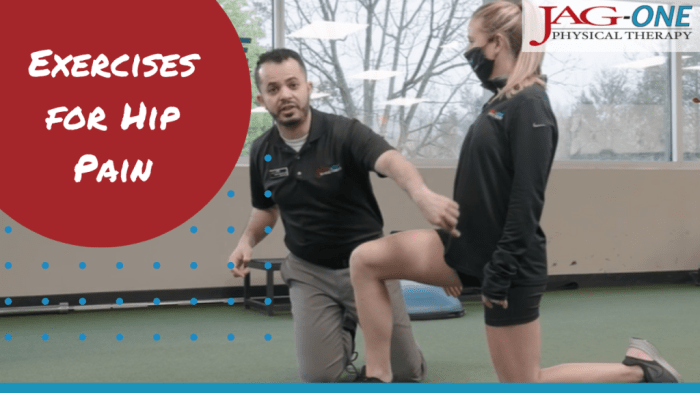
A crucial aspect of physical therapy for hip pain is the careful progression of exercises. Jumping into advanced exercises too quickly can exacerbate pain or lead to injury. A well-structured progression allows patients to gradually build strength and flexibility, minimizing discomfort and maximizing results. This tailored approach is essential for achieving long-term recovery and preventing future issues.
Exercise Progression Strategies
Proper exercise progression is a fundamental component of successful physical therapy. It involves starting with simple, low-impact exercises and gradually increasing the difficulty and complexity over time. This gradual escalation helps the body adapt to the demands of the exercise, minimizes the risk of injury, and allows for a more sustainable approach to recovery.
Modifications for Physical Abilities and Limitations
Physical therapy programs must be adaptable to accommodate individual differences in physical abilities and limitations. Modifications are crucial to ensure that everyone can participate safely and effectively, regardless of their current fitness level or existing conditions.
| Physical Ability/Limitation | Modification Strategies |
|---|---|
| Limited range of motion | Use assistive devices like resistance bands or pulleys for exercises. Reduce the range of motion for certain stretches and exercises. |
| Balance issues | Perform exercises in a stable environment, like standing near a wall or chair for support. Modify exercises to involve less complex movements or use supportive equipment. |
| Pain tolerance | Reduce the intensity and duration of exercises to manageable levels. Modify exercises to involve less weight, resistance, or repetition. |
| Cardiovascular limitations | Gradually increase the intensity and duration of exercises. Consider modifications like reducing the time spent exercising or using stationary equipment. |
Modifications for Specific Injuries or Conditions
Understanding specific injuries or conditions is vital when tailoring exercises. Modifications must address the unique needs of each patient. For example, individuals with arthritis may require lower resistance exercises or alternative exercises that minimize joint stress. Those with specific muscle tears or strains might need to avoid exercises that aggravate the affected area.
Importance of Proper Progression
Proper progression is not merely about increasing the difficulty of exercises. It’s about gradually increasing the demands on the body, allowing it to adapt and strengthen without causing pain or injury. This approach ensures that patients can progress through exercises safely and effectively, promoting long-term healing and recovery. A proper progression is critical for building strength, flexibility, and overall well-being.
Adjusting Intensity and Duration
Exercise intensity and duration should be adjusted based on individual needs and responses. If a patient experiences significant pain or discomfort, the intensity or duration should be decreased. Conversely, if a patient tolerates the exercise well, the intensity or duration can be gradually increased over time. This personalized approach ensures that the exercise program is tailored to the patient’s specific needs.
Example: Hip Flexor Exercise Progressions
| Exercise | Beginner | Intermediate | Advanced |
|---|---|---|---|
| Hip Flexor Stretch (lying) | Hold for 15-20 seconds, 2-3 sets | Hold for 20-30 seconds, 3-4 sets | Hold for 30-45 seconds, 3-5 sets |
| Hip Flexor Raises (with band) | Use light resistance band, 10-12 repetitions, 2-3 sets | Increase resistance band, 12-15 repetitions, 3-4 sets | Use heavier resistance band, 15-20 repetitions, 3-5 sets |
| Clamshells | 10-12 repetitions, 2-3 sets | 12-15 repetitions, 3-4 sets | 15-20 repetitions, 3-5 sets |
These examples show how to progressively increase the repetitions, sets, and resistance of exercises as the individual progresses.
Importance of Proper Form and Technique

Proper form and technique are paramount in physical therapy exercises for hip pain. Maintaining correct posture and alignment throughout each movement is crucial for maximizing the effectiveness of the exercises and minimizing the risk of injury. Ignoring proper form can lead to ineffective results, potentially worsening pain or causing further damage to the hip joint. Understanding the importance of correct technique will help you achieve optimal recovery and prevent setbacks.Proper form and technique are not just about looking good; they are about doing the exercise correctly to target the intended muscles and joints.
This ensures that the exercise is safe, effective, and helps promote healing and strength. Incorrect form can lead to injury, inefficient muscle engagement, and prolonged pain. Understanding common mistakes and practicing correct alignment will ensure that your hip pain therapy is productive.
Risks of Improper Form
Improper form during hip exercises can lead to a variety of negative consequences. These range from inefficient exercise outcomes, where the intended muscles are not properly engaged, to potential injuries like strained ligaments, tendons, or muscles. Furthermore, improper form can exacerbate existing hip pain or lead to the development of new problems in the joint. The risks can include muscle imbalances, joint stress, and increased pain, ultimately hindering your progress towards recovery.
Common Mistakes to Avoid
A few common mistakes during hip exercises include not maintaining a neutral spine, using excessive force or momentum, or not engaging the core muscles adequately. These errors can lead to unnecessary strain on the hip joint and surrounding tissues, potentially prolonging recovery time or worsening pain. It’s essential to focus on controlled movements and listen to your body’s signals.
Correct Posture and Alignment for Hip Exercises
| Exercise | Correct Posture and Alignment |
|---|---|
| Hip Flexor Stretch | Maintain a straight back, engaging core muscles. Keep the hips square to the floor. Avoid arching or rounding the back. |
| Glute Bridges | Place feet flat on the floor, knees bent at a 90-degree angle. Maintain a neutral spine, avoiding arching or sagging. |
| Clamshells | Lie on your side, knees bent, and feet together. Keep your hips stacked and avoid twisting your torso or spine. Focus on lifting the top knee, keeping the bottom knee in line. |
| Hip Abduction | Lie on your side, maintaining a straight line from head to knees. Focus on lifting the top leg outward, keeping the hips aligned and avoiding any twisting. |
This table illustrates the key postural and alignment considerations for various common hip exercises. It’s crucial to maintain proper form throughout the entire exercise to maximize benefits and prevent injury.
Using Visual Aids
Visual aids, such as images and videos, can significantly aid in learning and maintaining proper form during hip exercises. These visual representations provide a clear demonstration of correct posture and movement patterns, helping you visualize and understand the desired alignment. Images can showcase the correct position of the body, and videos can demonstrate the movement in action, facilitating a deeper understanding of the exercise’s mechanics.
It’s recommended to use high-quality images or videos from reputable sources to ensure accuracy and clarity. These aids should be used in conjunction with verbal instruction and guidance from a physical therapist or qualified professional.
Breathing Techniques
Proper breathing techniques can complement your hip exercises and enhance their effectiveness. Incorporating controlled breathing into the exercises can promote relaxation and reduce muscle tension, which can be particularly helpful during exercises that target the hip flexors and abductors. Diaphragmatic breathing, or deep belly breathing, can help manage stress and promote relaxation during the exercises, while ensuring optimal oxygen flow to the muscles.
This will improve the efficiency of the exercise, leading to better results.
Precautions and Contraindications
Knowing potential risks and limitations is crucial when designing a hip pain exercise program. This section Artikels precautions to take before starting any exercise routine, identifies contraindications for specific exercises, and emphasizes the importance of professional guidance. Understanding warning signs during exercises is equally vital for safety and effective recovery.
Potential Risks and Precautions
Before initiating any new exercise program, it’s essential to assess potential risks. Factors such as the severity of hip pain, underlying medical conditions, and the individual’s physical capabilities can significantly influence exercise selection and intensity. A comprehensive medical evaluation is crucial to identify any pre-existing conditions that might interact negatively with the exercises. For example, individuals with a history of blood clots or those with significant cardiovascular issues should consult their physician before beginning any exercise regimen.
Precautions Before Starting an Exercise Program
A thorough evaluation and preparation are paramount before embarking on any exercise program. It’s important to assess the current level of pain and physical ability. Start with low-intensity exercises and gradually increase the difficulty as tolerated. Avoid pushing through pain. Listen to your body, and adjust the exercises or rest as needed.
Proper warm-up and cool-down routines are vital to prevent injuries. Consider consulting a physical therapist for personalized guidance on appropriate warm-up and cool-down stretches, and for exercise selection.
Contraindications for Specific Exercises
Certain exercises may be contraindicated for individuals with specific medical conditions. For instance, exercises that involve excessive hip flexion might be inappropriate for those with recent hip replacements or individuals experiencing acute inflammation. A physical therapist can assess individual needs and modify exercises accordingly.
Table of Precautions and Contraindications
| Exercise Type | Precautions | Contraindications |
|---|---|---|
| Hip Flexor Stretches | Start slowly, avoid bouncing, listen to body signals, maintain proper form. | Recent hip replacement, acute hip inflammation, severe arthritis, pain radiating down the leg. |
| Hip Abduction Exercises | Focus on controlled movements, avoid jerky motions, use light resistance initially. | Recent hip fracture, severe osteoporosis, blood clots, uncontrolled pain. |
| Hip Extension Exercises | Maintain a neutral spine position, keep core engaged, use a chair for support if needed. | Recent spinal surgery, severe back pain, acute sciatica. |
| Hip Strengthening Exercises | Gradually increase weight or resistance, maintain proper form, use proper breathing techniques. | Recent hip surgery, uncontrolled blood pressure, severe osteoporosis, pain radiating down the leg. |
Importance of Consulting a Healthcare Professional
Seeking professional guidance is crucial for designing a safe and effective exercise program. A physical therapist can evaluate your specific needs, assess your current condition, and tailor an exercise program that addresses your individual requirements. They can also identify any potential contraindications or modifications necessary to prevent injury.
Warning Signs During Exercises
Be vigilant for any warning signs during exercises. Sharp, sudden pain, increased pain, swelling, or redness around the hip joint are serious indicators that require immediate cessation of the exercise and consultation with a healthcare professional. Persistent or worsening pain should also be monitored closely. Other warning signs include dizziness, lightheadedness, or shortness of breath.
Home Exercise Programs and Self-Management: Physical Therapy Exercises For Hip Pain
Taking charge of your hip pain recovery involves more than just physical therapy sessions. A crucial component is developing a robust home exercise program. This program empowers you to actively participate in your healing process, maintain gains made in therapy, and prevent future flare-ups. Consistent effort at home strengthens your muscles, improves flexibility, and promotes overall well-being.Understanding that managing hip pain is an ongoing journey, a structured home program is key to long-term success.
It complements your therapy sessions, ensuring you’re actively working toward your goals outside of scheduled appointments.
Finding the right physical therapy exercises for hip pain can be a real game-changer. It’s all about targeting the specific muscles causing the discomfort. But did you know that sleep quality can also play a huge role? Poor sleep can sometimes worsen hip pain, and conversely, hip pain can disrupt your sleep. This often connects to other issues, like the relationship between ADHD and sleep, which can also significantly impact physical well-being.
the relationship between adhd and sleep is an area often overlooked, but understanding the interplay between these factors can lead to more effective hip pain management strategies. Ultimately, focusing on proper sleep hygiene and incorporating the right physical therapy exercises is key to long-term relief.
Sample Home Exercise Program for Managing Hip Pain, Physical therapy exercises for hip pain
This sample program provides a foundation, but it’s essential to remember that individual needs vary. Consult with your physical therapist for personalized modifications and progressions. This program focuses on key areas, such as strengthening, stretching, and maintaining range of motion.
- Warm-up (5-10 minutes): Begin with gentle activities like walking, cycling, or light cardio. This prepares your muscles for the exercises and minimizes the risk of injury. Simple arm circles and torso twists also aid in warming up the core muscles that support the hip.
- Strengthening Exercises (15-20 minutes): Include exercises like clamshells, bridges, and hip abductions. These target the muscles around the hip joint, improving stability and strength. Gradually increase the repetitions and sets as your strength improves.
- Stretching Exercises (10-15 minutes): Focus on stretches that target the hip flexors, hamstrings, and glutes. Examples include the lying hip flexor stretch and hamstring stretch. Holding each stretch for 20-30 seconds promotes flexibility and reduces stiffness.
- Balance Exercises (5-10 minutes): Incorporate exercises like standing on one leg, heel-toe walking, and single-leg squats. Improving balance helps prevent falls and promotes stability around the hip joint. Gradually increase the difficulty as your balance improves.
- Cool-down (5-10 minutes): End with gentle stretching to further improve flexibility and promote relaxation. This also helps prevent muscle soreness.
Resources for Finding Additional Exercises
Expanding your exercise repertoire is beneficial. Accessing a variety of exercises allows you to target different muscle groups and adapt your routine as needed.
- Physical Therapist: Your physical therapist is an invaluable resource. They can recommend specific exercises tailored to your needs and provide guidance on proper form and technique.
- Online Resources: Numerous websites and videos offer a wealth of information and exercise demonstrations. However, ensure the sources are reputable and reliable.
- Physical Therapy Apps: Apps can provide structured programs and exercise tracking tools. Ensure these apps are validated by credible sources or your physical therapist.
- Community Groups: Joining a support group or online forum can connect you with others experiencing similar issues and offer a platform for sharing experiences and exercises.
Creating a Personalized Exercise Routine
Personalizing your routine is crucial for optimal results. It involves tailoring exercises to your specific needs and fitness level.
- Start Slowly: Begin with a manageable number of repetitions and sets. Gradually increase the intensity and duration of your workouts as your strength and stamina improve.
- Listen to Your Body: Pay attention to any pain or discomfort. If you experience pain, stop the exercise and consult with your physical therapist.
- Consistency is Key: Aim for regular exercise sessions. Consistency is more effective than infrequent intense workouts. Try to incorporate exercises into your daily routine, for instance, after meals or during breaks.
- Progression and Modifications: Adjust your routine based on your progress and any limitations. Your physical therapist can advise on suitable modifications.
Role of Self-Management in Maintaining Progress
Self-management plays a vital role in maintaining progress achieved through physical therapy. It ensures that the positive effects of therapy are sustained and that you can effectively manage your condition independently.
Self-management of hip pain involves actively participating in your recovery and prevention of further problems.
Exercises to Maintain Flexibility at Home
Maintaining flexibility is crucial for preventing stiffness and pain. The following exercises can be performed at home to maintain flexibility:
- Hip Flexor Stretch (Lying): Lie on your back with one leg straight and the other bent at the knee. Gently pull on the bent knee towards your chest to stretch the hip flexor muscles. Repeat with the other leg.
- Hamstring Stretch (Standing): Stand with one leg slightly forward and bend at the hips, keeping your back straight. Reach towards your toes to stretch the hamstring muscles. Repeat with the other leg.
- Glute Stretch (Seated): Sit on the floor with one leg extended and the other foot placed on the opposite knee. Lean forward from your hips to stretch the glutes. Repeat with the other leg.
Key Takeaways for Home Exercise Programs
Consistent home exercise programs are vital for managing hip pain and maintaining progress. By incorporating a personalized routine and listening to your body, you can effectively control your symptoms and improve your overall well-being.
Integrating Physical Therapy Exercises into Daily Life
Taking your physical therapy exercises beyond the clinic and into your daily routine is key to long-term hip pain management. Consistency is crucial for rebuilding strength and flexibility, preventing setbacks, and ultimately improving your quality of life. This approach allows you to gradually incorporate the exercises into your natural movements, making them feel less like a chore and more like a part of your day.The goal is to seamlessly weave these exercises into your everyday activities.
This approach allows you to build strength and endurance in a way that feels natural and less like a workout. Instead of seeing exercise as separate from your daily life, you’ll start to see it as a way to improve and enhance your everyday movements.
Incorporating Exercises into Daily Activities
Daily activities, from getting dressed to climbing stairs, use the same muscles and joints as your physical therapy exercises. By recognizing these connections, you can use daily tasks to reinforce the gains you make in therapy. This also helps prevent a return to previous pain levels.
Examples of Everyday Movements That Can Be Improved
Numerous everyday movements can benefit from strengthening and stretching. For instance, activities like walking, stair climbing, and even getting up from a chair can be made more efficient and less painful with targeted exercises. These improvements often translate to a noticeable decrease in pain during these activities.
Incorporating Stretching and Strengthening into Daily Routines
Integrating stretching and strengthening into your daily schedule doesn’t have to be time-consuming. Simple stretches can be done while waiting in line, and strengthening exercises can be incorporated during breaks at work or while watching TV. The key is to find opportunities throughout the day.
Daily Activity and Exercise Schedule
| Time of Day | Activity | Exercise |
|---|---|---|
| Morning (upon waking) | Getting dressed | Gentle hip flexor stretches, hamstring stretches, and light leg lifts. |
| Morning (before breakfast) | Walking | Short walks focusing on controlled steps and maintaining good posture. |
| Mid-morning (break time) | Sitting at a desk | Hip circles, glute bridges (modified), and standing quad stretches. |
| Lunchtime | Walking | A slightly longer walk, including some inclines if possible. |
| Afternoon (break time) | Standing | Standing hip extensions, and calf raises. |
| Evening | Preparing dinner | Gentle hip rotations and stretches while cooking. |
| Before Bed | Relaxing | Gentle stretches, focusing on the hips, lower back, and hamstrings. |
Importance of Consistency and Maintaining a Healthy Lifestyle
Consistency is paramount. Regular exercise, coupled with a healthy diet and sufficient sleep, creates a supportive environment for your body to heal and strengthen. A healthy lifestyle approach is more effective than isolated exercise sessions. For example, regular walking, a balanced diet, and adequate sleep will contribute to a more favorable environment for your body to recover and rebuild strength.
Tips on Avoiding Exacerbating Hip Pain
Avoid activities that aggravate your pain. Listen to your body. If an exercise or activity causes sharp pain, stop immediately and consult your physical therapist. This proactive approach can help you avoid unnecessary pain and ensure you’re on the path to recovery. Proper rest and recovery are also crucial in managing hip pain and preventing setbacks.
Addressing Specific Conditions
Tailoring physical therapy exercises to individual hip conditions is crucial for effective treatment and recovery. Understanding the specific pathology allows therapists to design targeted exercises that address the root cause of the pain and dysfunction, maximizing the potential for successful outcomes. This personalized approach helps patients regain strength, mobility, and reduce pain more effectively.Effective physical therapy for hip conditions involves modifying exercises based on the severity and nature of the specific condition.
This approach ensures that patients don’t exacerbate their injury while working towards recovery. Adjustments may involve altering the intensity, range of motion, or the specific muscles targeted in the exercises.
Arthritis
Arthritis, characterized by inflammation and degeneration of the joint, often leads to pain, stiffness, and limited mobility. Exercises for arthritis focus on maintaining joint range of motion and strengthening surrounding muscles to support the joint. Gentle stretching, low-impact cardio, and targeted strengthening exercises are crucial for managing arthritis symptoms.
- Gentle range of motion exercises: These exercises help maintain flexibility and reduce stiffness in the hip joint. Examples include leg swings, hip circles, and gentle knee bends. Proper form is paramount to avoid exacerbating pain. The goal is to gradually increase the range of motion over time.
- Strengthening exercises: Strengthening muscles surrounding the hip joint provides support and stability, reducing stress on the affected joint. Exercises such as isometric hip abductions, glute bridges, and seated hamstring curls are beneficial. Light weights or resistance bands can be incorporated as tolerated.
Bursitis
Bursitis involves inflammation of the bursae, small fluid-filled sacs that cushion the joints. Pain and tenderness around the hip are common symptoms. Exercises for bursitis focus on reducing inflammation and improving joint mobility.
- Rest and ice: Initially, rest and ice application are vital for reducing inflammation. Follow your physical therapist’s recommendations for ice application frequency and duration.
- Gentle range of motion exercises: These exercises aim to restore joint mobility without aggravating the inflamed area. Examples include gentle hip flexion, abduction, and external rotation.
- Strengthening exercises: Strengthening surrounding muscles can help support the hip joint and reduce stress on the inflamed bursa. Focus on exercises that don’t directly stress the affected area. For example, exercises like hip extensions and glute bridges are useful.
Labral Tears
A labral tear involves damage to the cartilage ring (labrum) that helps stabilize the hip joint. Pain, clicking, and catching sensations are common. Exercises for labral tears focus on restoring hip stability and reducing pain. Exercises should be tailored to the specific extent of the tear and the patient’s tolerance level.
- Hip strengthening exercises: Exercises that target the gluteal muscles (butt muscles) and hip abductors are important for restoring stability. Examples include clamshells, side-lying hip abductions, and glute bridges. These exercises, when performed correctly, strengthen the muscles supporting the hip joint.
- Range of motion exercises: Gradually increase hip mobility and flexibility to promote healing and reduce pain. Examples include hip flexion, extension, and rotation exercises.
- Balance and proprioceptive exercises: These exercises help improve awareness and control of the hip joint. Examples include single-leg balance exercises and exercises that involve changing positions.
Exercise Modifications Table
| Condition | Exercise Modification |
|---|---|
| Arthritis | Lower weights, fewer repetitions, avoid high-impact exercises, modify posture. |
| Bursitis | Avoid exercises that aggravate pain, use ice before and after exercises, modify posture and alignment. |
| Labral Tear | Focus on controlled movements, avoid excessive rotation, and modify exercises as tolerated. |
Comparison of Approaches
Different approaches to managing hip conditions through exercise exist. A comprehensive approach involves considering the patient’s individual needs and preferences, along with the specific condition. Therapists might incorporate manual therapy, education on proper posture, and lifestyle modifications alongside exercise. Individualized plans are crucial for effective outcomes.
Final Summary
In conclusion, managing hip pain through targeted physical therapy exercises requires a comprehensive approach. This guide has provided a detailed overview of exercises, progressions, and precautions. Remember to prioritize proper form, listen to your body, and consult with a healthcare professional before starting any new exercise program. By incorporating these exercises into your daily routine, you can effectively manage your hip pain and improve your overall well-being.