How should I eat after a colostomy? This is a crucial question for anyone facing this life change. Adjusting your diet after a colostomy is a journey of discovery, learning what foods work best for your unique body and colostomy. This guide dives into the dietary considerations, helping you understand the necessary changes and strategies for a smoother transition, from the first week to long-term healthy eating.
This comprehensive guide will walk you through dietary adjustments, common concerns, and practical strategies to manage your diet effectively after a colostomy. We’ll explore the crucial role of fiber, hydration, and the importance of listening to your body’s signals. From recommended foods to those to avoid, we’ll equip you with the knowledge to navigate your new eating habits successfully.
Dietary Considerations After Colostomy
Adjusting your diet after a colostomy is a crucial part of the recovery process. While it may seem daunting, with careful planning and attention to specific dietary needs, you can effectively manage your new digestive system and maintain a healthy lifestyle. It’s important to work closely with your healthcare team and a registered dietitian for personalized guidance.Dietary changes after a colostomy are often temporary and designed to help your body adjust to the new way it processes food.
Figuring out how to eat after a colostomy can feel overwhelming, but it’s totally manageable! Focus on a balanced diet with plenty of fiber, but it’s important to listen to your body. Some folks find that adjusting their diet to accommodate the changes in digestion is similar to how histrionic personality disorder is treated – through therapy and behavioral modifications.
A personalized approach, like consulting a registered dietitian, is key to finding what works best for you and your body. This will help you manage any discomfort and ensure you’re getting the nutrients you need to feel your best. how histrionic personality disorder is treated Ultimately, a gradual adjustment in your eating habits will be the most effective way to manage your new dietary needs.
Your digestive system needs time to heal and adapt to the presence of the colostomy, which can impact how you absorb nutrients and process different foods.
Dietary Changes Often Recommended
A common approach after colostomy surgery involves starting with a bland, low-fiber diet. This helps minimize initial digestive discomfort and allows your digestive tract to gradually adjust. This diet typically includes easily digestible foods like cooked vegetables, lean proteins, and soft grains. Gradually increasing fiber intake is important, but it should be done under the guidance of your doctor or a registered dietitian to avoid potential complications.
Common Dietary Concerns and Misconceptions
Some individuals fear they can no longer enjoy their favorite foods after a colostomy. This is often a misconception. The goal is to reintroduce foods gradually, monitoring your body’s response to different foods and food combinations. It’s essential to listen to your body and note any specific reactions or discomfort. Maintaining a balanced and varied diet is achievable with the right strategies.
Furthermore, the idea that certain foods will cause a blockage is often inaccurate, as long as reintroduction is gradual.
Strategies for Gradually Reintroducing Food Groups
Start with small portions of familiar, soft foods. Observe how your body reacts to these foods and adjust accordingly. If you experience any issues, contact your healthcare provider. Pay attention to how different food groups affect your bowel movements and adjust your intake based on your individual experience. For example, someone might find that beans trigger more frequent bowel movements.
Importance of Hydration and Fluid Intake
Hydration is paramount after a colostomy. Adequate fluid intake helps maintain healthy bowel movements and prevents dehydration, which can be a significant concern after surgery. Carry a water bottle with you and drink fluids throughout the day. Choose water, clear broths, and other non-caffeinated beverages. Avoid sugary drinks as they can potentially worsen digestive issues.
Sample Meal Plan for the First Week After a Colostomy
This meal plan is a sample and should be adapted based on individual needs and your healthcare provider’s recommendations. Always consult your doctor or a registered dietitian for personalized dietary advice.
Adjusting your diet after a colostomy can be tricky, but focusing on a balanced intake is key. Fiber is important, but you need to find the right types and amounts that work best for your body. While exploring different foods, it’s also interesting to note that, unrelated to colostomy care, understanding the factors contributing to conditions like testicular cancer is crucial.
For example, researching what causes testicular cancer can broaden your perspective on overall health. Ultimately, a balanced diet with foods that are easy to digest will help you feel your best after a colostomy.
| Food Group | Before Colostomy | After Colostomy | Notes |
|---|---|---|---|
| Fruits | Varied intake | Start with soft, cooked fruits (e.g., bananas, steamed applesauce). | Introduce other fruits gradually, monitoring for reactions. |
| Vegetables | Varied intake | Start with cooked, soft vegetables (e.g., mashed sweet potatoes, steamed carrots). | Gradually introduce more varieties and textures. |
| Protein | Varied intake | Lean, easily digestible proteins (e.g., cooked chicken, fish, eggs). | Soft, well-cooked forms are often best initially. |
| Grains | Varied intake | Soft, cooked grains (e.g., white rice, mashed potatoes). | Gradually introduce whole grains, observing reactions. |
Sample Meal Plan (First Week):* Breakfast: Oatmeal with mashed banana and a small amount of cooked chicken.
Lunch
Soup with soft vegetables and lean ground turkey.
Dinner
Baked fish with steamed asparagus and white rice.
Snacks
Plain yogurt, cooked apple slices, small portions of cooked sweet potato.
Foods to Avoid or Limit
Adjusting your diet after a colostomy is a crucial step toward a comfortable and healthy life. This involves recognizing which foods might trigger unwanted side effects like increased gas, diarrhea, or even blockages. Understanding these potential issues empowers you to make informed choices that support your recovery and long-term well-being.
Common Foods That May Increase Gas or Diarrhea
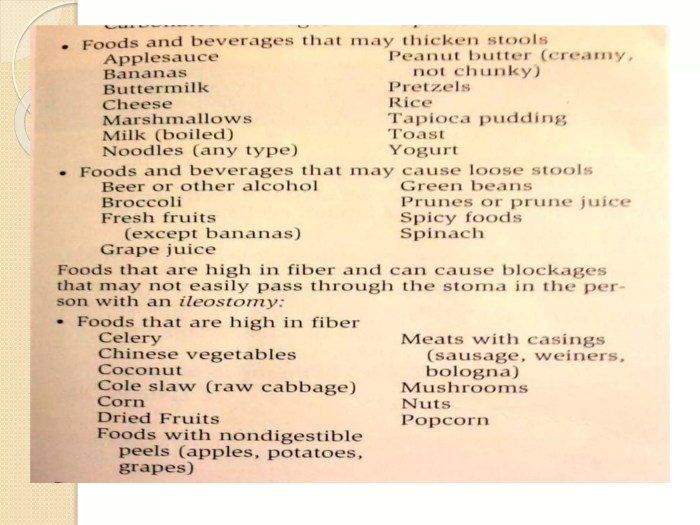
Certain foods are notorious for causing increased gas or loose stools. These can vary from person to person, so it’s essential to pay attention to your body’s response. Some common culprits include beans, broccoli, cabbage, cauliflower, and onions. These foods contain complex carbohydrates that are difficult for the body to fully digest, leading to increased gas production.
High-fat foods can also contribute to diarrhea, as they can speed up the movement of food through the digestive system.
Impact of High-Fiber Foods on Bowel Movements, How should i eat after a colostomy
High-fiber foods are generally beneficial for overall health, but their impact on colostomy output requires careful consideration. While fiber is essential for a healthy digestive system, some high-fiber foods can cause excessive gas and diarrhea. Foods high in insoluble fiber, like whole grains and some fruits and vegetables, may initially be more difficult to digest after a colostomy.
Foods That May Cause Blockage or Discomfort
Some foods can potentially cause blockages or significant discomfort in the colostomy area. These foods are often high in insoluble fiber or have a dense texture that can slow down digestion. Corn, popcorn, and seeds are examples of foods that might pose a risk. Avoid eating these foods initially, or introduce them gradually in small portions to assess your body’s response.
Foods to Avoid Initially and Gradual Reintroduction
Initially, it’s prudent to avoid foods that are known to cause significant gas, diarrhea, or blockages. This allows your body time to adjust to the colostomy. Foods like cruciferous vegetables (broccoli, cauliflower, cabbage), beans, lentils, and certain fruits (such as apples and pears) should be avoided or introduced gradually.
Foods That May Cause Gas, Bloating, or Other Digestive Issues
A detailed list of foods that may cause gas, bloating, or other digestive issues after a colostomy would be extensive and highly individualized. It’s best to consult with your healthcare provider or a registered dietitian for a personalized list of foods to avoid or limit.
Monitoring the Impact of Different Foods on Colostomy Output
Carefully monitoring how different foods affect your colostomy output is vital. Keep a food diary to record what you eat and how your body reacts. This allows you to identify patterns and tailor your diet accordingly. Pay attention to the consistency, frequency, and amount of your colostomy output. Note any discomfort or changes in your overall well-being.
Managing Gas and Odor
Adjusting your diet after a colostomy can feel like a delicate balancing act. While we’ve covered the foods to avoid and limit, understanding how to manage gas and odor is crucial for maintaining comfort and confidence. It’s important to remember that everyone’s experience is unique, and what works for one person might not work for another. Experimentation and careful monitoring are key to finding what works best for you.A significant contributor to gas and odor after colostomy is the altered digestive process.
The bacteria in your colon continue to ferment foods, leading to increased gas production. Furthermore, certain foods are naturally higher in gas-producing compounds. Understanding these factors allows for proactive management of both gas and odor.
Common Causes of Gas and Odor
The digestive system is complex, and the presence of a colostomy adds another layer of complexity. Changes in the digestive process and the presence of certain foods lead to gas and odor production. This is not a result of poor hygiene, but rather a physiological response to the altered digestive system.
Strategies for Minimizing Gas Production
Dietary adjustments play a significant role in reducing gas and odor. Gradual introduction of different foods and careful observation of your body’s reactions are crucial. Focus on consuming smaller meals more frequently to avoid overwhelming your system. Chewing food thoroughly can also aid in digestion and reduce gas production.
Foods Less Likely to Produce Gas or Odor
A variety of foods are relatively low in gas-producing compounds and generally well-tolerated by those with a colostomy. These foods include lean meats, poultry, fish, and eggs. Vegetables like carrots, cucumbers, and zucchini can also be incorporated into your diet in moderation. Rice, quinoa, and oatmeal are often good choices for grains.
- Lean proteins, such as chicken breast, fish, and turkey, are generally well-tolerated.
- Plain, cooked vegetables, like steamed broccoli or green beans, may cause less gas than raw or cruciferous vegetables.
- Fruits like bananas, applesauce, and pears are generally easier to digest than others.
- Simple carbohydrates, like white rice and toast, can be part of a balanced diet.
Foods Known to Cause Gas and Odor
Certain foods are more likely to produce gas and odor due to their high fiber content, or specific compounds they contain. Cruciferous vegetables (broccoli, cauliflower, cabbage), beans, lentils, and onions are often problematic for individuals with a colostomy. Processed foods high in sugar or artificial sweeteners can also lead to gas and odor.
- Cruciferous vegetables (broccoli, cauliflower, cabbage) are known to be gas-producing for many.
- Legumes (beans, lentils, peas) are often high in fiber, which can cause significant gas.
- Certain fruits, like apples, pears, and berries, can cause discomfort in some individuals.
- Carbonated drinks and foods high in sugar or artificial sweeteners can exacerbate gas.
Monitoring the Impact of Different Foods on Gas and Odor
Tracking your food intake and its effect on your colostomy output is essential for personalized dietary management. Maintain a food diary, noting what you eat, when, and the resulting gas and odor. This detailed record will help you identify specific foods that trigger gas and odor in your body.
Tips for Managing Odors from Colostomy Output
The odor associated with colostomy output is often a concern. Implementing certain strategies can help minimize this issue. Using a high-quality ostomy pouch and barrier cream can help to create a seal and prevent leakage, reducing the escape of gases and odors. Adjusting your diet to incorporate foods that don’t cause excessive gas and odor can be very helpful.
Importance of Fiber

Fiber plays a crucial role in digestive health, and its importance is amplified for individuals with a colostomy. Understanding how fiber affects digestion and adjusting your intake after a colostomy can significantly impact bowel regularity, comfort, and overall well-being. Fiber’s influence on colostomy output is multifaceted, impacting both the consistency and frequency of stool.Fiber acts as a bulking agent in the digestive tract, helping to form stool and promote regular bowel movements.
This is especially important after a colostomy, where the digestive process has been altered. A diet rich in fiber can help prevent constipation and promote healthy bowel habits. Furthermore, the type of fiber consumed can influence the texture and consistency of the stool, which can impact the colostomy output.
Different Types of Fiber
Fiber is categorized into two main types: soluble and insoluble. Understanding the differences in their effects on digestion is vital for managing colostomy output.
- Soluble Fiber dissolves in water, forming a gel-like substance in the digestive tract. This gel helps slow down digestion, promoting regularity and preventing diarrhea. Examples include fruits like apples and berries, oats, and legumes. Soluble fiber can help to regulate blood sugar levels and lower cholesterol.
- Insoluble Fiber does not dissolve in water. It adds bulk to the stool, speeding up the passage of food through the digestive tract. This helps prevent constipation and promotes regular bowel movements. Good sources include whole grains, vegetables like broccoli and carrots, and brown rice.
Gradual Fiber Intake Increase
It is crucial to gradually increase fiber intake after a colostomy. A sudden increase can lead to digestive discomfort, gas, and bloating. Start with small amounts of fiber-rich foods and gradually increase the intake over several weeks. This approach allows your body to adjust to the change and minimize potential digestive side effects.
- Initial Phase: Focus on foods with moderate fiber content, such as fruits, vegetables, and whole grains. Start with small portions and observe how your body reacts. Monitor the impact on your bowel movements, paying attention to frequency, consistency, and any discomfort.
- Monitoring and Adjustment: Continuously monitor how different fiber sources affect your colostomy output. Record your dietary intake and bowel movements in a journal to track the correlation between specific foods and your response. If you experience significant discomfort, reduce the fiber intake and gradually increase it again in smaller increments.
Monitoring the Impact of Fiber Sources
Tracking the impact of different fiber sources on bowel movements is essential. By observing how your body responds to various fibers, you can identify foods that work best for your individual needs and digestive system. Keeping a food diary and recording bowel movements is vital in this process.
- Dietary Diary: A dietary diary is a tool to meticulously record your food intake and the type of fiber consumed. This record helps to track the relationship between your diet and bowel movements.
- Bowel Movement Journal: A bowel movement journal allows for the recording of the frequency, consistency, and any discomfort experienced after consuming different fiber-rich foods. This will help you identify which foods and types of fiber suit your digestive system better.
High-Fiber Foods
A variety of high-fiber foods are suitable for consumption after a colostomy. These foods provide essential nutrients while contributing to healthy bowel function.
- Fruits: Apples, berries, pears, and prunes are good sources of fiber.
- Vegetables: Broccoli, carrots, spinach, and green beans are excellent sources of fiber.
- Legumes: Beans, lentils, and peas are high in fiber and protein.
- Whole Grains: Oatmeal, brown rice, quinoa, and whole-wheat bread are rich in fiber.
Nutritional Supplements: How Should I Eat After A Colostomy
Navigating dietary changes after a colostomy can sometimes lead to nutritional gaps. Understanding potential deficiencies and the importance of supplementation can help ensure optimal health and well-being. This section delves into the role of nutritional supplements, highlighting when and how they might be beneficial.Many individuals adjust their eating habits following a colostomy, which can affect their intake of essential nutrients.
While a balanced diet remains crucial, certain vitamins and minerals may require supplementation in some cases. This section will explore potential nutrient deficiencies and how to address them effectively.
Potential Nutrient Deficiencies
A colostomy can sometimes impact nutrient absorption, potentially leading to deficiencies in certain vitamins and minerals. Factors such as altered digestion and changes in dietary habits can play a role.
- Iron deficiency: A common issue, especially in those with reduced blood loss from the digestive tract. Dietary changes, such as a reduction in red meat consumption or a decrease in iron-rich foods, can contribute to iron deficiency. Iron-rich foods and supplements, in conjunction with a balanced diet, can help combat this.
- Vitamin B12 deficiency: This is often seen in individuals with a history of digestive issues. It can impact energy levels, neurological function, and overall well-being. Vitamin B12 supplements, along with dietary adjustments, are important to consider.
- Calcium and Vitamin D deficiency: These are vital for bone health. Individuals with restricted dairy intake or limited exposure to sunlight may experience deficiencies. Dietary adjustments, including fortified foods, and supplements, can be considered to help maintain adequate calcium and vitamin D levels.
- Fiber-related deficiencies: While not a vitamin or mineral, inadequate fiber intake can arise from dietary adjustments following a colostomy. This can lead to digestive issues. Ensuring sufficient fiber intake, through dietary modifications or supplements, can aid in managing bowel regularity.
Importance of Consulting a Healthcare Professional
Determining the need for nutritional supplements and the appropriate dosage requires professional guidance. Self-treating can be harmful.
- A registered dietitian can assess individual nutritional needs, taking into account specific dietary restrictions, medical history, and lifestyle factors.
- A doctor can evaluate potential underlying medical conditions that might contribute to nutrient deficiencies. They can also prescribe supplements if necessary.
- A personalized approach is crucial to ensure that any supplements are effective and safe, and do not interfere with the colostomy adjustment.
Nutritional Supplement Options
Various types of nutritional supplements are available.
- Multivitamins and mineral supplements: These provide a broad spectrum of vitamins and minerals. Choosing a reputable brand is essential. Look for supplements that have been thoroughly tested and meet quality standards.
- Specific vitamin and mineral supplements: These address particular deficiencies, such as iron or vitamin B12, as determined by a doctor or dietitian.
- Protein supplements: May be helpful for individuals struggling to meet their protein needs. A registered dietitian can advise on appropriate protein intake and supplement options.
Vitamin and Mineral Needs for Individuals with Colostomies
Specific vitamin and mineral requirements may vary based on individual needs and factors such as age, activity level, and overall health. The recommended daily allowance (RDA) for vitamins and minerals can serve as a general guideline.
| Nutrient | Importance | Potential Deficiency Symptoms |
|---|---|---|
| Iron | Essential for red blood cell production | Fatigue, weakness, shortness of breath |
| Vitamin B12 | Crucial for nerve function and cell health | Numbness, tingling, fatigue |
| Calcium | Supports bone health and muscle function | Bone pain, osteoporosis |
| Vitamin D | Essential for calcium absorption | Bone pain, muscle weakness |
Recommendations for Consulting a Healthcare Professional
Regular check-ups with a healthcare professional are essential for monitoring overall health.
- Schedule follow-up appointments with your doctor or registered dietitian to discuss any changes in your health or dietary needs.
- Report any unusual symptoms or concerns to your healthcare team promptly.
- Be proactive in managing your nutritional needs to maintain optimal health and well-being.
Hydration and Fluid Intake
Staying hydrated is paramount for everyone, but it takes on a new significance after a colostomy. Proper hydration is crucial for maintaining healthy bowel movements and overall well-being. It directly impacts the consistency and volume of your colostomy output, and inadequate fluid intake can lead to complications. Understanding the importance of hydration and making informed choices about fluids will greatly improve your comfort and management of your colostomy.Maintaining a consistent fluid intake is essential for preventing dehydration.
Navigating a colostomy can feel tricky, but focusing on what you can eat is key. Learning to adjust your diet after a colostomy often involves trying different foods to find what works best for your body. This often involves a lot of patience and understanding of your body’s reactions, just like addressing passive aggressive behavior in relationships. You’ll need to listen carefully to your body’s signals and adjust your eating plan accordingly.
Remember, finding the right approach is a process, and exploring resources like those for addressing passive aggressive behavior can help you with the emotional aspect of this transition. Ultimately, eating after a colostomy comes down to understanding your body and being proactive in your approach.
Dehydration can cause your colostomy output to become hard, dry, and difficult to manage. Conversely, sufficient hydration keeps your output soft and easier to control. The right balance of fluids ensures your body functions optimally, which directly translates to improved colostomy management.
Importance of Adequate Fluid Intake
Adequate fluid intake is essential for proper bowel function. When you’re properly hydrated, your digestive system works efficiently, which helps prevent constipation and maintain a healthy stool consistency. This is especially crucial after a colostomy. The consistency of your colostomy output is directly related to your fluid intake.
Impact of Dehydration on Colostomy Output
Dehydration can significantly impact the consistency of your colostomy output. Hard, dry stool can be challenging to manage and increase the risk of blockages. Conversely, adequate hydration helps maintain a soft, manageable consistency.
Recommendations for Appropriate Fluid Intake
The amount of fluid you need will vary based on individual factors, including activity level, climate, and overall health. However, aiming for 8 glasses of water per day is a good starting point. Remember, this is a guideline, and you should listen to your body’s signals. If you feel thirsty, drink fluids.
Foods and Drinks Contributing to Hydration
Numerous foods and beverages contribute to your daily fluid intake. Water is the ideal choice for hydration. However, other drinks like juice, milk, and broth also count toward your fluid intake goals. Even fruits and vegetables contain water, contributing to your hydration.
Comparison of Different Fluids and Their Impact
Different fluids have varying impacts on hydration. Plain water is the most effective and readily absorbed. Sugary drinks, while hydrating, can also lead to other issues. Sports drinks are formulated to replenish electrolytes lost during strenuous activity but should not be relied on as a primary source of hydration.
Specific Fluid Recommendations
- Water: The cornerstone of hydration. Its purity and lack of added sugars make it the best choice for most situations. Aim for water as your primary source.
- Unsweetened Tea: Tea, especially herbal varieties, provides a comforting beverage option that can contribute to hydration. Avoid caffeinated tea in excess, as caffeine can lead to dehydration.
- Broths and Soups: These are excellent choices, offering hydration and essential electrolytes. Choose low-sodium options for optimal health benefits.
- Fruit- and Vegetable Juices: Fruits and vegetables contain water, and juices derived from them can contribute to hydration. However, it’s important to limit added sugars and artificial ingredients.
Healthy Eating Habits and Lifestyle

Embarking on a journey of healthy eating and lifestyle choices after a colostomy is crucial for overall well-being. It’s not just about the food you eat, but also about how you approach your diet and daily routines. This holistic approach allows you to regain control and maintain a positive outlook while managing your new normal. The benefits extend beyond physical comfort; a balanced lifestyle positively impacts your emotional and mental health, further supporting your healing process.A healthy lifestyle after a colostomy is a proactive approach to managing your digestive system and overall health.
It encompasses a variety of factors that work in harmony to promote well-being. By focusing on nutritious food choices, regular exercise, stress reduction techniques, and a positive mindset, you can optimize your health and quality of life.
Connection Between Healthy Eating and Well-being
A healthy diet plays a pivotal role in supporting your body’s recovery and ongoing well-being after a colostomy. Proper nutrition fuels your body, aiding in wound healing, maintaining energy levels, and supporting your immune system. Nutritious foods provide essential vitamins, minerals, and antioxidants, promoting overall health and combating potential complications. A diet rich in fruits, vegetables, whole grains, and lean protein can contribute significantly to maintaining optimal health.
Tips for Developing Sustainable Eating Habits
Sustainable eating habits involve making gradual, manageable changes to your diet that you can maintain long-term. This avoids drastic shifts that can be difficult to sustain and ultimately lead to setbacks. Start by incorporating one or two new healthy habits per week. For example, swap processed foods for whole grains, increase your intake of fruits and vegetables, or choose lean protein sources over fatty options.
Remember, consistency is key.
Significance of Regular Exercise and Stress Management
Regular physical activity is essential for maintaining a healthy weight, boosting your mood, and improving your overall energy levels. Exercise strengthens your body, promotes digestive regularity, and helps to manage stress. Finding activities you enjoy, such as walking, swimming, or cycling, can help make exercise a sustainable part of your routine. Stress management techniques, such as meditation, yoga, or deep breathing exercises, can help reduce anxiety and improve your overall well-being, which positively impacts your digestive health.
Impact of Emotional Well-being on Digestive Health
Emotional well-being significantly impacts digestive health. Stress and anxiety can disrupt the normal functioning of the digestive system, potentially leading to digestive issues. Cultivating a positive mindset and engaging in stress-reducing activities can help manage these issues. Consider incorporating activities like journaling, spending time in nature, or pursuing hobbies to promote emotional well-being.
Examples of Healthy Lifestyle Choices
Implementing healthy lifestyle choices can contribute significantly to your overall well-being. Some examples include:
- Prioritizing sleep: Aim for 7-9 hours of quality sleep each night to support your body’s restorative processes. Sufficient sleep promotes emotional well-being, energy levels, and overall health.
- Maintaining a balanced diet: Focus on whole, unprocessed foods, including fruits, vegetables, whole grains, and lean protein. Limit processed foods, sugary drinks, and excessive unhealthy fats.
- Engaging in regular physical activity: Find activities you enjoy and aim for at least 150 minutes of moderate-intensity exercise per week.
- Practicing stress management techniques: Incorporate relaxation methods such as meditation, yoga, or deep breathing exercises into your daily routine.
Importance of Listening to Your Body’s Signals
Your body provides valuable cues regarding its needs and limitations. Pay attention to hunger and fullness cues, recognizing when you are truly hungry versus when you are simply craving something. This mindful approach helps to prevent overeating and maintain a balanced diet. Also, recognize signs of discomfort or distress related to your colostomy and promptly address any concerns with your healthcare provider.
Ultimate Conclusion
Navigating dietary changes after a colostomy can feel daunting, but with the right information and strategies, you can achieve a healthy and fulfilling diet. Remember, consistency and patience are key. By gradually reintroducing foods, monitoring your body’s response, and prioritizing hydration, you can adapt to your new eating habits and enjoy a positive and healthy lifestyle. This guide provides a solid foundation for making informed choices, but consulting a registered dietitian or your doctor is always recommended for personalized guidance.