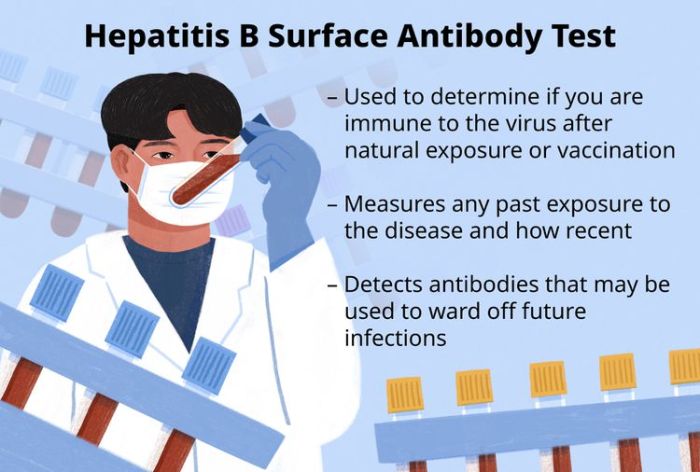
HBsAb Hepatitis B surface antibody is a crucial marker in understanding immunity to hepatitis B virus (HBV). It indicates the presence of antibodies produced by the body in response to HBV infection or vaccination. Understanding HBsAb levels is vital for diagnosis, disease management, and predicting the course of the disease. This guide explores everything from the basics of HBsAb to its role in different populations and its significance in public health.
This comprehensive guide will delve into the intricacies of HBsAb, from its definition and role in immunity to various testing methods, levels, and interpretation. We will also examine the implications of HBsAb in different populations, including vaccinated individuals, those who have recovered from HBV, and pregnant women. Further, we’ll explore its role in treatment, disease progression, and public health strategies.
Introduction to Hepatitis B Surface Antibody (HBsAb)
Hepatitis B is a significant global health concern, and understanding the immune response to the virus is crucial for diagnosis and management. A key component of this response is the development of antibodies against the hepatitis B virus surface antigen (HBsAg). These antibodies, known as Hepatitis B Surface Antibodies (HBsAb), play a critical role in protecting individuals from chronic infection and liver disease.HBsAb are crucial for effectively combating the hepatitis B virus.
They are produced by the immune system in response to infection or vaccination, effectively neutralizing the virus and preventing its spread. This neutralization prevents the virus from infecting healthy cells and damaging the liver. This immunity is essential for long-term protection against hepatitis B.
Significance of HBsAb in Diagnosis
HBsAb levels are routinely measured in individuals suspected of having or recovering from hepatitis B infection. A positive HBsAb result indicates that the individual has developed immunity to the virus, either through natural infection or vaccination. This result is significant in determining the individual’s susceptibility to future HBV infection.
Significance of HBsAb in Disease Management, Hbsab hepatitis b surface antibody
HBsAb plays a crucial role in managing hepatitis B. A positive HBsAb result suggests successful resolution of acute infection or the effectiveness of vaccination. This knowledge is vital for tailoring treatment plans and monitoring the patient’s response to therapy. Furthermore, the presence of HBsAb signifies protection from future HBV infection, allowing healthcare professionals to make informed decisions about the patient’s overall health status and management.
HBsAb Levels, Interpretation, and Clinical Implications
The interpretation of HBsAb levels depends on the context, whether it’s a routine check, post-exposure prophylaxis, or after vaccination. The table below provides a general guide, but individual cases should be evaluated in conjunction with other clinical findings.
| HBsAb Levels | Interpretation | Associated Clinical Implications |
|---|---|---|
| Positive (typically above a certain threshold, e.g., 10 mIU/mL) | Indicates immunity to hepatitis B. | Protection from HBV infection. No need for further HBV vaccination or antiviral treatment. |
| Negative | Indicates a lack of immunity to hepatitis B. | Susceptibility to HBV infection. Vaccination is recommended. Further evaluation may be required to assess infection status and potential need for antiviral treatment. |
| Indeterminate or borderline | Results may be influenced by various factors, including recent infection, immune response, or the assay used. | Further testing and clinical assessment are essential to determine the appropriate course of action. |
Testing for HBsAb
Identifying the presence and level of Hepatitis B surface antibody (HBsAb) is crucial for determining immunity to hepatitis B. This is essential for vaccination strategies, infection surveillance, and assessing the effectiveness of past or present treatment regimens. Accurate and reliable testing methods are vital for proper clinical management.Various methods exist for detecting HBsAb, each with its own strengths and weaknesses.
Understanding these differences is important for interpreting test results and making informed decisions.
HBsAb Testing Methodologies
Different methods are employed to detect HBsAb, reflecting advancements in laboratory techniques. These methods vary in their sensitivity and specificity, and in the complexity of the testing process.
- Enzyme-linked immunosorbent assay (ELISA): ELISA is a widely used method for detecting HBsAb. It relies on the principle of antigen-antibody binding. A known antigen (HBsAg) is coated onto a solid surface, and a sample containing the suspected antibody (HBsAb) is added. If HBsAb is present, it will bind to the antigen. An enzyme-linked secondary antibody is then added, which binds to the HBsAb.
The enzyme activity is measured, providing a quantitative or qualitative result for the presence and level of HBsAb. ELISA is often considered a standard method for HBsAb detection due to its relative simplicity and cost-effectiveness.
- Immunodiffusion (Ouchterlony): This method involves diffusing the antigen and antibody in a gel medium. The formation of a visible precipitation line indicates the presence and reaction of the antigen-antibody complex. It’s a less frequently used technique, often employed in research settings or when other methods are unavailable.
- Radioimmunoassay (RIA): RIA employs radioactive isotopes to detect HBsAb. The binding of the antibody to the antigen is detected through the presence of radioactivity. This method is less common due to safety concerns associated with handling radioactive materials and the availability of safer alternatives.
Comparison of HBsAb Testing Methods
Different HBsAb testing methods offer varying degrees of sensitivity and specificity. Sensitivity refers to the ability of a test to correctly identify individuals with HBsAb, while specificity refers to the ability to correctly identify individuals without HBsAb. The choice of method often depends on the clinical context and available resources.
| Method | Sensitivity | Specificity | Clinical Utility |
|---|---|---|---|
| ELISA | High (typically >95%) | High (typically >95%) | Widely used for routine testing due to high accuracy, relative simplicity, and cost-effectiveness. |
| Immunodiffusion | Moderate | Moderate | Less common in routine settings, often used in research or specialized circumstances. |
| RIA | High | High | Less frequently used due to safety concerns related to radioactive materials. |
Clinical Utility of HBsAb Testing Methods
Accurate HBsAb testing is crucial in various clinical scenarios. For example, it helps determine immunity after vaccination, identify individuals who have recovered from hepatitis B, or monitor treatment efficacy. Understanding the strengths and weaknesses of each method is vital for selecting the appropriate test for each specific clinical situation.
HBsAb Levels and Interpretation
Understanding the levels of Hepatitis B surface antibody (HBsAb) is crucial in assessing an individual’s protection against hepatitis B virus (HBV) infection. A sufficient level of HBsAb indicates immunity, while lower levels might suggest a need for further investigation or vaccination. This section delves into the correlation between HBsAb levels and protection, the clinical implications of various levels, and a practical interpretation table.
Correlation of HBsAb Levels with Protection
HBsAb levels directly correlate with the strength of protection against HBV. Higher HBsAb levels generally indicate a stronger immune response and a greater likelihood of protection against future HBV infection. This protective effect is often sustained over time, providing long-term immunity. Conversely, lower HBsAb levels may signal a weaker immune response, potentially increasing the risk of HBV infection, particularly if exposure occurs.
Different HBsAb Levels and Their Clinical Implications
Interpreting HBsAb levels requires consideration of various factors, including the individual’s vaccination history, previous HBV infection, and overall health status. Different levels of HBsAb can signify different clinical scenarios. For example, high levels indicate strong immunity, while low levels could indicate a need for further evaluation or additional vaccination. The interpretation also depends on whether the individual has received the hepatitis B vaccine.
HBsAb Levels and Interpretation Table
The following table Artikels different HBsAb levels and their corresponding interpretations in the context of HBV infection. This table provides a general guideline and should be interpreted in conjunction with clinical context.
| HBsAb Level (mIU/mL) | Interpretation | Clinical Implications |
|---|---|---|
| >10 mIU/mL | Indicates protection against HBV infection. | Generally considered immune to HBV. |
| 5-10 mIU/mL | Potentially protective, but further evaluation is recommended. | May require additional testing to confirm immunity or booster vaccination. Susceptible to infection if exposed to HBV. |
| <5 mIU/mL | Indicates a lack of protection against HBV infection. | Requires further investigation and vaccination to prevent HBV infection. Consider risk factors, such as recent exposure to HBV. |
HBsAb Levels and Disease Status Table
The following table illustrates how HBsAb levels relate to various disease statuses. It’s essential to remember that this is a general guideline and should be used in conjunction with other clinical findings.
| HBsAb Level (mIU/mL) | Disease Status | Example |
|---|---|---|
| >10 mIU/mL | Immune to HBV | A previously vaccinated individual with high HBsAb levels would be considered immune. |
| 5-10 mIU/mL | Potentially immune, but require further evaluation. | A person with a history of HBV infection, showing levels between 5-10 mIU/mL, may require further testing to confirm complete immunity. |
| <5 mIU/mL | Not immune to HBV | An individual who has never been vaccinated or exposed to HBV, showing low levels, would be at risk of infection if exposed. |
HBsAb in Different Populations
Understanding the presence and levels of Hepatitis B surface antibody (HBsAb) across various populations is crucial for effective vaccination strategies and disease management. This knowledge helps predict the likelihood of protection against Hepatitis B virus (HBV) infection. Different factors, including prior exposure to HBV, vaccination status, and age, influence HBsAb levels.The prevalence and levels of HBsAb vary significantly between populations.
Individuals with prior HBV infection or those who have been vaccinated against HBV typically exhibit higher HBsAb levels, indicating a robust immune response. This difference is important for assessing the effectiveness of preventive measures and understanding the individual’s risk of infection.
Understanding HBsAb (hepatitis B surface antibody) is crucial for assessing immunity to hepatitis B. While not directly related, recent research into GLP-1 drugs and their potential impact on obesity and cancer risk is fascinating glp 1 drugs obesity cancer risk. Ultimately, knowing your HBsAb status helps determine if you need vaccination or further testing, especially if you’re considering potential long-term health strategies.
Prevalence of HBsAb in Vaccinated Individuals
Vaccination programs have dramatically reduced the global burden of HBV infection. The success of these programs is largely due to the development of effective vaccines that induce the production of HBsAb. A high proportion of vaccinated individuals develop protective levels of HBsAb, providing substantial immunity against HBV. Documented studies show that vaccination efficacy varies, with some individuals demonstrating a stronger immune response than others.
Comparison of HBsAb Levels in Vaccinated and Recovered Individuals
Individuals who have recovered from HBV infection also develop HBsAb, demonstrating the body’s ability to mount an immune response. Compared to vaccinated individuals, recovered individuals often show higher HBsAb levels. This difference reflects the intensity of the immune response stimulated by the actual infection versus the controlled response elicited by vaccination. However, the precise correlation between HBsAb levels and the duration of immunity after infection varies.
HBsAb Levels Across Age Groups and Genders
Age and gender can influence the immune response to HBV vaccination. Studies suggest that HBsAb levels might differ across age groups, with younger individuals potentially exhibiting a slightly different immune response compared to older adults. Gender differences in HBsAb responses to vaccination are also reported, although further research is needed to fully understand the impact. For example, in some studies, the immune response in women might be different than in men, with varying degrees of protection against infection.
HBsAb Levels in Different Populations: A Comparison
| Population Group | HBsAb Level (Typical Range) | Comments |
|---|---|---|
| Vaccinated Adults | >10 mIU/mL | Protective levels typically achieved after a complete vaccination series. |
| Recovered HBV Patients | >100 mIU/mL (often higher) | The immune response to an actual infection is often stronger, leading to higher levels. |
| Children (post-vaccination) | >10 mIU/mL | Protective levels achievable, although responses may vary. |
| Older Adults (post-vaccination) | >10 mIU/mL | May show a slightly lower response compared to younger adults, requiring further investigation. |
| Infants (post-vaccination) | >10 mIU/mL (potential variations) | Responses vary, requiring careful monitoring. |
| Women (post-vaccination) | >10 mIU/mL | Potential differences in response compared to men, but further research is needed. |
Note: HBsAb levels can vary based on individual factors. The values provided are general ranges and should not be used for individual diagnosis or treatment decisions. Consult with a healthcare professional for personalized advice.
Understanding HBsAb, or hepatitis B surface antibody, is crucial for assessing immunity to hepatitis B. While this antibody typically indicates past infection or vaccination success, it’s important to note that other factors can affect its presence. For example, elevated potassium levels (hyperkalemia) can sometimes impact the body’s immune response, potentially affecting HBsAb results. Learning more about the signs and symptoms of hyperkalemia can help you understand how such factors might interact with HBsAb levels.
signs and symptoms of hyperkalemia Ultimately, a thorough understanding of HBsAb levels, combined with other health factors, provides a more complete picture of your overall health status related to hepatitis B.
HBsAb and Vaccination
HBsAb, or Hepatitis B surface antibody, is a crucial marker of immunity to Hepatitis B Virus (HBV). A significant portion of the population’s protection against HBV infection stems from vaccination, and the presence and level of HBsAb are key indicators of that protection. Understanding the relationship between HBsAb and vaccination is essential for assessing and maintaining immunity against HBV.The development of HBsAb after vaccination is a testament to the effectiveness of the HBV vaccine.
This antibody acts as a crucial defense mechanism, preventing HBV from infecting the body. Monitoring HBsAb levels post-vaccination is essential for ensuring adequate protection and identifying individuals who might require booster doses or further intervention.
Relationship Between HBsAb and HBV Vaccination
HBV vaccination is a highly effective strategy for preventing HBV infection. The vaccine stimulates the immune system to produce HBsAb, creating an antibody response that neutralizes the virus. A successful vaccination campaign leads to a majority of vaccinated individuals developing protective levels of HBsAb. This response is crucial for preventing HBV infection, a significant public health concern.
Importance of HBsAb Levels Post-Vaccination
Adequate HBsAb levels after vaccination are critical for long-term protection against HBV. These levels vary between individuals and are influenced by factors like age, health status, and the specific vaccine formulation. Monitoring HBsAb levels allows healthcare providers to assess the effectiveness of vaccination and identify individuals at risk of infection. In some cases, a booster dose may be recommended to maintain adequate levels.
For instance, healthcare workers regularly exposed to HBV may require booster shots to ensure ongoing protection.
Recommended HBV Vaccination Schedule and Expected HBsAb Responses
The recommended HBV vaccination schedule typically involves three doses over a period of several months. The schedule and expected HBsAb responses vary slightly depending on the specific age group and vaccination regimen.
| Age Group | Vaccination Schedule | Expected HBsAb Response (Timeframe) |
|---|---|---|
| Infants | 0, 1, 6 months | Measurable HBsAb levels by 6 months post-final dose in most individuals. |
| Adults | 0, 1, 6 months | Measurable HBsAb levels by 6 months post-final dose in most individuals. |
| Individuals at high risk (e.g., healthcare workers) | May require booster doses or additional monitoring | Maintain high levels of HBsAb to ensure long-term protection. |
This table provides a general overview. Specific details may vary depending on the vaccine used and the individual’s immune response.
Strategies to Achieve Optimal HBsAb Levels After Vaccination
Maintaining optimal HBsAb levels post-vaccination is crucial for long-term protection. Adherence to the recommended vaccination schedule is paramount. Individuals who experience compromised immune systems may require additional monitoring or vaccination strategies.
Following the recommended vaccination schedule and understanding the expected HBsAb responses are critical for ensuring optimal protection against Hepatitis B.
Furthermore, maintaining a healthy lifestyle, including a balanced diet and regular exercise, can contribute to a robust immune response. Consult with a healthcare professional for personalized recommendations regarding vaccination and booster doses.
HBsAb and Treatment
Hepatitis B surface antibody (HBsAb) plays a crucial role in the management of hepatitis B virus (HBV) infection, particularly in chronic cases. Its presence signifies immunity to HBV, and its level can provide insights into the effectiveness of treatment strategies. Understanding the relationship between HBsAb and treatment is vital for optimizing patient outcomes.HBsAb is a key indicator of a patient’s immune response to HBV.
In chronic HBV infections, where the virus persists, maintaining or boosting HBsAb levels is a significant goal in treatment. This antibody response is crucial for clearing the virus and preventing further liver damage.
Role of HBsAb in Chronic HBV Management
HBsAb, if present at adequate levels, acts as a critical defense mechanism against HBV replication. It neutralizes the virus, preventing its spread and reducing the risk of liver complications. In patients with chronic HBV, maintaining or increasing HBsAb levels is a key aspect of management, aiming to suppress viral replication and promote liver health.
Use of HBsAb in Monitoring Treatment Efficacy
Monitoring HBsAb levels is a valuable tool in assessing the efficacy of antiviral treatments for chronic HBV. An increase in HBsAb levels indicates an effective immune response to the virus, suggesting the treatment is working. Conversely, declining or stable HBsAb levels might signal the need for adjustments to the treatment regimen or the possibility of treatment failure. The monitoring of HBsAb levels provides dynamic feedback on the patient’s response to treatment.
Strategies to Boost HBsAb Levels
Various strategies can be employed to enhance HBsAb levels in patients with chronic HBV. These strategies include vaccination, which can stimulate the production of HBsAb. In some cases, immune-modulating therapies or combined treatment approaches may also be used to bolster the immune system’s response and elevate HBsAb levels. Careful consideration of individual patient needs and responses is crucial.
Treatment Options and Impact on HBsAb Levels
| Treatment Option | Impact on HBsAb Levels | Description |
|---|---|---|
| Nucleoside/Nucleotide Analogs (e.g., Tenofovir, Entecavir) | Generally, leads to a reduction in viral load, which may or may not directly correlate with increased HBsAb levels. | These drugs inhibit viral replication, often leading to significant viral suppression. Some patients may experience a rise in HBsAb levels alongside the reduction in viral load. |
| Pegylated Interferon-α | Potentially increases HBsAb levels in some patients; response is variable. | This treatment option stimulates the immune system, potentially promoting the production of HBsAb. Individual responses to interferon-alpha can vary significantly. |
| Combination Therapies | The impact on HBsAb levels depends on the specific combination. | Combining antiviral agents, such as nucleoside/nucleotide analogs with pegylated interferon, can enhance the treatment’s effectiveness. The resulting impact on HBsAb levels can be varied. |
Note: The impact on HBsAb levels can vary significantly among patients due to individual immune responses and factors such as age, overall health, and co-morbidities. Monitoring HBsAb levels is crucial for tailoring treatment strategies.
HBsAb and Disease Progression
Understanding the relationship between hepatitis B surface antibody (HBsAb) levels and the progression of liver disease is crucial for effective management and prognosis. High HBsAb levels generally indicate a strong immune response and a lower risk of disease progression, while low levels might suggest a greater vulnerability to complications. This section delves into the correlation between HBsAb levels and the risk of liver cirrhosis and hepatocellular carcinoma (HCC).
Correlation of HBsAb Levels and Disease Progression Risk
HBsAb levels act as a crucial indicator of the immune system’s ability to effectively combat hepatitis B infection. A robust HBsAb response, often correlated with higher antibody titers, is associated with a lower risk of disease progression. Conversely, individuals with lower HBsAb levels may be at increased risk of chronic hepatitis B, liver cirrhosis, and hepatocellular carcinoma. This isn’t a strict rule, as other factors like viral load, genetic predisposition, and lifestyle choices also play a role.
HBsAb Levels and Prediction of Complications
HBsAb levels can be used to predict the risk of complications associated with chronic hepatitis B infection. Monitoring HBsAb levels alongside other markers like liver enzymes and viral load allows healthcare professionals to assess the patient’s risk profile and tailor treatment strategies accordingly. A sustained high level of HBsAb generally signifies a better prognosis and reduced risk of disease progression compared to low levels.
However, it’s important to consider the individual’s overall health status and other contributing factors.
Impact on Liver Cirrhosis and Hepatocellular Carcinoma
The presence and level of HBsAb can significantly influence the development of liver cirrhosis and hepatocellular carcinoma. Individuals with persistently high HBsAb levels demonstrate a lower risk of developing these severe complications. This is because a robust immune response effectively controls the viral replication and inflammatory damage. Conversely, those with lower HBsAb levels may experience more significant liver damage, increasing their risk of developing cirrhosis and HCC.
It’s important to note that this is a general trend and other factors like viral load and genetic predisposition also contribute to the outcome.
Association Between HBsAb Levels and Liver Disease Progression
The following table summarizes the general association between HBsAb levels and the risk of liver disease progression. It’s crucial to understand that this is a general guideline and individual responses vary. Consultation with a healthcare professional is essential for accurate assessment and management.
| HBsAb Level | Interpretation | Risk of Disease Progression |
|---|---|---|
| High | Strong immune response | Low |
| Moderate | Adequate immune response | Moderate |
| Low | Weak immune response | High |
HBsAb and Pregnancy
Protecting both mother and baby from hepatitis B is crucial during pregnancy. Understanding the role of HBsAb (Hepatitis B surface antibody) in this context is vital for informed decision-making. This knowledge helps guide strategies for preventing transmission of the virus from mother to child.HBsAb levels are a key indicator of a mother’s immunity to hepatitis B. Adequate levels of this antibody effectively prevent the virus from passing to the developing fetus.
Understanding how these levels influence transmission and the appropriate management strategies are critical to ensuring the well-being of both mother and child.
Significance of HBsAb in Pregnant Women
Adequate levels of HBsAb in pregnant women indicate immunity to hepatitis B, significantly reducing the risk of vertical transmission to the newborn. This immunity protects the baby from the virus during pregnancy and delivery. Maternal HBsAb levels are critical for preventing perinatal transmission. A mother with sufficient HBsAb levels is less likely to pass the virus to her child.
HBsAb Levels and HBV Transmission to Newborns
The level of HBsAb in a pregnant woman directly correlates with the likelihood of HBV transmission to the newborn. High HBsAb levels provide robust protection against transmission, while low or absent levels increase the risk. A mother with low or undetectable HBsAb levels needs additional preventative measures. In such cases, the newborn is at higher risk of contracting the virus.
Ever wondered about that HBsAb (hepatitis B surface antibody)? It’s a marker showing your body’s immune response to the hepatitis B virus. Sometimes, figuring out if you have a health concern like this can be tricky. It’s important to know that symptoms can vary widely, and understanding your body’s signals is crucial, especially if you’re looking into how you might be experiencing certain challenges, like those that might be associated with ADHD.
To get a better idea of identifying potential ADHD symptoms, you can check out this helpful resource on how do you know if you have adhd. Ultimately, getting tested for HBsAb is a good step towards understanding your health and well-being.
Management Strategies for Pregnant Women with Varying HBsAb Levels
Management strategies for pregnant women with varying HBsAb levels depend on the specific situation. The strategy focuses on preventing vertical transmission and providing necessary support to both mother and child. Women with adequate HBsAb levels generally require no additional intervention, but monitoring is essential. Those with low or undetectable HBsAb levels require a more comprehensive approach. This approach may include antiviral treatment for the mother and hepatitis B vaccination for the newborn.
Recommendations for HBsAb Testing and Management During Pregnancy
The following table Artikels the recommendations for HBsAb testing and management during pregnancy, categorized by HBsAb levels:
| HBsAb Level | Testing Recommendations | Management Strategies |
|---|---|---|
| Adequate HBsAb levels (e.g., above a certain threshold, determined by local guidelines) | Routine testing during the first prenatal visit, and potentially repeat testing in the third trimester. | Monitoring of HBsAb levels; no additional intervention typically required. |
| Low HBsAb levels (e.g., below a certain threshold, determined by local guidelines) | Repeat testing during the third trimester; additional testing for HBsAg (Hepatitis B surface antigen) in the mother. | Referral to a specialist for further evaluation; consideration of antiviral treatment for the mother; administration of hepatitis B immunoglobulin (HBIG) and hepatitis B vaccine to the newborn immediately after birth. |
| Absent or undetectable HBsAb levels | Immediate testing for HBsAg; prompt referral to a specialist. | Antiviral treatment for the mother, along with active vaccination and passive immunization (HBIG) for the newborn. Close monitoring and follow-up for both mother and child are crucial. |
A pregnant woman with sufficient HBsAb levels typically poses no risk of transmitting HBV to the baby. However, a woman with low or undetectable levels requires careful management and treatment to minimize the risk.
HBsAb and Public Health
Hepatitis B surface antibody (HBsAb) plays a crucial role in public health initiatives aimed at preventing the spread of hepatitis B virus (HBV). A significant portion of the global burden of disease stems from HBV infection, and proactive strategies are essential to reduce its impact. Effective vaccination programs and vigilant monitoring of HBsAb levels are paramount in achieving this goal.HBsAb testing is an integral component of public health programs due to its ability to identify individuals with protective immunity against HBV.
This information allows for targeted interventions and resource allocation, focusing on populations most at risk or lacking adequate protection. Furthermore, HBsAb data aids in evaluating the effectiveness of vaccination campaigns and adjusting strategies as needed.
Importance of HBsAb Testing in Public Health Programs
HBsAb testing is vital for assessing the effectiveness of vaccination campaigns and identifying individuals who require vaccination or booster doses. Monitoring HBsAb levels in a population provides valuable data on the prevalence of protective immunity, allowing public health officials to tailor interventions. Early detection of individuals lacking protective immunity is crucial for timely vaccination and preventing further transmission.
Strategies for Improving HBV Prevention through HBsAb Promotion
Effective HBV prevention relies on a multi-faceted approach. Public awareness campaigns emphasizing the importance of vaccination and regular HBsAb testing are critical. Partnerships with healthcare providers and community organizations can ensure accessible vaccination opportunities. Integrating HBsAb testing into routine health checkups can facilitate early detection and intervention. Strengthening surveillance systems to track HBsAb levels in different populations is essential to pinpoint areas needing focused vaccination efforts.
Data on the Impact of Vaccination Programs on HBsAb Levels in the Population
Numerous studies have demonstrated the positive impact of vaccination programs on HBsAb levels in the population. In countries with comprehensive vaccination programs, a significant reduction in HBV infection rates has been observed, directly correlated with increased HBsAb positivity. This reduction translates to fewer cases of chronic hepatitis, liver cirrhosis, and liver cancer, illustrating the tangible benefits of vaccination programs.
For instance, the World Health Organization (WHO) reports a notable decrease in HBV prevalence in regions with robust vaccination coverage.
Benefits of HBsAb Testing in Public Health
| Benefit | Explanation |
|---|---|
| Early Detection of Non-Immune Individuals | Identifying individuals lacking protective immunity allows for prompt vaccination or booster doses. |
| Assessment of Vaccination Campaign Effectiveness | Monitoring HBsAb levels in the population provides valuable data on the success of vaccination campaigns. |
| Targeted Resource Allocation | Understanding HBsAb levels allows for focused interventions in populations with lower levels of immunity. |
| Reduced HBV Transmission | A higher prevalence of HBsAb in the population leads to a lower risk of HBV transmission. |
| Prevention of Chronic HBV | Vaccination, facilitated by HBsAb testing, minimizes the risk of chronic HBV infection and its complications. |
HBsAb and Emerging Research: Hbsab Hepatitis B Surface Antibody
The field of hepatitis B surface antibody (HBsAb) research is constantly evolving, driven by advancements in diagnostic tools and a deeper understanding of the immune response. Recent studies are exploring the nuances of HBsAb’s role beyond just protection from hepatitis B infection, potentially uncovering its involvement in other health outcomes. This dynamic landscape offers exciting possibilities for improved prevention, diagnosis, and treatment strategies.
Recent Research Findings on HBsAb
Recent research delves into the long-term impact of HBsAb on the body. Studies are examining the correlation between HBsAb levels and the risk of other liver conditions, potentially beyond the prevention of acute hepatitis B. This research is crucial in understanding the holistic health implications of HBsAb. Further investigations into the molecular mechanisms of HBsAb’s action are also underway, leading to a more comprehensive understanding of its protective capabilities.
Emerging Research Trends in HBsAb
Several emerging trends highlight the expanding horizons of HBsAb research. A significant focus is on characterizing the diverse immune responses associated with different HBsAb levels. Understanding the variability in these responses is essential to refining diagnostic criteria and predicting long-term outcomes. Another trend involves exploring the potential use of HBsAb as a biomarker for various liver conditions.
This could revolutionize early detection and personalized medicine. Furthermore, research is investigating the impact of lifestyle factors on HBsAb levels, with a view to tailoring vaccination and preventative strategies.
Advanced Technologies in HBsAb Research
Advanced technologies are accelerating HBsAb research. Enzyme-linked immunosorbent assays (ELISAs) are being refined for more accurate and sensitive HBsAb quantification. Furthermore, sophisticated techniques such as next-generation sequencing (NGS) are being applied to study the genetic variations that influence the immune response to hepatitis B vaccination, potentially leading to personalized vaccination strategies. These technological advancements provide more detailed insights into the complexities of the immune response.
Table Summarizing Recent Advancements and Research in HBsAb
| Advancement/Research Area | Description | Impact |
|---|---|---|
| Correlation with Other Liver Conditions | Studies investigating the link between HBsAb levels and the risk of non-alcoholic fatty liver disease (NAFLD) or cirrhosis. | Potential identification of HBsAb as a biomarker for these conditions. |
| Diverse Immune Responses | Characterizing the variety of immune responses linked to different HBsAb levels. | Refinement of diagnostic criteria and prediction of long-term outcomes. |
| HBsAb as a Biomarker | Exploration of HBsAb as a potential marker for early detection of liver conditions. | Improved early detection and personalized medicine strategies. |
| Impact of Lifestyle Factors | Research investigating the influence of lifestyle factors (diet, exercise, etc.) on HBsAb levels. | Tailored vaccination and preventative strategies. |
| Advanced Diagnostics | Refinement of ELISAs and implementation of NGS for more accurate HBsAb quantification and understanding of genetic influences. | More detailed insights into the immune response to hepatitis B vaccination and potential personalized vaccination strategies. |
Ending Remarks
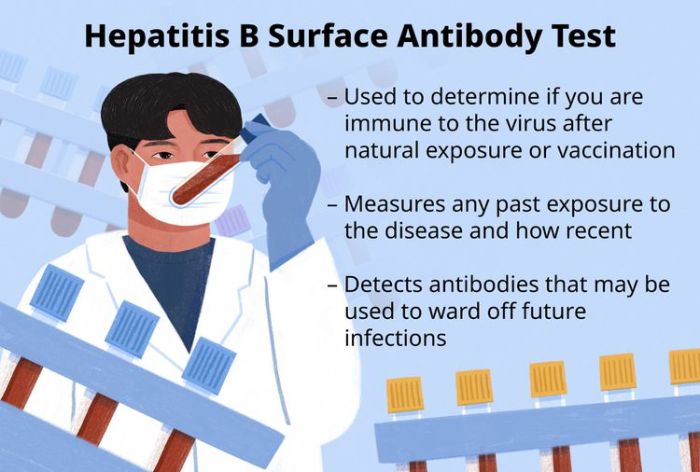
In conclusion, HBsAb Hepatitis B surface antibody plays a critical role in the fight against HBV. Understanding its levels, interpretation, and correlation with various factors, from vaccination to disease progression, is essential for effective diagnosis, treatment, and public health initiatives. This guide provides a comprehensive overview of this critical antibody, equipping readers with the knowledge needed to navigate the complexities of HBV management.