The Evolution of Self-Quantification: Balancing Human Intuition with Wearable Technology

While our ancestors relied on their senses to assess how they were doing, increasingly, we rely on gadgets. The modern era of self-quantification—often dubbed the "Quantified Self" movement—has transitioned from a niche hobby for data enthusiasts into a cornerstone of contemporary wellness. Today, if you are curious enough, you can measure your heart rate, step count, exercise intensity, and sleep quality, often simultaneously on a single, sleek wearable device. These tools offer a unique bridge between subjective physiological sensations and objective biometric data, providing a window into the body’s internal state that was previously inaccessible without medical equipment.
The rise of this technology marks a significant shift in how individuals approach health management. For decades, the medical community relied primarily on clinical visits and patient-reported symptoms. Now, a massive influx of continuous data allows for a granular, longitudinal view of health. However, this technological integration raises a fundamental question: as we outsource our self-assessment to algorithms, are we becoming more attuned to our bodies, or are we losing the ability to trust our own internal signals?
The History and Growth of the Quantified Self
The roots of modern fitness tracking can be traced back to the 1960s with the invention of the "manpo-kei" (10,000-step meter) in Japan, but the real technological explosion occurred in the early 2010s. The introduction of consumer-grade activity trackers by companies like Fitbit, followed by the integration of sophisticated sensors into the Apple Watch and Garmin ecosystems, fundamentally changed the landscape.
By 2024, the global wearable technology market was valued at over $60 billion, with projections indicating steady growth through the end of the decade. This growth is driven by a societal push toward preventative medicine and personalized health optimization. Yet, the rapid adoption of these devices has outpaced the development of clinical guidelines on how to interpret this data, leaving many users in a state of "data paralysis," where they possess massive amounts of information but lack the expertise to apply it meaningfully.

The Paradox of Precision
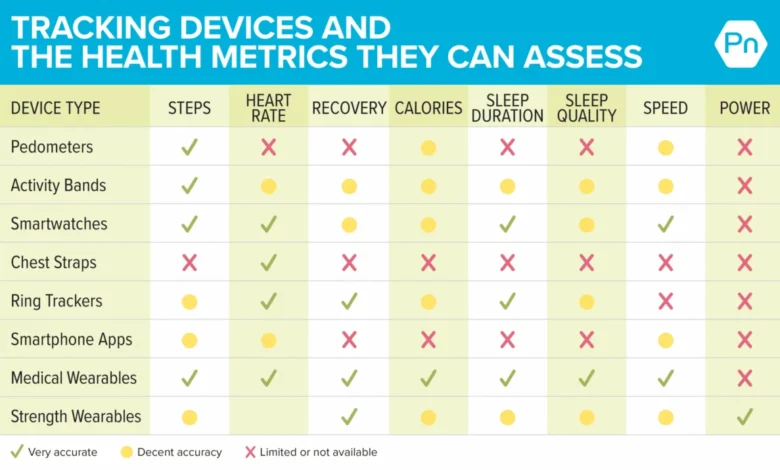
The core challenge in the current landscape is the accuracy of the data being collected. Not all data is created equal; while high-end medical-grade wearables are calibrated to clinical standards, many consumer devices rely on optical heart-rate sensors (photoplethysmography) that can be easily skewed by movement, skin tone, or device fit.
Research indicates that while step-counting remains relatively consistent across devices, metrics like "calories burned" or "sleep quality" are often based on proprietary algorithms rather than direct measurement. For instance, a 2022 study published in the Journal of Applied Physiology noted that most consumer wearables overestimate caloric expenditure by 15% to 30%. This discrepancy highlights the danger of relying solely on technology to make dietary or exercise adjustments.
Data as a Double-Edged Sword: The Cognitive Load
Samantha Kleinberg, a computer scientist and expert in health informatics, has extensively studied the impact of data on human decision-making. Her research highlights a critical phenomenon: the inverted U-curve of information. When individuals have too little data, they make poor decisions based on hunches; when they have too much data, they experience "analysis paralysis," which is equally detrimental.
The psychological implications are significant. For high-performing individuals, seeing a "low recovery score" on a device can trigger a placebo effect, leading the user to feel fatigued even if their physiological markers are normal. Conversely, individuals who rely on tracking apps for caloric intake may suffer from a loss of agency, feeling unable to eat a meal without checking an app first. This shift from internal awareness to external validation can diminish the ability to interpret basic biological cues like hunger, satiety, and fatigue.
Three Signs That Tracking Is Working for You
To navigate this digital landscape, users should evaluate whether their technology serves as a tool for empowerment or a source of unnecessary stress.

- Validation of Method: For individuals prone to overtraining, data can serve as a vital reality check. By monitoring resting heart rate and heart rate variability (HRV), athletes can objectively see the benefits of "Zone 2" training or rest days. When the data aligns with performance improvements, it builds trust in a structured program, reducing the anxiety that one is not doing "enough."
- Enhanced Motivation through Feedback: Tracking can provide the necessary "nudge" to alter behavior. Research into behavior change theory suggests that for a habit to stick, individuals need motivation, ability, and a prompt. A sleep tracker that highlights the direct correlation between late-night alcohol consumption and poor sleep quality serves as a powerful prompt that often leads to immediate, positive behavioral changes.
- Improved Self-Knowledge: The most effective use of trackers is for calibration. By comparing how one feels (e.g., "I feel exhausted") with the objective data (e.g., "My HRV is significantly lower than average"), users can learn to better identify their body’s signals. Over time, the goal should be to reach a point where the device is no longer necessary to understand one’s recovery state.
The Case for Reconnecting with Human Intuition
Despite the sophistication of modern wearables, they are limited by their inability to account for the "human element"—the complex intersection of psychology, environment, and social context. The human nervous system is an incredibly complex pattern-recognition machine. We possess proprioception, interoception, and emotional intelligence that no sensor can currently replicate.
To cultivate a healthier relationship with technology, experts recommend a three-step integration strategy:
- The Predictive Check-In: Before looking at your watch or phone to see how you slept or how your workout went, pause for ten seconds. Ask yourself: "How do I feel? What is my energy level? How is my muscle soreness?" By forming a prediction first, you train your brain to become more sensitive to internal feedback.
- Contextualize with Shortcuts: Use tools like the Rate of Perceived Exertion (RPE) scale. If you are lifting weights, ask yourself if you could perform two more reps. This subjective assessment, combined with the objective tracking of weight and volume, creates a holistic view of your fitness that is more robust than either metric alone.
- Prioritize Sensory Awareness: Our bodies are equipped with sophisticated internal sensors—our breath, our heartbeat, our mood, and our hunger levels. When we rely solely on external devices, we risk silencing these signals. A healthy practice involves using technology to "check in" periodically, rather than "living" within the data.
Future Implications and Conclusion
As we move forward, the integration of Artificial Intelligence into health wearables is likely to make data interpretation more automated. AI-driven insights could theoretically filter out the "noise" and provide users with actionable, simple recommendations. However, the onus remains on the individual to remain the primary decision-maker.
The ultimate goal of health and fitness is not to achieve a perfect set of statistics, but to foster a body that is resilient, capable, and responsive to the demands of life. While fitness trackers provide a useful map of our physiological terrain, they are not the landscape itself. By maintaining a balance between the precision of the device and the intuition of the human experience, individuals can leverage technology to enhance their performance without sacrificing their connection to their own physical reality. The most accurate tracker in the world remains, and will likely always be, the one you were born with.