Symptoms of Down syndrome present a fascinating and complex array of physical, developmental, and behavioral characteristics. This comprehensive look delves into the intricacies of this condition, exploring its genetic underpinnings, observable traits, and the support systems that help individuals with Down syndrome thrive.
From common physical features to potential developmental delays and medical considerations, this overview aims to provide a nuanced understanding of Down syndrome, emphasizing the unique challenges and triumphs faced by those living with it. We’ll also touch on the importance of early intervention and support systems in fostering a fulfilling life for individuals with Down syndrome.
Introduction to Down Syndrome
Down syndrome is a genetic condition characterized by the presence of an extra copy of chromosome 21. This extra genetic material alters the normal course of development, leading to a range of physical and intellectual characteristics. Understanding the genetic basis and types of Down syndrome is crucial for recognizing the condition and providing appropriate support.The presence of an extra chromosome 21 disrupts the delicate balance of gene expression, influencing physical traits, cognitive abilities, and overall health.
Early intervention and appropriate therapies are often essential for maximizing an individual’s potential and quality of life.
Genetic Basis of Down Syndrome
Down syndrome arises from a chromosomal abnormality. The typical human karyotype consists of 46 chromosomes, arranged in 23 pairs. In individuals with Down syndrome, there’s an extra copy of chromosome 21, resulting in a total of 47 chromosomes. This extra genetic material disrupts normal development. This extra chromosome 21 can originate from different mechanisms, impacting the characteristics and severity of the condition.
Types of Down Syndrome
Down syndrome is categorized into three main types, each distinguished by the origin of the extra chromosome 21 material. Understanding these distinctions is crucial for healthcare professionals and families to tailor support strategies effectively.
Chromosomal Abnormalities Associated with Down Syndrome Types
| Type | Chromosome Abnormality | Characteristics | Prevalence |
|---|---|---|---|
| Trisomy 21 | Three copies of chromosome 21 | The most common type, accounting for about 95% of cases. Individuals with this type typically have physical features such as a flattened facial profile, upward slanting eyes, and a single palmar crease. Intellectual disability is a common characteristic, although the severity varies significantly. | About 95% |
| Translocation Down Syndrome | Extra chromosome 21 material is attached to another chromosome (typically chromosome 14). | This type accounts for about 3-4% of cases. Individuals with translocation Down syndrome may have a typical appearance, and the severity of intellectual disability can vary. Important to note that some individuals with translocation Down syndrome may not exhibit any of the typical physical characteristics. | About 3-4% |
| Mosaicism Down Syndrome | A mixture of cells with 46 and 47 chromosomes. Some cells have the normal 46 chromosomes, while others have 47 chromosomes due to an extra chromosome 21. | This type accounts for about 1-2% of cases. Characteristics vary greatly, as some cells carry the extra chromosome 21 while others do not. The degree of intellectual disability and physical features can range widely among individuals. | About 1-2% |
Physical Symptoms
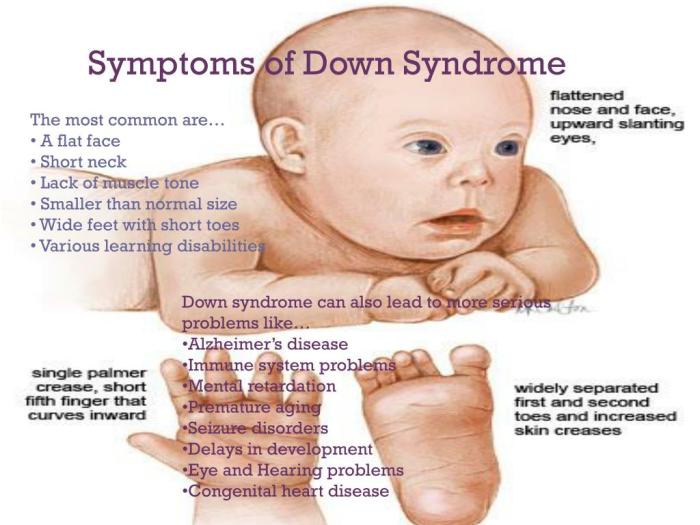
Down syndrome, a genetic condition, is associated with a range of physical characteristics. While the specific features can vary significantly from person to person, some common traits often appear. Understanding these physical attributes is crucial for early diagnosis and appropriate care. Early intervention and support can significantly impact the development and well-being of individuals with Down syndrome.Physical features associated with Down syndrome often become noticeable during infancy and childhood.
These traits are not exclusive to Down syndrome, and the presence of one or several of these traits doesn’t definitively indicate the condition. A comprehensive evaluation by a medical professional is essential for diagnosis.
Common Physical Features
The physical characteristics of Down syndrome are often subtle, and some features may only become apparent as the individual grows. Variations exist in the severity and presence of these characteristics. A medical professional can provide a comprehensive evaluation to determine if there are any concerns or potential health implications.
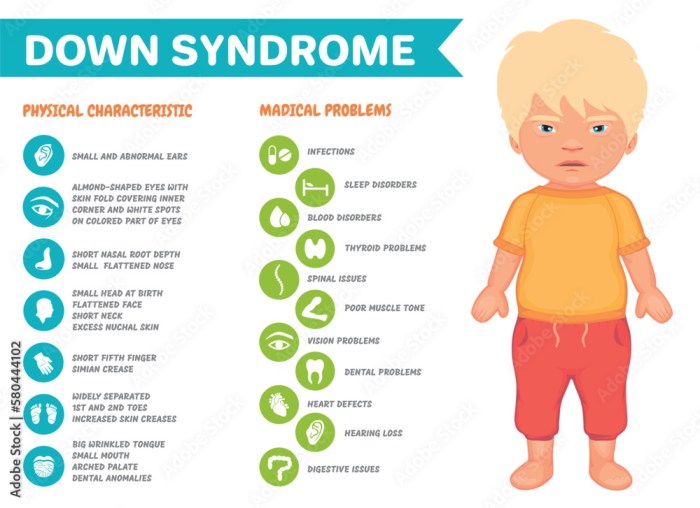
- Flattened facial profile: A characteristic flattened bridge of the nose and a small nose are frequently observed.
- Upward slanting eyes (palpebral fissures): This feature is often noticeable in infants and children.
- Small ears: The ears are typically smaller and may be set lower on the head.
- Small mouth and/or a protruding tongue (macroglossia): The mouth may appear small, and the tongue may be larger than average.
- Short neck: A shorter neck with excess skin is a frequent observation.
- Single palmar crease (simian crease): A single crease across the palm of the hand is a common feature.
- Small hands and feet: Hands and feet tend to be smaller than average.
- Wide gap between the big toe and the second toe: This is a noticeable physical trait.
- Loose joints (hypotonia): Loose joints and low muscle tone can affect movement and posture.
- Small hands and feet, with short fingers and toes: This is a common physical trait.
Variability in Physical Features
The physical features of Down syndrome can vary significantly between individuals. While some individuals may exhibit many of the common traits, others may only show a few. The degree of severity and the presence of each characteristic can differ. The specific genetic makeup and other influencing factors can contribute to this variability.
Comparison of Physical Features Across Lifespan
The following table illustrates how some physical features of Down syndrome might present differently in infants, children, and adults.
| Feature | Infant | Child | Adult |
|---|---|---|---|
| Flattened facial profile | Noticeable, especially the bridge of the nose. | Still present but may appear less pronounced. | Still evident, but may not be as prominent as in childhood. |
| Upward slanting eyes | Highly visible. | Less pronounced than in infancy. | Visible but less prominent. |
| Short neck | Often noticeable. | May be less prominent. | Still visible. |
| Single palmar crease | May be present. | Usually present. | Usually present. |
| Small hands and feet | Apparent. | Smaller than average. | Smaller than average. |
Potential Health Concerns
Some physical features associated with Down syndrome can increase the risk of certain health concerns. For instance, the presence of a single palmar crease may not be a health concern itself, but it can be a factor in the medical assessment process. These concerns include, but are not limited to, heart defects, hearing problems, vision issues, and respiratory infections.
Early screening and appropriate medical care are essential to address potential health issues.
Developmental Delays and Cognitive Symptoms: Symptoms Of Down Syndrome
Individuals with Down syndrome often experience developmental delays across various areas, impacting their cognitive abilities. Understanding these delays is crucial for providing appropriate support and fostering their overall well-being. Early intervention plays a vital role in maximizing their potential and enabling them to reach their full capabilities.Developmental delays in individuals with Down syndrome manifest differently for each person.
While some may experience delays in specific areas, others may encounter challenges across multiple developmental domains. The severity of these delays can vary significantly, and the pace of development can fluctuate. It is important to remember that each individual with Down syndrome has unique strengths and weaknesses.
Common Developmental Delays
Developmental delays in individuals with Down syndrome can encompass various areas, including motor skills, language development, social-emotional growth, and cognitive functioning. These delays are often noticeable during the early years of life. Early identification and intervention are key to maximizing developmental potential.
- Motor Skills: Delayed development of gross motor skills, such as sitting, crawling, and walking, is frequently observed. Fine motor skills, such as grasping and manipulating objects, may also be delayed.
- Language Development: Language development, including expressive and receptive language skills, often progresses more slowly than in typically developing children. This may manifest as delayed vocabulary acquisition, difficulties with sentence structure, and challenges with understanding complex language.
- Social-Emotional Development: Individuals with Down syndrome may experience delays in social-emotional development, including developing appropriate social skills, understanding emotions, and building relationships. They may exhibit challenges in recognizing social cues and expressing their emotions effectively.
Potential Cognitive Challenges, Symptoms of down syndrome
Individuals with Down syndrome may face challenges in various cognitive domains, including learning, memory, and problem-solving. These challenges are often interwoven and impact each other.
- Learning: Learning disabilities are a common characteristic. Difficulties in acquiring and processing information may necessitate individualized educational approaches and support.
- Memory: Individuals with Down syndrome may experience difficulties with different types of memory, such as short-term memory, working memory, and long-term memory. Strategies to compensate for these memory challenges are vital for their learning and daily functioning.
- Problem-Solving: Problem-solving skills often require development. Support systems and training tailored to their specific needs can empower them to navigate challenges and develop appropriate problem-solving strategies.
Intellectual Functioning
Intellectual functioning in individuals with Down syndrome typically falls within the range of mild to moderate intellectual disability. However, it is important to emphasize that this is a broad spectrum. Individuals with Down syndrome can exhibit a wide range of intellectual abilities.
Range of Intellectual Abilities
The range of intellectual abilities in individuals with Down syndrome is substantial. While some individuals may have significant challenges in learning and daily tasks, others may demonstrate remarkable strengths and talents. Their abilities are not defined solely by their diagnosis but are unique and diverse.
Importance of Early Intervention and Support
Early intervention and ongoing support are crucial for fostering optimal development in individuals with Down syndrome. These interventions should be tailored to the specific needs and strengths of each child. Early intervention programs focus on enhancing cognitive, physical, and social-emotional skills.
| Milestone | Typical age | Down syndrome age | Intervention strategies |
|---|---|---|---|
| Sitting unsupported | 6-8 months | 9-12 months or later | Physical therapy, exercises, sensory stimulation |
| Walking independently | 12-15 months | 18-24 months or later | Occupational therapy, walking aids, mobility support |
| Simple sentences | 18-24 months | 24-36 months or later | Speech therapy, language stimulation, communication aids |
| Understanding complex instructions | 3-4 years | 4-6 years or later | Educational interventions, visual aids, simplified instructions |
Medical and Health Considerations
Individuals with Down syndrome often face unique medical challenges requiring proactive management and support. Understanding these considerations is crucial for ensuring their well-being and quality of life. Early intervention and ongoing medical care are key to addressing potential health issues and promoting optimal health outcomes.A significant aspect of caring for individuals with Down syndrome is recognizing the increased susceptibility to certain medical conditions.
This necessitates regular monitoring and interventions to mitigate risks and promote overall health. Proactive medical care allows for early detection and treatment, which can significantly impact the individual’s long-term health and development.
Potential Medical Complications
Down syndrome is associated with a heightened risk of various medical complications. These conditions often require specialized care and attention, highlighting the importance of a multidisciplinary approach to healthcare. Early intervention and proactive management are crucial for improving outcomes and quality of life.
Increased Risk of Specific Health Conditions
Individuals with Down syndrome are at a higher risk for specific health conditions compared to the general population. This increased vulnerability underscores the need for comprehensive healthcare strategies tailored to their unique needs. Prompt diagnosis and treatment are vital in managing these conditions effectively.
- Congenital Heart Defects: A substantial percentage of individuals with Down syndrome are born with congenital heart defects. These defects can range from mild to severe and require surgical intervention in some cases. Early detection through prenatal screening and postnatal examinations is essential for timely intervention.
- Hearing Problems: Hearing impairments are also relatively common among individuals with Down syndrome. This can affect their communication development and overall well-being. Regular hearing screenings are crucial for early identification and intervention, often involving hearing aids or other assistive devices.
- Vision Issues: Eye problems, such as cataracts, glaucoma, and strabismus, are more prevalent in this population. Early diagnosis and management of these conditions are vital for preserving optimal vision and preventing long-term complications. Regular eye examinations are important for preventing vision loss and optimizing visual function.
Importance of Regular Medical Checkups and Screenings
Regular medical checkups and screenings are crucial for individuals with Down syndrome. These appointments allow healthcare professionals to monitor their overall health, detect potential problems early, and implement appropriate interventions. Consistent medical care is essential for proactive management of their health needs.
Down syndrome, characterized by a range of physical and developmental characteristics, can sometimes present with subtle symptoms. While the specifics of these symptoms vary greatly, understanding the possible indicators is crucial for early intervention. Sometimes, you might find yourself wondering if certain medications, like antibiotics, can be effective for related conditions. For instance, a common question is whether Bactrim can treat sinus infections.
Information on this can be found at can bactrim treat sinus infections. Ultimately, consulting a healthcare professional is essential for proper diagnosis and management of any potential concerns, especially when it comes to conditions like Down syndrome.
Common Health Concerns Throughout the Lifespan
Certain health concerns tend to emerge or become more prominent throughout the lifespan of individuals with Down syndrome. Understanding these patterns helps healthcare providers anticipate and address potential challenges effectively. Addressing these concerns proactively can lead to improved quality of life and well-being.
- Heart Conditions: Congenital heart defects, if present, may require ongoing monitoring and potential interventions throughout life. Regular checkups and follow-up appointments are necessary to manage the condition effectively and address any complications that might arise.
- Vision Issues: Vision problems, like cataracts or glaucoma, can progress over time. Regular eye examinations are essential to detect and manage these conditions. Proactive management can prevent vision loss and improve the individual’s ability to see and participate in daily activities.
- Respiratory Infections: Individuals with Down syndrome may have an increased susceptibility to respiratory infections. Regular vaccinations and preventive measures are essential to reduce the risk of infections and complications.
Role of Medical Professionals in Supporting Individuals with Down Syndrome
Medical professionals play a critical role in supporting individuals with Down syndrome. Their expertise is vital in providing comprehensive care, addressing specific needs, and coordinating with other specialists. Collaboration among medical professionals ensures that individuals receive holistic care and support.
Common Medical Concerns and Associated Treatments
| Concern | Symptoms | Diagnosis | Treatment |
|---|---|---|---|
| Congenital Heart Defects | Abnormal heart sounds, shortness of breath, fatigue | Echocardiogram, physical examination | Surgery, medication, cardiac monitoring |
| Hearing Impairment | Difficulty hearing, delayed speech development, inconsistent responses | Audiometry, speech evaluation | Hearing aids, speech therapy, assistive listening devices |
| Vision Problems | Blurry vision, eye pain, difficulty focusing | Eye examination, ophthalmological tests | Eyeglasses, surgery, medication |
| Respiratory Infections | Cough, fever, difficulty breathing | Physical examination, chest X-rays | Antibiotics, supportive care |
Behavioral and Social Aspects
Understanding the behavioral and social aspects of Down syndrome is crucial for fostering positive development and inclusion. Individuals with Down syndrome, while facing unique challenges, possess inherent strengths and the capacity for meaningful relationships and contributions to society. This section delves into common behavioral characteristics, potential social challenges, and effective strategies for supporting their social-emotional growth.
Common Behavioral Characteristics
Individuals with Down syndrome exhibit a diverse range of behaviors, influenced by various factors including age, specific genetic makeup, and the environment. Some common behavioral characteristics include a tendency towards impulsivity, social awkwardness in certain situations, and differences in communication styles. These characteristics are not inherently negative but often require adjustments in approaches to foster positive interactions.
Potential Social Challenges and Support Needs
Social challenges can arise due to difficulties with social cues, communication, and understanding social expectations. Individuals with Down syndrome may struggle with maintaining eye contact, interpreting nonverbal communication, or participating in group activities. Support needs vary significantly depending on the individual’s specific strengths and challenges. Early intervention and ongoing support are crucial for maximizing social participation and development.
Social Skills Development and Strategies for Improvement
Structured social skills training programs can be highly effective. These programs often focus on teaching specific social skills, such as turn-taking, sharing, and conflict resolution. Visual aids, role-playing, and positive reinforcement are often incorporated to enhance learning and practice. Consistent practice and real-life application are essential for long-term skill development. Families and educators can create opportunities for social interaction in structured and supportive environments.
Down syndrome, a genetic condition, presents with a range of symptoms, including developmental delays and distinct facial features. While those are common, sometimes a less obvious symptom like pain on top of the foot might be present. This is important to note because it can be a sign of other underlying issues, and needs to be assessed by a medical professional.
Ultimately, recognizing and addressing all possible symptoms is crucial for optimal care and well-being for individuals with Down syndrome.
Strategies for Fostering Social Inclusion and Relationships
Fostering social inclusion involves creating environments where individuals with Down syndrome feel valued and accepted. This includes promoting opportunities for interaction with typically developing peers, encouraging friendships, and highlighting their unique contributions. Activities that promote shared interests and common goals can be effective in building relationships and fostering social inclusion. Open communication and understanding within families and communities are crucial for supporting the social development of individuals with Down syndrome.
Down syndrome often presents with recognizable symptoms like a flattened facial profile and upward-slanting eyes. While these are fairly common indicators, it’s crucial to remember that each individual’s experience differs. Sometimes, symptoms can overlap with those of other conditions, like the potential warning signs of a mini heart attack. For example, sudden chest pain, shortness of breath, or lightheadedness, should prompt immediate medical attention.
Learning about these potential indicators, like the ones found on this page about mini heart attack symptoms , is essential for recognizing and addressing various health concerns. Understanding the subtle and sometimes misleading signs of Down syndrome is equally important for proper diagnosis and care.
Communication Challenges and Approaches to Improve Communication
Communication challenges may include difficulties with expressive and receptive language. Communication strategies should be tailored to the individual’s strengths and needs. Augmentative and alternative communication (AAC) methods, such as picture exchange systems or sign language, can significantly improve communication effectiveness. Consistent modeling of appropriate communication behaviors by family members and educators is important.
Impact of Down Syndrome on Family Dynamics
Down syndrome can impact family dynamics in various ways, potentially causing stress, adjustment, and altered family roles. Families may need support in navigating the unique challenges and opportunities presented by having a child with Down syndrome. Open communication, mutual understanding, and access to resources can be critical in fostering a supportive and positive family environment.
Behavioral Challenges and Effective Strategies for Intervention
| Behavior | Causes | Strategies | Outcomes |
|---|---|---|---|
| Impulsivity | Developmental delays in executive function | Structured routines, visual schedules, clear expectations, positive reinforcement, redirection | Improved self-regulation, reduced impulsive actions, increased ability to follow instructions |
| Social withdrawal | Difficulties understanding social cues, fear of rejection | Social skills training, peer interaction opportunities, modeling appropriate social behaviors, building trust | Increased social engagement, improved confidence in social situations, development of meaningful relationships |
| Tantrums | Frustration, unmet needs, sensory sensitivities | Understanding triggers, providing choices, offering alternative solutions, positive reinforcement, sensory regulation techniques | Reduced frequency and intensity of tantrums, improved coping mechanisms, increased emotional regulation |
| Difficulty with transitions | Lack of predictability, sensory sensitivities | Visual schedules, clear communication of upcoming changes, gradual introduction to new situations, providing choices | Increased ability to adapt to transitions, decreased anxiety and stress, improved ability to cope with change |
Educational Considerations
Educating individuals with Down syndrome requires a multifaceted approach that recognizes their unique strengths and needs. Tailored educational plans, supportive environments, and access to appropriate resources are crucial for fostering their full potential. The goal is not just academic achievement, but also the development of essential life skills and social competence.
Individualized Educational Programs (IEPs)
Individualized Educational Programs (IEPs) are essential for students with Down syndrome. These plans are meticulously crafted to address each student’s specific learning style, strengths, and challenges. They Artikel the individualized educational goals, support strategies, and accommodations necessary to promote optimal learning and development. IEPs are dynamic documents, regularly reviewed and revised to ensure continued progress and responsiveness to the student’s evolving needs.
Educational Approaches and Support Systems
Various educational approaches can be implemented to support students with Down syndrome. These strategies should emphasize active learning, multi-sensory experiences, and a supportive learning environment. Early intervention programs, often starting in infancy, can significantly impact a child’s development and learning.
- Early Intervention Programs: These programs focus on maximizing a child’s potential through specialized therapies and educational activities. Early intervention programs typically involve speech therapy, physical therapy, occupational therapy, and educational support to address developmental delays and build foundational skills. For example, a child with Down syndrome may participate in a program focused on developing fine motor skills, promoting language development, and enhancing cognitive abilities.
- Inclusive Education: Inclusive education is paramount, fostering a sense of belonging and promoting social interaction. It involves integrating students with Down syndrome into regular classrooms, alongside their typically developing peers. This approach promotes peer interaction and learning, offering valuable opportunities for social development and cultural understanding.
Role of Specialized Educators and Support Staff
Specialized educators, such as special education teachers and related service providers (speech-language pathologists, occupational therapists, physical therapists), play a vital role in supporting students with Down syndrome. They provide individualized instruction, support, and guidance to students and their families. Their expertise in adapting curriculum, utilizing assistive technologies, and implementing individualized support strategies is invaluable.
Importance of Inclusive Education
Inclusive education offers numerous benefits for students with Down syndrome. It allows them to interact with their peers, learn from them, and develop crucial social skills. Furthermore, inclusive classrooms create a more accepting and understanding learning environment for all students. This approach promotes social inclusion and understanding, creating a learning environment that benefits both the student with Down syndrome and their peers.
Assistive Technologies in Education
Assistive technologies can significantly enhance the learning experience for students with Down syndrome. These technologies can help with communication, task completion, and access to educational materials. Examples include communication boards, speech-generating devices, and adaptive software. By utilizing assistive technologies, students can participate more fully in classroom activities and achieve their academic goals.
Comparing Educational Approaches
| Approach | Methods | Benefits | Challenges |
|---|---|---|---|
| Traditional Special Education | Separate classrooms, individualized instruction, focus on specific needs | Targeted support for specific needs, individualized attention | Potential for social isolation, limited exposure to diverse learning styles |
| Inclusive Education | Integration into general education classrooms, collaboration with general education teachers, use of assistive technologies | Development of social skills, exposure to diverse learning styles, improved peer interaction | Requires significant support from specialized staff, potential for diverse learning styles to not be met, classroom management challenges |
| Montessori Education | Hands-on learning, self-directed activities, multi-sensory experiences | Development of independence, self-regulation, focus on child-centered learning | Requires trained educators, may not be suitable for all students |
| Differentiated Instruction | Adapting instruction to meet individual needs, varied learning activities | Cater to varied learning styles, foster engagement, accommodates individual pace | Requires significant planning and preparation, ensuring appropriate modifications |
Quality of Life and Support Systems
Living with Down syndrome can present unique challenges, but with appropriate support and understanding, individuals can lead fulfilling lives. A supportive environment is crucial in fostering independence, self-esteem, and overall well-being. This section explores the impact of Down syndrome on quality of life, available support systems, and the role of community engagement in creating a positive experience.The quality of life for individuals with Down syndrome is significantly influenced by access to appropriate resources and support.
While challenges may arise in areas like communication and physical development, positive outcomes are attainable through tailored interventions and consistent encouragement.
Potential Impact on Quality of Life
Individuals with Down syndrome may experience varying degrees of developmental delays, impacting their independence and participation in daily activities. These challenges can include difficulties with communication, learning, and physical coordination. However, with appropriate interventions and support, individuals with Down syndrome can achieve significant milestones and lead fulfilling lives. Early intervention programs, therapies, and educational support can play a vital role in maximizing potential and promoting self-sufficiency.
Available Support Systems
A comprehensive support system is essential for individuals with Down syndrome and their families. This includes a network of professionals, family members, and community organizations dedicated to providing assistance and resources.
- Healthcare Professionals: Pediatricians, specialists in developmental disabilities, therapists (physical, occupational, speech-language), and medical professionals are integral parts of a supportive network. They provide medical care, therapies, and guidance tailored to the individual’s needs.
- Educational Institutions: Special education programs, adapted curricula, and individualized education plans (IEPs) are crucial for academic success. Schools play a vital role in fostering learning and social development.
- Family Support Networks: Family members often provide the bedrock of support, offering emotional encouragement, practical assistance, and a sense of belonging. Support groups, family counseling, and respite care can be valuable in alleviating stress and fostering well-being.
- Community Organizations: Local organizations dedicated to individuals with Down syndrome provide resources, advocacy, and opportunities for social interaction and community engagement. These groups often organize events, activities, and workshops for both individuals with Down syndrome and their families.
Resources for Support, Advocacy, and Community Engagement
Numerous organizations offer resources and support for individuals with Down syndrome and their families. These resources range from information materials to direct support services. Joining advocacy groups empowers individuals to advocate for their rights and needs.
- National Down Syndrome Society (NDSS): A prominent national organization offering information, support groups, and advocacy resources for individuals with Down syndrome and their families.
- Local Chapters and Support Groups: Many local chapters of the NDSS and other similar organizations provide localized support, facilitating community engagement and fostering connections.
- Online Forums and Communities: Online platforms provide valuable connections and support for families, sharing experiences and providing access to a broader network.
Role of Support Groups and Organizations in Fostering Inclusion
Support groups and organizations play a crucial role in promoting inclusion by providing opportunities for social interaction and fostering a sense of community. These groups offer a space for sharing experiences, offering support, and creating a network of understanding. They help in normalizing differences and promote acceptance within the broader community.
Importance of Creating a Supportive Environment
A supportive environment is paramount for individuals with Down syndrome to thrive. This environment fosters self-esteem, independence, and the ability to reach their full potential. It involves creating a space where individuals feel accepted, valued, and empowered to participate fully in all aspects of life.
Potential Career Paths and Employment Opportunities
Individuals with Down syndrome possess unique talents and skills that can be harnessed in various career paths. With appropriate training and support, they can contribute meaningfully to the workforce. Supported employment programs provide opportunities for gaining work experience and developing job skills.
Support Systems Table
| Type of Support | Description | Accessibility | Effectiveness |
|---|---|---|---|
| Healthcare Professionals | Pediatricians, therapists, and specialists providing medical care and support. | Generally accessible through referrals and insurance coverage. | High effectiveness when services are tailored to individual needs. |
| Educational Institutions | Special education programs and individualized support plans. | Dependent on location and availability of special education resources. | Highly effective in fostering academic growth and social development. |
| Family Support Networks | Emotional and practical support from family members and relatives. | Highly accessible and often the primary source of support. | Effectiveness depends on the level of support and understanding within the family. |
| Community Organizations | Local groups providing resources, activities, and advocacy. | Variable depending on location and community involvement. | Effective in promoting community engagement and social inclusion. |
Outcome Summary
In conclusion, comprehending the diverse symptoms of Down syndrome requires acknowledging the spectrum of experiences and challenges. Understanding the unique needs of individuals with Down syndrome is crucial to creating a more inclusive and supportive environment. By recognizing the multifaceted nature of the condition, we can better appreciate the remarkable resilience and potential of those affected.